There’s a certain smell in the mountains in early spring, right when the ground thaws and the sunlight just starts to hit the forest floor. It’s a mix of damp earth, green things, and wild onion. That’s the smell of “ramp season,” and it’s the start of a tradition that’s as old as the hills themselves. You’re likely here wondering, what is foraging? For generations of Appalachian and Southern folks, it wasn’t a trendy hobby; it was just part of the grocery list. It was how you got your first fresh, green-tasting food after a long winter of preserved goods and dried beans. It’s a core part of the resourcefulness that our ancestors and forefathers used to enjoy a fresh bounty before the crops were ready to harvest. I’ve been walking these woods my whole life, and I can tell you there’s a feast to be had if you know where to look.
But I’ll tell you just as quickly: you must know what you’re doing. Knowing what is foraging is one thing, but knowing how to do it safely is everything. Getting it wrong isn’t just a mistake, it can be a tragedy. We’re going to talk about how to safely find and prepare some of our most beloved mountain treasures: ramps, poke sallet, and a few good mushrooms.
Safety First: The Non-Negotiable Rules of Foraging
Before you take one step into the woods, you need to get this in your head. There is no “mostly sure” in foraging. You are either 100% certain, or you leave it be. I’ve been doing this for over twenty years, and I still walk past things I’m not absolutely positive about. Your pride is not worth your life. People from all over the many souths will be the first to tell you, if you do not know 100% what you are doing, make dagnum sure you find someone who does!
- When in Doubt, Throw It Out. This is the first and last rule. There are many “look-alikes” in the wild that can make you terribly sick, or worse. If you have even a shadow of a doubt, do not pick it. And never eat anything you haven’t positively identified with a good field guide and, preferably, an experienced person.
- Know the Land. Never forage along busy roadsides. Those car exhaust fumes and road salts settle on and in the plants. The same goes for any land you don’t know—it could be treated with pesticides or herbicides. You want clean, wild land, far from any contamination.
Know The Proper Way To Prepare Any Foraged Food!
- Preparation is Key. This is a warning many beginners miss. Some of the best wild edibles, like poke, are only safe after very specific preparation. You can’t just fry it up like spinach. Knowing how to cook it is just as important as knowing how to find it.
- Forage with Respect. This is just as important. The woods are a garden, not a grocery store you can clear out. Never take the whole patch. If you’re digging roots, always leave more than you take so the plant can come back. This is especially true for ramps, which are very sensitive.
- Wash Everything. Twice. Wash your hands as soon as you get home. Wash your harvest in clean, cold water. Some plants, like poke, should be handled on a separate cutting board to avoid any cross-contamination with your other food.
For beginners, I truly cannot stress this enough: go with someone experienced. If you can’t, get a good regional field guide from a trusted source, like your local university extension office. The woods are generous, but they are not forgiving.
The Beloved Southern Ramp (Wild Leek)
If you’ve never had a ramp, you are in for a treat. A ramp is a wild leek, and it’s one of the very first things to come up in the spring. It tastes like a powerful, fiery cross between garlic and a spring onion.
How to Identify Ramps (And What to Avoid)
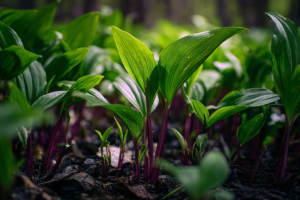
Ramps grow in shady, damp patches and have one or two broad, smooth, bright green leaves. The stems are a beautiful white that fades up into a deep purple-red.
But the number one way to know a ramp is the smell. If you break a leaf and it doesn’t smell so strongly of garlic and onion that your eyes water, it is not a ramp.
CRITICAL RAMP WARNING: Ramps have a deadly look-alike called Lily of the Valley. It often grows in similar conditions. The leaves look shockingly similar, but it has no smell and is highly toxic. It can stop your heart. The smell is your only true test. If there’s no onion-garlic blast, it’s not a ramp. Period.
When you harvest, please be mindful. It can take a ramp patch years to recover. Don’t dig up the whole bulb. The best, most sustainable way is to just cut one leaf from the plant, leaving the bulb and the other leaf to grow. The leaves have all that wonderful flavor.
Preparing and Cooking Ramps
 Ramps are strong, so a little goes a long way. To prepare them, just wash them well in cold water. That papery skin on the bulb (if you harvested it) will slip right off. You can use the entire plant—the white bulb, the purple stem, and the green leaves.
The classic Appalachian way to eat them is simple “ramps and eggs.”
- Chop up a good handful of ramps (bulbs, stems, and leaves).
- Sauté them in a hot cast-iron skillet with a little bacon grease or butter until they’re soft and fragrant. Your whole house will smell like spring.
- Pour your beaten eggs right on top and scramble it all together.
- Serve with hot cornbread and you’ve got a true mountain breakfast.
You can also chop them raw into cornbread batter, or blend them with soft butter to make a “ramp butter” that is heavenly on a hot biscuit or steak.
The Danger and Delight of Poke Sallet
Now, we need to have a serious talk about poke, or “poke sallet” as it’s called. This plant is a perfect example of how what is foraging in the South often means turning something dangerous into something delicious through hard-won knowledge.
CRITICAL SAFETY WARNING: POKEWEED (POKE SALLET) IS A POISONOUS PLANT. The berries, roots, and mature stems are highly toxic. The young leaves and stems are only edible after a very specific, careful boiling process. NEVER eat any part of this plant raw. NEVER touch the red berries or thick root.
That said, when prepared the right way, it’s been a staple spring green for generations. You just have to know exactly what you’re doing.
Identifying and Preparing Poke
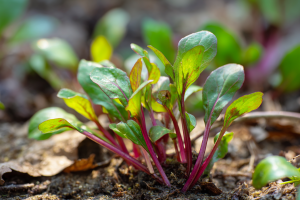 You only harvest poke when it is very young—no more than 6 to 8 inches tall. The shoots will be tender and green, maybe with a little reddish-purple on the stem. Once it gets taller, or the leaves get dark and the stem turns deep purple, you’ve missed your chance. It’s too toxic.
Here is the only safe way to prepare it. This is how my pawpaw taught me, and it’s not negotiable. You are boiling out the poison (phytolaccatoxin), and you must discard the water each time.
The Triple-Boil Method:
- First Boil: Put your young poke leaves and stems in a large pot. Cover them completely with cold water. Bring to a rolling boil and boil for 20 minutes. Drain all the water into the sink.
- Second Boil: Cover the poke again with fresh cold water. Bring to a boil and cook for another 20 minutes. Drain all the water.
- Third Boil: Cover the poke one last time with fresh cold water. Bring to a boil and cook for a final 20 minutes. Drain it completely in a colander, pressing out as much water as you can.
After three changes of water and a full hour of boiling, the poke is now “poke sallet.” It will be a dark, soft-cooked green, much like spinach. This is the only way it’s safe. For more information on the plant’s toxicity, please check with an authoritative source like the National Capital Poison Center on pokeweed.
From here, you treat it like any other green. The most common way is to fry it up in a hot skillet with bacon grease, then scramble a few eggs into it, just like with ramps.
A Word on Foraging Appalachian Mushrooms
Mushroom hunting is a whole world unto itself, and it carries the highest risk. This is not something to take lightly. I only recommend beginners start after they have gone with an expert. Many “safe” mushrooms have deadly look-alikes.
MUSHROOM SAFETY WARNING: Never, ever, ever eat a “little brown mushroom” (or LBM) you find. So many are deadly, it’s not worth a second glance. The same goes for any mushroom with white gills, a “skirt” on the stem, and a “cup” at the base—this describes the Death Cap, and its name is not a joke.
That said, there are a few sought-after mushrooms that are more beginner-friendly.
Morel Mushrooms
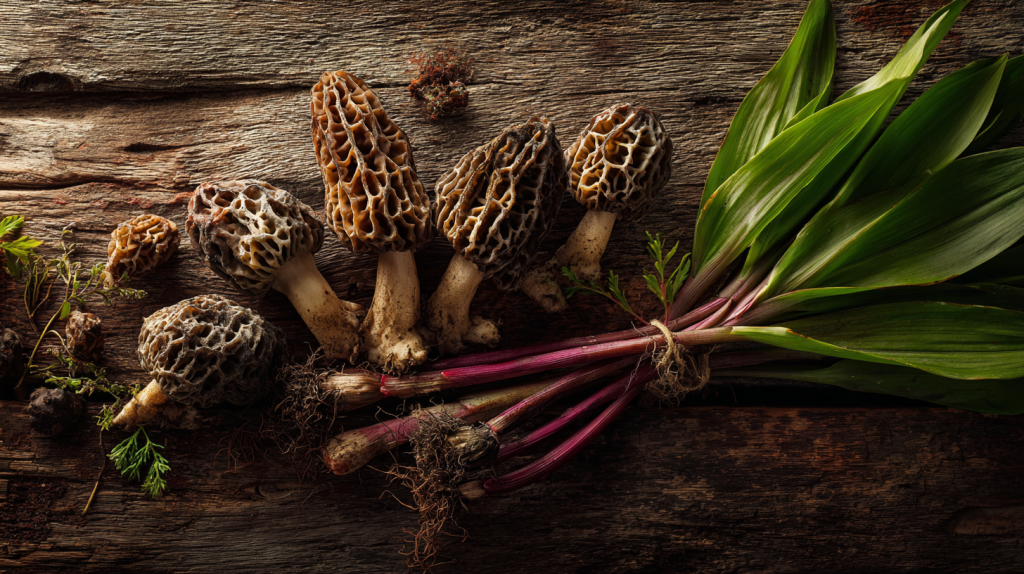
Morels pop up in the spring, often around the same time as ramps. They favor certain trees, so look around old apple orchards, near dying elm trees, ash, and sometimes poplars.
Their key feature is the cap: it looks like a honeycomb or a brain, full of deep pits and ridges. The most important ID trick is to slice it top-to-bottom. A true morel is completely hollow inside, from the tip of the cap all the way down the stem. If it’s solid or filled with a cottony substance, it’s a false morel, and you must throw it out.
Chanterelle Mushrooms
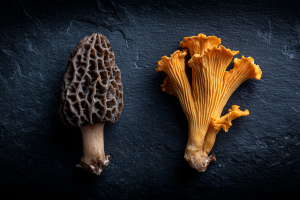 My personal favorite is the Chanterelle, which comes up in the summer, usually a day or two after a good rain. They are bright yellow-orange and smell faintly of apricots.
- Key ID: Chanterelles do not have true gills (like a mushroom from the store). They have “false gills,” which are rounded ridges that run down the stem and can’t be easily separated from the cap.
- The Look-Alike: Their main look-alike is the Jack-o’-Lantern mushroom. Jacks have true gills (sharp, like pages in a book), grow in big, tight clusters (chanterelles grow individually or in loose groups), and will make you sicker than a dog.
There are many kinds of mushrooms, from chanterelles to lion’s mane, and each is a part of the many souths regional cuisines. But for any of them, you need an expert guide or a resource like the North American Mycological Association.
Cooking Wild Mushrooms
If you are 100% sure you have a safe, edible mushroom, the preparation is simple. Don’t soak them in water; they’re like little sponges and will get mushy. Just brush them clean.
Slice them and sauté them in a hot pan with a good bit of butter, salt, and pepper until they’re golden brown. They have a deep, nutty, earthy flavor that is unlike anything else.
The Tradition of Foraging and Knowing the Woods
I hope this helps you understand what is foraging in our part of the world. It’s more than just finding free food. It is a tradition of knowledge, passed down through generations. It’s about respecting the land, paying attention to the seasons, and knowing how to turn the wild into a wonderful, safe, and filling meal.
Start slow. Learn one plant, one season at a time. Go with someone who knows. There’s a real joy in it. But take your time, be safe, and always, always be certain.