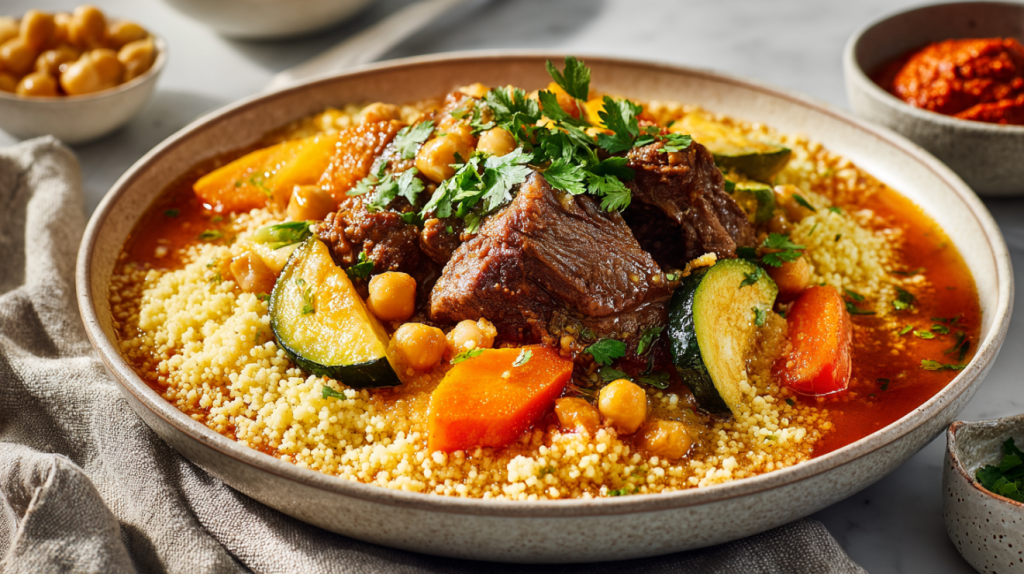
French couscous with zucchini and lamb is one of those meals that turns a kitchen into the warmest room in the house — the kind of dish where the smell alone tells everyone dinner is going to be something special. This is a complete guide to making it the way it should be made: with deeply browned lamb, a spiced broth that has real body to it, tender garden vegetables, and couscous that soaks up every drop of flavor.
If you have ever tried making couscous at home and ended up with a thin, watery broth or lamb that was tough instead of tender, you are not alone. The secret is not in some complicated technique — it is in patience, good bones, and knowing what to pay attention to at every stage. This recipe walks you through all of it, from the first sear to the last ladle, so you end up with a pot of couscous that tastes like it simmered all day even on a busy weekend.
Where This Dish Comes From and Why It Belongs on Your Table
French couscous with zucchini and lamb has roots that go back generations, carried to France from North Africa and woven into the fabric of French home cooking over the last century. It is one of the most beloved dishes in France today — not fancy restaurant food, but the kind of thing families make on Sundays when everyone is coming over. In the South, we understand that kind of cooking. A big pot on the stove, a table full of people, and a meal that says you took the time to do it right.
I came to this dish through a neighbor who had grown up in Marseille. She made it for a church supper one fall, and I watched a room full of people who had never tasted couscous go back for seconds and thirds. The lamb was so tender it fell apart on the fork, and the broth had this warmth to it — not just heat, but warmth from the cinnamon and cumin and the long, slow simmer. I asked her to teach me, and she did, standing right in my kitchen just like her mother had stood in hers.
What makes this version worth making is the way every element comes together. The lamb braises low and slow until it gives up everything it has to the broth. The vegetables go in at different stages so nothing is overcooked. And the couscous gets steamed in that same broth, which means every grain carries the flavor of the whole pot. It is one of those meals where the sum is so much greater than the parts, and once you make it, you will understand why families have been making it this way for generations.
What Makes This French Couscous Recipe Work
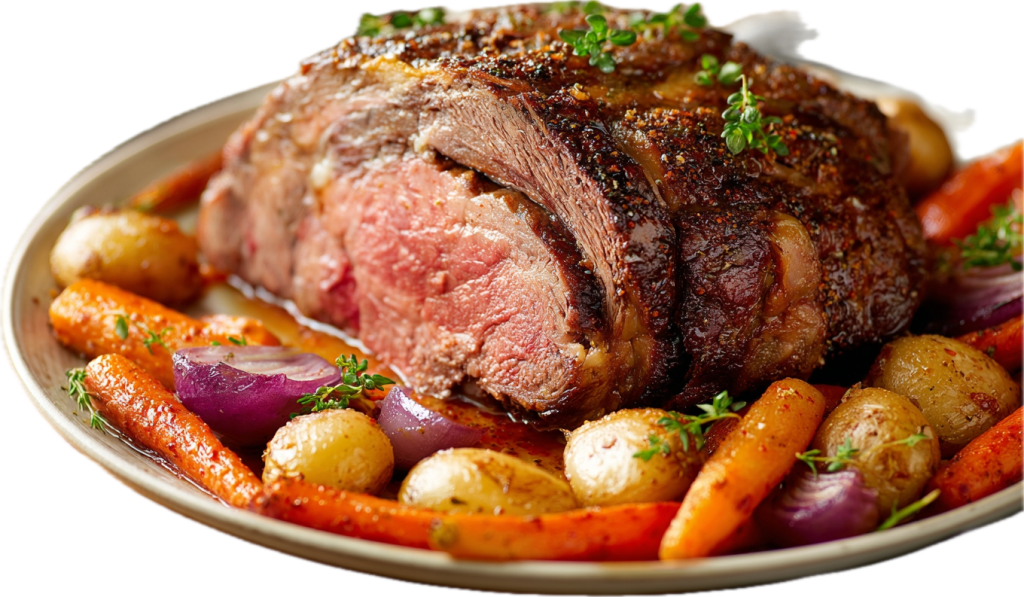
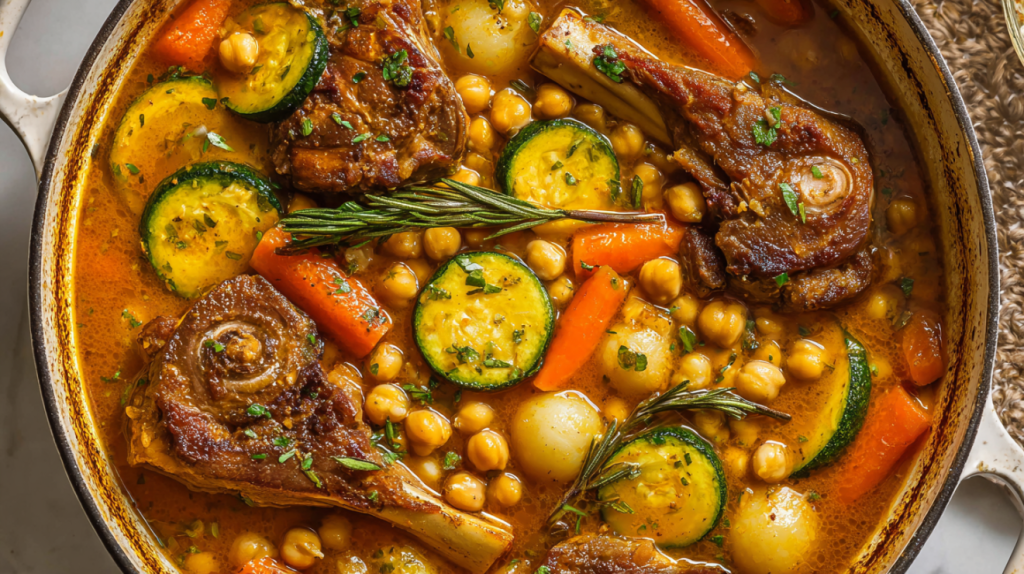
The lamb is the foundation of everything in this pot, and the cut you choose matters more than almost any other decision you will make. Bone-in lamb shoulder or neck is what you want. The bones release gelatin as they braise, and that gelatin is what gives your broth body — that silky, almost sticky quality that coats the back of a spoon and clings to every grain of couscous. Boneless lamb will give you tender meat, but your broth will taste thin and flat by comparison. If you are working with a cut like How to Cook a Sirloin Tip Roast for Sunday Dinner you know already that the bone does half the work for you.
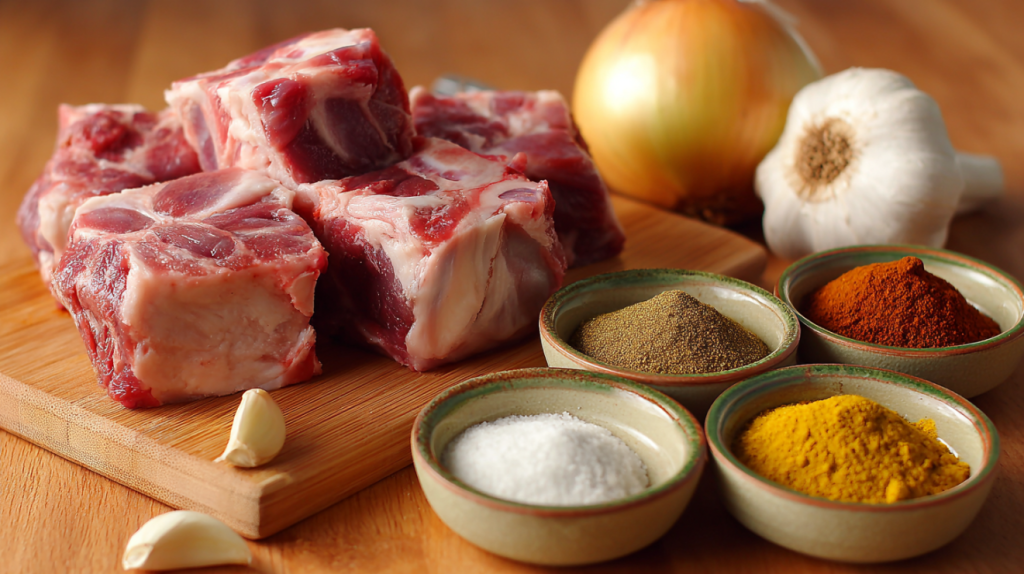
The spice blend is what gives this dish its soul. Cumin, coriander, paprika, turmeric, and cinnamon are the backbone, and every one of them does something different. The cumin brings earthiness. The coriander adds a citrus note you cannot quite put your finger on. The turmeric gives the broth that beautiful golden color. And the cinnamon — just a whisper of it — adds a warmth that rounds out the whole pot without making it taste sweet. I have made this hundreds of times, and I will tell you that blooming those spices in the pot with the tomato paste before the liquid goes in is what separates a good couscous from a great one. If you want to go deeper on how spice work builds flavor, I cover it in How to Bloom Your Spices for Deeper Flavor.
Preparing The Ingredients
The zucchini is where most people go wrong. They cut it too thin or add it too early, and it turns to mush in the broth. Thick half-moons, added in the last twenty minutes, is the answer. You want the zucchini tender enough to absorb the broth but firm enough to hold its shape on the plate. The carrots and turnips can handle a longer simmer — they need it to get soft all the way through. The chickpeas go in with the zucchini. They do not need to cook long since they are already tender from the can, but giving them twenty minutes in that broth lets them soak up the spices.
The tomato paste and canned tomatoes work together to give the broth acidity and depth. Tomato paste, when you cook it down in the oil with the spices for that first minute, concentrates and caramelizes. That is where a lot of the complexity comes from. The canned tomatoes add body and brightness. Together they balance the richness of the lamb fat and keep the broth from tasting heavy. If you want to understand how tomato paste and other umami-rich ingredients work in a pot like this, I go into detail in Using Umami in Southern Cooking: Tomato Paste, Mushrooms & MSG.
Here is a quick substitution guide if you need it:
- Lamb shoulder → lamb shanks (increase cook time by 30 minutes) or beef chuck roast (different flavor but works)
- Turnips → parsnips or rutabaga
- Chickpeas → white beans (cannellini or great northern)
- Harissa → sriracha mixed with a pinch of cumin and smoked paprika
- Fresh cilantro → fresh mint (traditional in some regions)
How to Make French Couscous with Zucchini and Lamb
Getting a Good Sear on the Lamb
Before anything else, pat those lamb pieces bone-dry with paper towels. Wet meat steams instead of searing, and you will never get that deep golden crust if there is moisture on the surface. Season the pieces generously with salt and pepper — do not be shy about it, because this is a big pot and the seasoning has to carry through all that broth.
Get your Dutch oven over medium-high heat with the olive oil. You are waiting for the oil to shimmer — not smoke, shimmer. When you see the surface ripple like heat coming off a road in July, that is your sign. Lay the lamb pieces in with space between them. If you crowd the pot, the temperature drops and the meat steams instead of searing. Work in two or three batches. This takes patience, but it is the single most important step in the entire recipe.
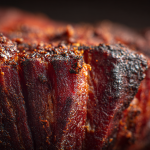
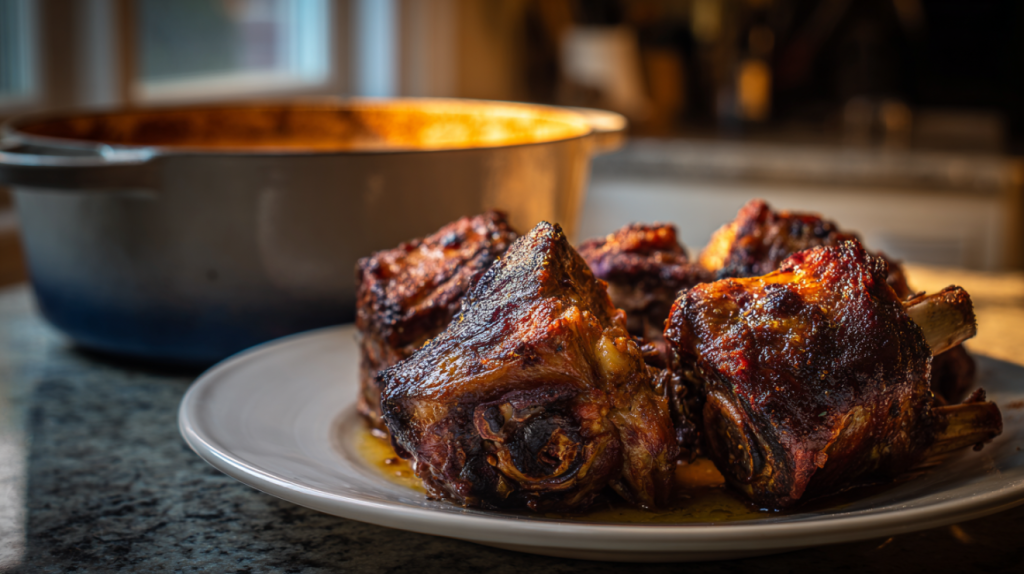
Leave each piece alone for three to four minutes per side. I know the temptation to poke and turn is strong, but every time you move it, you are robbing it of that crust. When the meat is ready to turn, it will release from the pan on its own — if it is sticking, it is not ready. You are looking for a color somewhere between dark gold and mahogany. When you see that color and your kitchen smells like roasted meat, you are there. Pull the lamb out to a plate, and do not pour off those drippings — that is flavor you just built.
This is the same principle behind getting a good sear on any piece of meat in a Cast Iron Cooking: The Southern Way — heat, patience, and leaving things alone.
Building the Broth
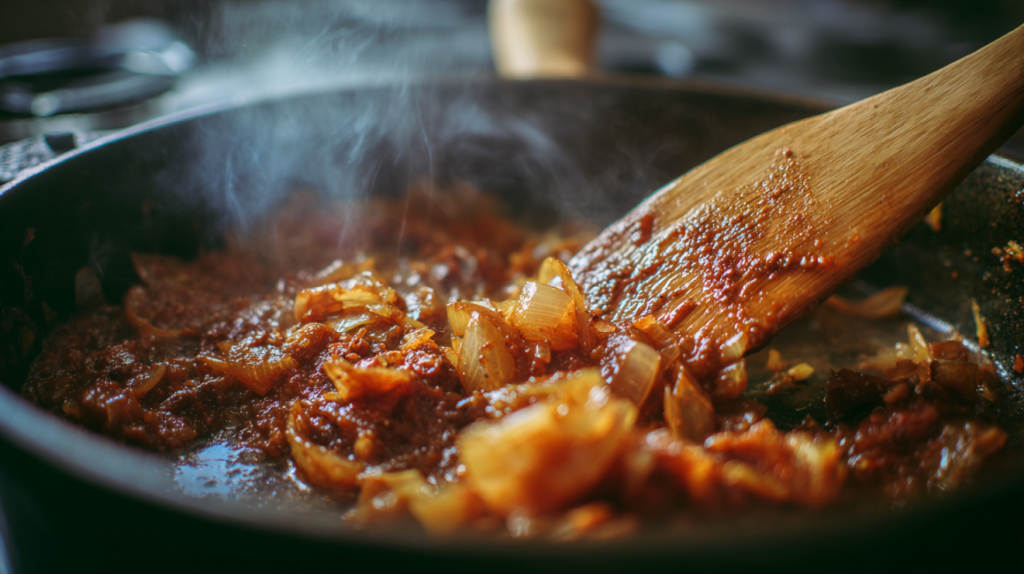
Turn the heat down to medium. Add your diced onion to those lamb drippings and let it cook for about five minutes, stirring now and then. The onion should soften and pick up some of that brown color from the bottom of the pot. You will hear it sizzle when it first hits the pan, and as it cooks, the sound will quiet down as the onion releases its moisture.
Now add the garlic and stir it for about thirty seconds — just until you can smell it. Then in goes the tomato paste with all your spices: the cumin, coriander, paprika, turmeric, cinnamon, and cayenne. Stir everything constantly for about one minute. You are watching for the tomato paste to darken just a shade and the spices to bloom. Your kitchen will smell incredible at this point — warm and earthy and a little sweet from the cinnamon. That smell is telling you the spice oils are releasing, and that is exactly what you want.
Acquiring That Fabulous Flavor
Pour in the canned tomatoes with all their juices and use your spoon to scrape up every bit of brown goodness stuck to the bottom of the pot. That fond is concentrated flavor, and you do not want to leave a speck of it behind. Add the chicken broth, bay leaves, and return your lamb with any juices that collected on the plate. The technique of scraping up those browned bits and building a broth on them is something I cover in more detail in How to Deglaze a Pan and Why You Must.
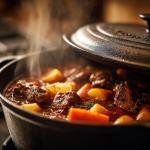
Bring the whole pot to a boil — you will see big bubbles rolling across the surface. Then turn the heat down to low. You want the barest simmer, just a gentle bubble breaking the surface every few seconds. Cover the pot and walk away for one hour. The hardest part of this dish is leaving it alone during this stage, but that lamb needs time and gentle heat to break down and become tender. If you understand the principle behind Low & Slow on the Stovetop: Mastering Patience for Meat and Vegetables, you know that rushing this step is the fastest way to ruin the whole pot.
Adding the Vegetables at the Right Time
After one hour, lift the lid and check on your lamb. Give a piece a poke with a fork — it should be getting tender but not falling apart yet. The broth should be a rich golden-amber color and smell deeply savory with that warm spice undertone.
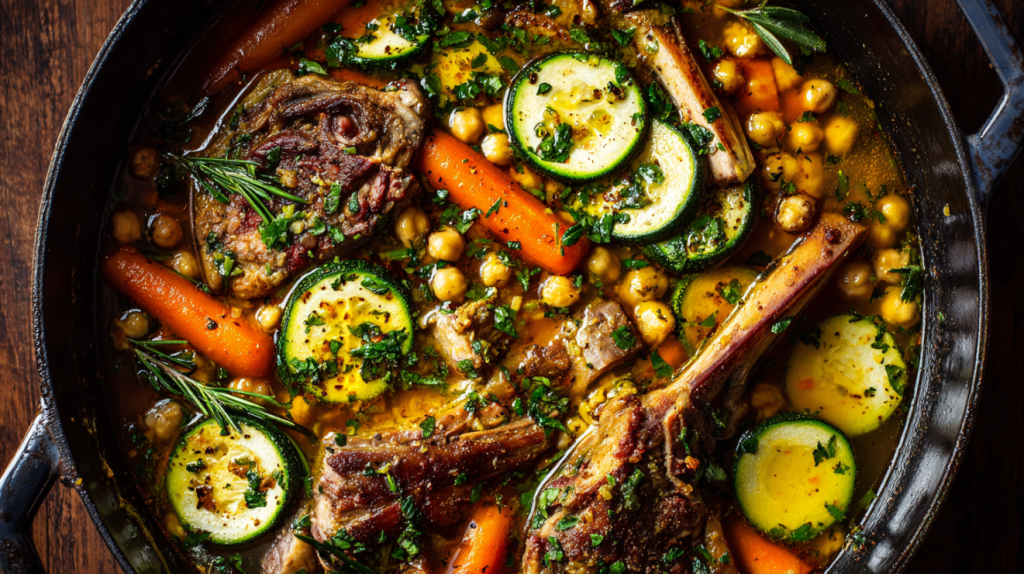
Now add the carrots, turnips, and cabbage wedges. These are the sturdy vegetables that need a good twenty minutes of simmering to cook through. Nestle them down into the broth, cover the pot, and let it go for twenty more minutes.
After twenty minutes, add the zucchini and chickpeas. The zucchini only needs fifteen to twenty minutes, and this is why you add it last — it cooks faster than everything else, and overcooked zucchini turns into a sad, waterlogged mess. You want the zucchini tender enough that a fork slides in easily but firm enough that it holds its half-moon shape when you ladle it onto the plate.
When everything is done, the lamb should be falling-off-the-bone tender. The broth should taste rich, warmly spiced, and deeply savory. Taste it now and adjust the salt — this is the moment that matters, because the couscous will absorb this broth, and if the broth is underseasoned, the whole dish will taste flat.
Getting the Couscous Right
About ten minutes before your stew finishes, put the couscous in a medium saucepan. Ladle two cups of that gorgeous hot broth right from the stew pot over the couscous — this is the secret to couscous that actually tastes like something instead of plain starch. Add the butter and a half teaspoon of salt. Give it one stir, cover the pot tightly, and pull it off the heat. Let it sit, covered, for ten full minutes. Do not peek.
When you uncover it, the couscous will have absorbed all the liquid. Take a fork — not a spoon, a fork — and fluff it by raking through the grains gently. You are breaking up any clumps and letting steam escape. The grains should be light, separate, and tender. If they are still a little firm in the center, sprinkle a tablespoon of hot broth over them, re-cover for two more minutes, and fluff again.
The Harissa Sauce
Stir together the harissa paste, three tablespoons of hot broth, and a drizzle of olive oil in a small bowl. This is not a cooking step — it is a finishing touch, served on the side so everyone can add as much or as little heat as they want. Some people want just a dot, and some people want to turn the whole bowl red. Let them choose.
How to Serve This Meal and What to Put Beside It
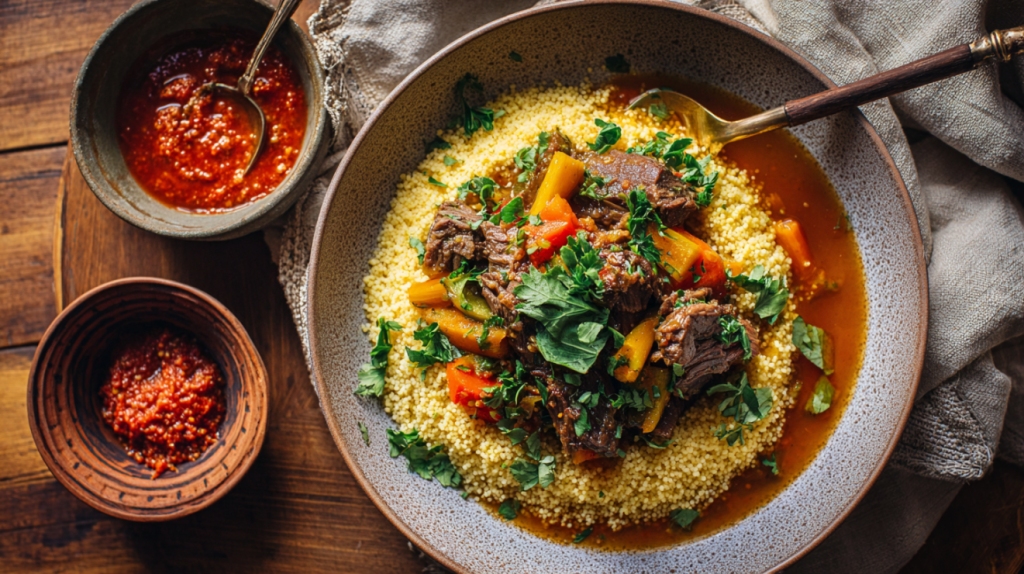
The traditional way to serve French couscous is on a big platter — mound the couscous in the center, arrange the lamb and vegetables around and over it, and ladle that broth generously over everything. The couscous should be sitting in a pool of that broth, soaking it up. Put the harissa sauce in a small bowl on the side.
This is a meal that does not need much beside it. A simple salad of sliced cucumbers and tomatoes dressed with lemon juice and olive oil is the classic accompaniment. Some warm flatbread on the side is welcome for sopping up the last of the broth. If you want something green and fresh on the table, a handful of fresh mint leaves scattered over the top right before serving adds a brightness that cuts through the richness beautifully.
This is a Sunday dinner kind of meal, the kind you make when the family is coming or when you want leftovers that will feed you for days. It is also the kind of dish that earns its place on a holiday table or at a potluck, because it travels well and reheats beautifully. If you are exploring more about how to build complete Southern meals from a single pot, you will find a whole world of ideas in The Complete Guide to Southern Cooking: Techniques, Traditions & Time-Tested Wisdom.
Variations Worth Trying
Chicken Couscous
If lamb is hard to find or not your preference, bone-in chicken thighs are a wonderful substitute. Brown them the same way, but reduce the total simmer time to about 45 minutes before adding vegetables. The broth will be lighter but still rich, especially if you use the bone-in thighs with skin. My daughter-in-law makes it this way every other week, and nobody at her table complains.
Seven-Vegetable Couscous
The traditional Moroccan version uses seven vegetables for good luck — typically zucchini, carrots, turnips, cabbage, pumpkin or butternut squash, tomatoes, and onion. Add cubed butternut squash with the carrots and turnips, and you get a slightly sweeter, heartier stew that is especially good in the fall.
Spicy Merguez Couscous
Add four or five merguez sausages to the pot alongside the lamb. Brown them first, then slice them into thick rounds and add them back in during the last thirty minutes of cooking. The merguez adds a smoky, spicy kick that takes the whole dish to another level. This is the version that disappears fastest at a gathering.
Vegetarian Couscous
Skip the lamb entirely and build your broth with vegetable stock, a generous amount of olive oil, and all the same spices. Add an extra can of chickpeas and consider adding cubed sweet potato for heartiness. The spice blend and the tomato base carry enough flavor to make this version deeply satisfying on its own.
How to Store, Reheat, and Make This Ahead
Store the stew and the couscous separately in airtight containers in the refrigerator. The stew keeps beautifully for four to five days, and the flavor actually improves overnight as the spices continue to meld. The couscous is best eaten within two to three days.
To reheat, warm the stew gently on the stove over medium-low heat, adding a splash of water or broth if the liquid has thickened too much. The couscous reheats best by sprinkling a couple tablespoons of water over it, covering the bowl, and microwaving in thirty-second intervals, fluffing with a fork each time. You can also steam it in a covered pot on the stove.
This dish is an excellent make-ahead candidate. You can make the stew a full day before you plan to serve it, refrigerate it overnight, and make the couscous fresh just before dinner. In fact, many people who have been making this dish for years will tell you it is better the second day. The fat rises to the top in the fridge and can be skimmed off if you prefer a lighter broth.
The stew freezes well for up to three months. Thaw overnight in the refrigerator and reheat on the stove. The couscous does not freeze as well — it tends to get gummy — so I recommend making it fresh whenever you pull the stew from the freezer.
Clever Ways to Use the Leftovers
Lamb and Couscous Stuffed Peppers
Shred the leftover lamb, mix it with the couscous and a spoonful of the thickened broth, and stuff it into halved bell peppers. Bake at 375 degrees for about twenty-five minutes until the peppers are soft and the filling is heated through. A spoonful of harissa on top makes them sing.
Spiced Lamb Soup
Thin the leftover stew with extra chicken broth, shred any remaining lamb, and stir in a handful of chopped spinach or kale. Simmer for ten minutes and serve with crusty bread. This is one of the best weeknight soups you will ever make from something that was already in the fridge.
French Couscous Grain Bowl
Layer leftover couscous in a bowl with shredded lamb, a handful of the vegetables, a drizzle of the broth, some sliced cucumber, and a spoonful of plain yogurt. Drizzle with olive oil and a squeeze of lemon. It makes a quick, filling lunch that feels like something from a restaurant.
Lamb and Vegetable Hand Pies
Chop the leftover lamb and vegetables finely, mix with a tablespoon of the thickened broth, and fill store-bought pie dough rounds. Fold, crimp, and bake at 400 degrees until golden. These are perfect for packing in a lunch or taking to a potluck.
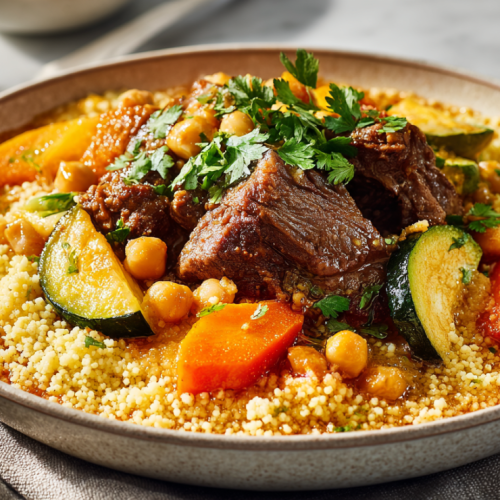
French Couscous with Zucchini and Lamb
Equipment
- Large Dutch Oven or Heavy-Bottomed Pot
- Medium Saucepan with Lid
- Sharp knife
- Cutting board
- Wooden Spoon
- Large Fork for Fluffing Couscous
Ingredients
Lamb and Broth
- 3 lb bone-in lamb shoulder or neck cut into 2-inch pieces
- 2 tablespoon olive oil
- 1 large yellow onion diced
- 4 cloves garlic minced
- 2 tablespoon tomato paste
- 1 teaspoon ground cumin
- 1 teaspoon ground coriander
- 1 teaspoon paprika
- 0.5 teaspoon ground turmeric
- 0.5 teaspoon ground cinnamon
- 0.25 teaspoon cayenne pepper adjust to taste
- 1 can diced tomatoes 14.5 oz
- 6 cup chicken broth or water
- 2 bay leaves
- 1 teaspoon kosher salt plus more to taste
- 0.5 teaspoon black pepper freshly ground
Vegetables
- 3 medium zucchini cut into thick half-moons
- 3 carrots peeled and cut into 2-inch chunks
- 2 turnips peeled and quartered
- 1 can chickpeas 15 oz, drained and rinsed
- 1 small cabbage wedge about 1/4 head, cut into 2 wedges
Couscous
- 2 cup couscous medium grain preferred
- 2 cup hot broth from the stew or hot water with butter
- 2 tablespoon butter
- 0.5 teaspoon salt
Harissa Sauce (for serving)
- 2 tablespoon harissa paste
- 3 tablespoon hot broth from the stew
- 1 tablespoon olive oil
Garnish
- 0.25 cup fresh cilantro roughly chopped
- 0.25 cup fresh flat-leaf parsley roughly chopped
Instructions
Brown the Lamb
- Pat lamb pieces dry with paper towels and season generously with salt and pepper. Heat olive oil in a large Dutch oven over medium-high heat until the oil shimmers.
- Working in batches so you do not crowd the pot, brown the lamb on all sides until deeply golden, about 3-4 minutes per side. Remove browned lamb to a plate and set aside.
Build the Broth
- Reduce heat to medium. Add the diced onion to the pot and cook in the lamb drippings, stirring occasionally, until softened and lightly golden, about 5 minutes.
- Add the garlic, tomato paste, cumin, coriander, paprika, turmeric, cinnamon, and cayenne. Stir constantly for about 1 minute until the spices are fragrant and the tomato paste darkens slightly.
- Pour in the diced tomatoes with their juices and scrape up any browned bits from the bottom of the pot. Add the chicken broth, bay leaves, and return the lamb and any accumulated juices to the pot. Bring to a boil, then reduce heat to low, cover, and simmer for 1 hour.
Add the Vegetables
- After 1 hour, add the carrots, turnips, and cabbage wedges to the pot. Cover and continue to simmer for 20 minutes.
- Add the zucchini and chickpeas. Cover and cook for an additional 15-20 minutes, until the zucchini is tender but still holds its shape and the lamb is falling-apart tender. Taste the broth and adjust salt and pepper as needed. Remove bay leaves.
Prepare the Couscous
- About 10 minutes before the stew is finished, place couscous in a medium saucepan. Ladle 2 cups of hot broth from the stew over the couscous. Add butter and salt. Stir once, cover tightly, and remove from heat. Let stand for 10 minutes.
- Uncover and fluff the couscous with a fork, separating any clumps. The grains should be light, tender, and separate.
Make the Harissa Sauce
- In a small bowl, stir together the harissa paste, 3 tablespoons of hot broth from the stew, and olive oil until smooth. This is served on the side so each person can add as much heat as they like.
Serve
- Mound the couscous on a large serving platter or in individual wide bowls. Arrange the lamb and vegetables over the couscous. Ladle plenty of the spiced broth over everything. Sprinkle with fresh cilantro and parsley. Serve the harissa sauce on the side.
Nutrition
Rate This Recipe
Share This Recipe With The Ones You Love!Common Questions About French Couscous with Zucchini and Lamb
Can I use boneless lamb for this recipe?
You can, but the broth will not have the same body and richness. Bones release gelatin during the long simmer, and that gelatin is what makes the broth silky and full. If boneless is all you have, consider adding a lamb bone or two from the butcher to the pot just for the broth, then discard them before serving.
How do I keep the zucchini from getting mushy?
Cut it thick — at least one-inch half-moons — and add it in the last fifteen to twenty minutes of cooking. Thin slices or early additions will dissolve into the broth. You want the zucchini tender enough for a fork but firm enough to hold its shape.
What kind of couscous should I use?
Medium-grain couscous gives the best results. It has more texture and holds up to the heavy broth better than fine instant couscous. If you can find it at a Mediterranean market, it is worth the trip. Fine couscous works too — just be careful not to oversoak it.
Can I make this in a slow cooker?
You can transfer everything to a slow cooker after browning the lamb and building the spice base on the stove. Cook on low for six to eight hours. Add the zucchini in the last hour so it does not overcook. The browning step on the stove is not optional — it builds too much flavor to skip.
What is harissa and can I skip it?
Harissa is a North African chili paste made from roasted peppers, garlic, and spices. It adds heat and a smoky depth to the couscous. You can absolutely skip it if you do not like heat, or serve it on the side so everyone can choose. A squeeze of hot sauce works in a pinch, though it will not taste quite the same.
How do I know when the lamb is done?
The lamb is ready when it falls apart easily with a fork and pulls cleanly from the bone. If you have to tug at it, give it more time. At the right point, the meat will be so tender it practically shreds itself. Trust the fork, not the clock.
Can I freeze the couscous separately?
The stew freezes beautifully for up to three months, but I do not recommend freezing the couscous. It turns gummy and loses its texture. Make the couscous fresh when you are ready to serve, and freeze only the stew portion.
Make This Pot of French Couscous Your Own
This is the kind of meal that rewards you for every minute you spend on it. The browning, the blooming, the slow simmer — none of it is hard, but all of it matters. When you sit down to a bowl of this french couscous with zucchini and lamb and taste that broth, rich with spices and lamb and the sweetness of slow-cooked vegetables, you will know exactly why this dish has been feeding families for generations.
Make it this weekend. Make it your own. And when you are sitting at the table with the people you love, ladling seconds out of that pot, come back and tell me how it turned out. I have a feeling you are going to want to make it again.