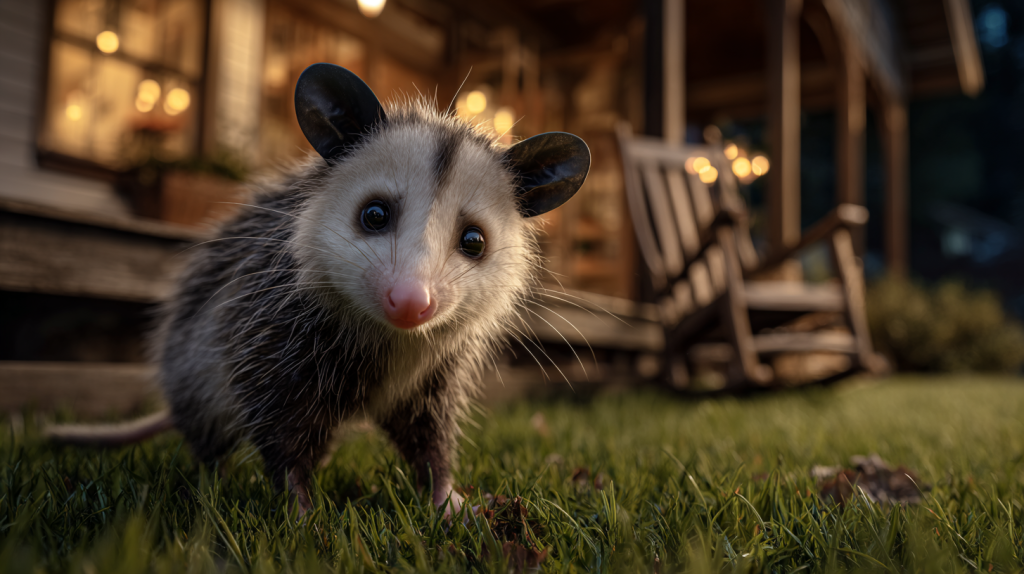
That little rustle in the bushes right after sunset, or the glint of two small eyes from the edge of the porch light—it’s a familiar sound and sight for most of us here in the South. And nine times out of ten, it’s just one of our resident possums making its nightly rounds. But I know what folks are thinking, especially when they’re new to country living or just had a close encounter by the trash cans: Are they dangerous? Do I need to worry about my pets, or my children?
 After decades of sharing my yard with these fellas, I’ve heard just about every tall tale there is. The truth about possums is often buried under a heap of misunderstanding. They aren’t the clean-cut, storybook woodland creatures, but they’re certainly not the vicious, rabid monsters some folks make them out to be. My pawpaw used to say, “Fear comes from not knowin’. Get to knowin’, and the fear finds its own way out.”
Let’s sit a spell and set the record straight. We’ll talk straight about what’s myth, what’s fact, and how to live alongside these unique animals with plain old common sense. By the time we’re done, you’ll know exactly what to worry about (which is very little) and what to appreciate (which is quite a lot).
The Big Question: Are Possums Dangerous?
This is usually the first thing on anyone’s mind. When you see a cornered animal with a mouth full of 50 sharp teeth, it’s a natural question to ask. But the short answer, in a word, is no. A possum’s entire life strategy is built around avoiding conflict. They are not hunters or fighters by nature; they’re scavengers and foragers.
Are possums aggressive?
In my experience, possums are just about the least aggressive wild animal you’ll find. They are remarkably timid and shy. That ‘aggression’ you see—the hissing, the drooling, the showing of all those teeth—that’s not an attack, that’s a bluff. It’s pure theater. It’s a desperate attempt to look scary enough that you, or whatever predator has cornered them, will back off and leave them be. They have no interest in fighting you. Their first, second, and third instinct is to escape. A raccoon will stand its ground; a possum will look for the nearest exit.
That Hiss and Drool: Deconstructing the Bluff
I remember the first time I startled one by the woodpile. It puffed up, let out a hiss that sounded like a leaky tire, and opened that pink mouth wide. It looks terrifying, and that’s the whole point. It’s a defensive display, not an offensive one. They will often drool or even release a musky, greenish fluid from their anal glands. They are trying to say, “I am a very scary, possibly sick, and terrible-tasting creature. Please go away.”
The 50-Tooth Myth
It’s true that possums have 50 teeth, which is more than any other mammal in North America. It’s a scary-looking mouthful, no doubt. But here’s the “insider tip” on that: those teeth are not designed for ripping and tearing like a predator’s. They’re built for crushing. Their diet consists of insects, snails, small rodents, and plant matter. Their jaws are surprisingly weak for their size—far weaker than a housecat’s or a small dog’s. That mouthful of teeth is for show and for crunching, not for attacking.
If this bluff doesn’t work, their next move isn’t to attack—it’s to faint.
Let’s Settle the Rabies Myth for Good
Now we come to the biggest myth of all, the one that causes the most fear. Folks are terrified that any possum they see is riddled with rabies. I’m here to tell you that this is one worry you can largely set aside.
The Surprising Truth: Can possums have rabies?
Let’s get this one out of the way, because it’s the number one question folks ask. Yes, technically, as mammals, possums can contract rabies. However, it is extremely rare. In all my years, I’ve never seen one, and health departments and wildlife biologists will tell you the same thing. You are far, far more likely to encounter a rabid raccoon, skunk, fox, or bat than you are a rabid possum.
Why ‘Possums and Rabies’ Aren’t a Common Pair
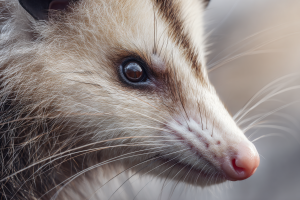 It’s not just blind luck; there’s a biological reason for this. It all comes down to their body temperature. Possums have a very low average body temperature for a mammal, typically running somewhere between 94-97°F (34-36°C).
The rabies virus, it turns out, doesn’t like this. It struggles to survive and replicate in such a “cold” environment. Most strains of the virus simply can’t take hold. This unique physiology makes possums remarkably resistant to rabies, a fact that wildlife experts and veterinarians confirm. While it’s not 100% impossible, the risk is so low that it’s not considered a primary health concern.
What a Rabid Possum Would Look Like (On the Off-Chance)
That drooling, hissing possum in “bluff mode” is not rabid. A truly rabid animal exhibits neurological symptoms. It would be disoriented, perhaps lose its fear of humans, stumble, circle, or act genuinely aggressive—lunging and biting without being cornered. This is the complete opposite of a healthy possum’s “play dead” defense. If you ever see any wild animal acting this way, call animal control immediately. But the chance of that animal being a possum is next to zero.
Comparing the Risk: Possums vs. Other Backyard Wildlife
Let’s put this in perspective. According to the Centers for Disease Control (CDC), the primary carriers of rabies in the wild are raccoons, skunks, foxes, and bats. Possums are rarely even on the list. You are practicing good animal safety by being wary of wildlife, but your fear is better directed at a raccoon that’s acting strangely, not a possum that’s just waddling by.
What About Biting? Do Possums Bite?
This is the next logical question. If they have all those teeth, they must use them, right? Again, only as an absolute, final, last resort.
When and Why a Possum Might Bite
A possum will only bite if it is physically grabbed, cornered, and believes it is about to be killed. A mother possum might also bite if you are threatening her young. This is not a “lunge and attack” situation. You would have to be actively handling or attacking the possum for a bite to occur.
If you simply stumble upon one, your very presence is usually enough to send it shuffling away or freezing in place. If you give it space, it will take the first opportunity to waddle off into the darkness. Just leave it be, and it will gladly return the favor.
“Playing Possum”: A Survival Tactic, Not a Sickness
More often than not, a possum that can’t escape will “play possum.” This isn’t a conscious choice; it’s an involuntary comatose-like state brought on by extreme fear. It’s a true physiological response, almost like a seizure.
The animal will flop over, its body will go stiff, its breathing will slow, and it will often stick its tongue out and drool. To make the “dead” act even more convincing, it secretes a foul-smelling, greenish mucus from its anal glands. This is a brilliant evolutionary trick. Most predators prefer a live chase and kill, and they’ll lose interest in a “dead” (and frankly, bad-smelling) carcass.
Insider Tip: How to Handle a “Dead” Possum
This is a common mistake folks make. They find a “dead” possum on the porch in the morning and think they need to dispose of it. Do not poke it, prod it, or try to move it. It’s just waiting for you (the predator) to leave. Go inside, close the door, and give it peace. It can stay in this state for anywhere from a few minutes to several hours. Once it feels the danger has truly passed, it will “wake up,” look around, and be on its way.
Possums and Your Pets: A Practical Look
This is a very real concern. I’ve had to break up a few standoffs on my back porch between my old hound dog and a startled possum.
Keeping Cats and Dogs Safe
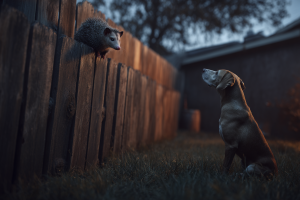 Most of the time, possums and house pets will ignore each other. A possum sees a dog or cat as a predator and will try to avoid it. The danger comes when a curious dog or an outdoor cat corners a possum. The possum will go into its defensive “hiss and drool” display, and an amped-up dog might take this as a challenge and attack.
In such a fight, both animals can get hurt. While the possum is unlikely to give your pet rabies, a bite is still a bite. It can get infected just like any other wound.
My Best Advice: The single best way to prevent conflict is to bring your pet food inside at night. Don’t leave a bowl of kibble on the porch. That’s an open invitation that draws possums, raccoons, and skunks right to your door, forcing an encounter with your pets.
The Truth About Possums and Chickens
This is a huge question for folks with a backyard flock. Let’s be honest: possums are opportunists. They are not mighty hunters and are very unlikely to tangle with a full-grown hen. However, they will absolutely take advantage of an easy meal. This means they will eat eggs and, yes, they will sometimes take a small chick or a young pullet.
The solution here isn’t to wage war on possums; it’s to secure your coop. A possum can slip through a surprisingly small hole. Your real problem is a gap in the fence or a door that doesn’t latch.
After a Scuffle: Vet Visits and Wound Care
If your pet does get into a fight with a possum, bring your pet inside and calm it down. Check for injuries. If your pet was bitten or scratched, clean the wound gently with soap and water and call your veterinarian. Even though the rabies risk is tiny, any wild animal bite can cause a nasty bacterial infection. Your vet will want to clean the wound properly and make sure your pet’s vaccinations (rabies and tetanus) are up to date.
Health Concerns Beyond the Bite
While rabies isn’t the worry, possums aren’t entirely without risk. Like any wild animal, they can carry other diseases and parasites. This isn’t to scare you, just to give you the full picture so you can use common sense.
Equine Protozoal Myeloencephalitis (EPM)
This is the most significant real health risk associated with possums, but it only affects horses. Possums can be carriers of a parasite (Sarcocystis neurona) that they pass in their droppings. If horses ingest feed, hay, or water contaminated with these droppings, they can develop EPM, a serious neurological disease.
This is why it’s critical for anyone with horses to secure their feed bins, keep hay off the ground, and use water troughs that are harder for wildlife to access. This is a case where possum-proofing is a serious part of animal husbandry, a fact according to veterinary sources.
Leptospirosis and Other Bacteria
Possums, like raccoons and rodents, can carry bacteria like Leptospirosis or Salmonella in their urine and feces. This can contaminate soil or standing water. This is not a risk from just seeing a possum. The risk comes from, say, working in contaminated soil with an open cut on your hand, or drinking from a contaminated water source.
The main takeaway here is simple hygiene. Don’t handle wild animals, dead or alive. If you have to clean up an area where possums have been (like under a shed or in a garage), wear gloves, maybe a mask if it’s a dusty, enclosed space, and wash your hands thoroughly with soap and water afterward. This is the same common-sense advice you’d follow for dealing with any wildlife.
Let’s Talk Parasites: Fleas, Ticks, and Mites
People often see possums as “dirty” or “rat-like” and assume they’re covered in pests. And like any wild mammal, they can carry fleas, mites, and ticks. But here’s a surprising fact that turns that idea on its head.
The Good Possums Do: Nature’s Clean-Up Crew
It feels wrong to only talk about the (very small) risks without mentioning the good these critters do. I’ve come to respect them, honestly. They’re nature’s own little sanitation crew, and they work for free.
A Free Pest Control Service: The Tick Eaters
This is my favorite fact about possums. You may have heard that possums eat thousands of ticks. The original study has been quoted all over, but here’s the real story: possums are meticulous groomers. They are like little cats, constantly cleaning themselves.
As they walk through the grass, ticks latch onto them, just as they would a deer or a dog. But the possum, in its constant grooming, finds these ticks and eats them. They don’t hunt ticks, but they are incredibly efficient at removing and destroying the ones that try to feed on them. One study estimated they can kill up to 95% of the ticks that land on them. In an area where ticks and the diseases they carry are a real concern, having a possum around is a blessing.
Your Garden’s Unsung Hero
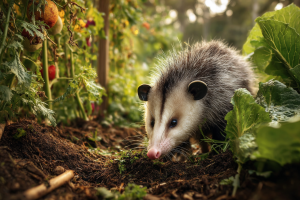 Possums are true omnivores. That means they have a taste for the very things that plague a vegetable garden. They love to eat slugs and snails. They’ll munch on beetles and other ground-dwelling insects. They’ll clean up all the fallen, rotten fruit under your trees before it can attract yellow jackets and other pests.
A Surprising (and Scaly) Snack: Possums and Venomous Snakes
Here is a piece of old-timey wisdom that happens to be true: possums kill and eat snakes, including venomous ones. They have a partial immunity to the venom of most North American pit vipers (rattlesnakes, copperheads, and water moccasins). While they don’t go tracking them down, if they encounter one, they will often kill and eat it. Having a possum patrol your property is one of nature’s best ways to have fewer venomous snakes.
How to Keep Possums Out: A Humane & Practical Guide
Respecting them is one thing, but that doesn’t mean you want them living on your front porch or in your attic. If they’re getting a little too close for comfort, deterring them is all about the grocery store. Possums are ruled by their stomachs, and if you close the kitchen, they’ll move on.
Rule #1: Secure the Buffet (Trash and Compost)
Your garbage can is a 24-hour buffet. A possum will happily knock over a can to get at last night’s leftovers.
- The Fix: Get a trash can with a locking lid, or use a bungee cord to secure the lid to the handles. It’s a simple step that works wonders.
- Compost: If you have an open compost pile, avoid putting meat, dairy, or oily foods in it. Stick to vegetable scraps, coffee grounds, and yard trimmings. Better yet, use an enclosed compost tumbler.
Rule #2: The Pet Food and Bird Seed Problem
I’ll say it again: Bring pet food in at night. This is the #1 reason possums come onto a porch. And don’t forget bird feeders. Possums (and raccoons, and rodents) are more than happy to clean up all the seed that spills on the ground. Use a catch-tray under your feeder or sweep up the spill before dark.
Rule #3: Remove “Welcome Home” Signs (Shelter)
A possum isn’t looking for a fight; it’s looking for a dark, quiet place to sleep during the day. Don’t offer them one.
- Seal up holes under your porch, shed, or foundation.
- Pro Tip: Use 1/4-inch hardware cloth, not chicken wire. A determined raccoon or possum can rip right through chicken wire. Hardware cloth is a sturdy metal mesh.
- Keep woodpiles neat and, if possible, raised off the ground.
- Trim back overgrown shrubbery, especially against the side of the house.
Do Natural Repellents Actually Work?
This is a common question, and the answer is… sort of.
- Motion-Activated Sprinklers: These work very well. Possums hate a surprise shower and will learn to avoid the area.
- Ammonia-Soaked Rags: They dislike the smell. You can place rags soaked in ammonia (or bleach, but never mix them) near their den. The problem? It smells awful for you, too, and you have to re-soak the rags every time it rains.
- Predator Urine (Coyote, Fox): This can work, but it’s expensive, washes away, and is generally hit-or-miss.
The best repellent, bar none, is taking away their food and shelter.
Handling a Close Encounter: When a Possum is In Your House
Sometimes, despite your best efforts, one will find its way into your garage, your attic, or even the henhouse.
A Possum in the House or Garage
First, don’t panic. I promise, the possum is ten times more scared than you are.
- Don’t Corner It: This is the only time it might try to snap.
- Isolate It: Close interior doors to keep it in one area (e.g., the garage or a single room). Remove any pets from the area.
- Give It an Exit: Open any exterior doors or windows in that room.
- Leave It Alone: Back away, turn off the lights in that room, and be patient. It will find the opening and leave on its own when things are quiet.
- The Broom Method (If Needed): If it’s in a very open area like a garage, you can gently “herd” it toward the open door with a long push broom. Don’t poke or jab it; just use the wide end of the broom to encourage it to move in the right direction.
A Note on Trapping: Why It’s Often the Wrong Answer
Many folks’ first instinct is to buy a live trap. I urge you to think again. First, in many places, it’s illegal to trap and relocate wildlife. You can be fined for it. Second, it’s often a death sentence for the animal. You’re dropping it in a strange territory where it doesn’t know where to find food or water and has to fight other animals for a spot.
And most importantly, it doesn’t work. If you have a hole under your shed and a full trash can, trapping one possum just opens up a “vacancy” for the next one to move in. The only real, long-term solution is to remove the attractants (food) and seal the entry points (shelter).
When to Call a Professional
You can handle 99% of possum encounters on your own with patience. But if an animal appears obviously sick (circling, stumbling, acting truly aggressive) or if it’s trapped in a wall, chimney, or attic space you can’t access, it’s time to call your local wildlife rehabilitation or removal service. Do not try to handle a sick or trapped animal yourself. A professional will not only remove the animal but will also, and more importantly, find and seal the entry points for you.
So, that rustle in the dark… it’s usually just a shy neighbor passing through, looking for a snack. Possums are not the rabid menaces of campfire stories. They are quiet, non-aggressive animals that, left to their own devices, are a bigger benefit to your yard than a threat.
They’re a great example of how a little understanding can replace a lot of fear. By knowing their true nature—their bluffs, their diet, and their unique biology—you can stop worrying. By securing your trash, bringing in the pet food, and sealing up holes, you can live alongside them just fine. A little common sense and a little space are all it takes.
Frequently Asked Questions (FAQs)
Q: Do possums get rabies often?
A: No, it is incredibly rare for possums to get rabies. Their low body temperature (94-97°F) makes it very difficult for the rabies virus to survive and multiply. While they are mammals and can technically get it, they are considered highly resistant. You are at a much greater risk from animals like raccoons, bats, and skunks.
Q: Will a possum attack my dog or cat?
A: A possum will not seek out a fight with your pet. They are not aggressive and will try to avoid confrontation. An attack would only happen if your pet corners the possum and the possum feels it has no choice but to defend itself. The possum’s main defenses are hissing and “playing dead.” The best way to prevent any conflict is to bring pet food indoors at night so you don’t attract them to your porch.
Q: What does it mean when a possum hisses at me?
A: Hissing, along with baring its 50 teeth and drooling, is a defensive bluff. It’s the possum’s way of trying to look as scary and unappealing as possible so that you will leave it alone. It is not a sign of aggression or an impending attack. It’s a sign of a very frightened animal. If you see this, just back away slowly and give it space.
Q: I found a baby possum. What should I do?
A: First, make sure it’s truly an orphan. Mother possums carry their young on their back, and sometimes a baby will fall off. If the baby is over 7 inches long (not including the tail), it’s old enough to be on its own. If it’s smaller, or if you find several, the best thing to do is call a licensed wildlife rehabilitator. Do not try to raise it or feed it yourself. Cow’s milk can be fatal to them, and it’s illegal in most places to keep them as pets.
Q: Do possums carry diseases I should worry about?
A: Aside from rabies (which is rare), the main disease of concern is EPM (Equine Protozoal Myeloencephalitis), which is a serious risk for horses that might eat feed contaminated with possum droppings. Like other wildlife, they can also carry bacteria like Leptospirosis in their urine. The best practice is to simply use common sense: don’t handle possums, and wear gloves when cleaning any areas where wildlife has been.
Q: How can I tell if a possum is sick?
A: A healthy possum is shy and active only at night. A sick possum might be active during the day, appear disoriented, stumble, or act oddly bold or genuinely aggressive (not just hissing). Remember, “playing possum” is an involuntary response to fear, not a sign of sickness. If you truly believe an animal is ill or injured, do not approach it. Call your local animal control or a wildlife rehabilitator for advice.
Q: Are possums related to rats?
A: Not at all! This is a common misconception. Rats are rodents, but possums are marsupials. This means they are in a completely different order of mammals, more closely related to kangaroos and koalas. The mother possum raises her tiny, undeveloped young in a pouch, just like a kangaroo.