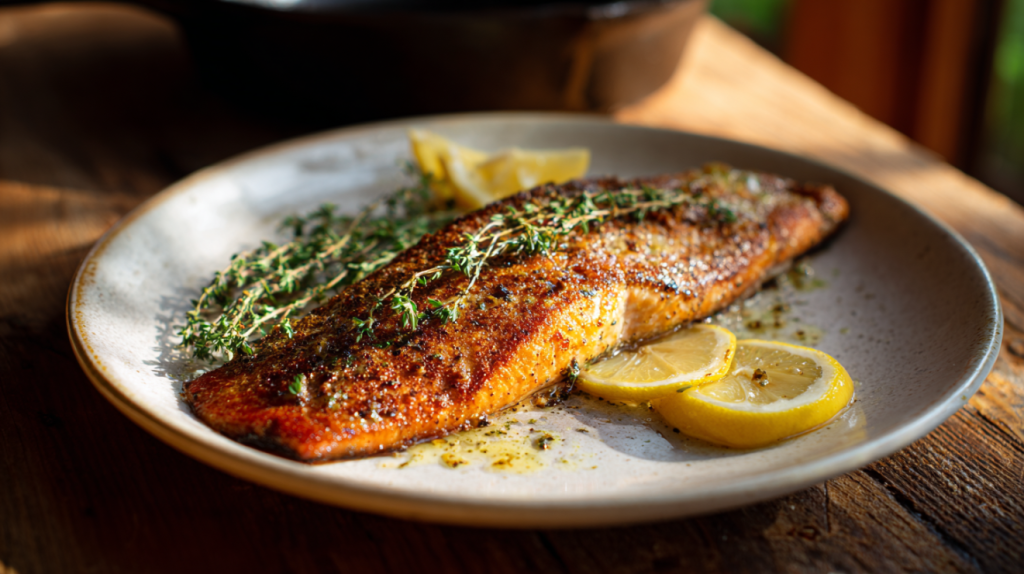
A perfectly seared steelhead trout recipe is one of the finest things you can put on a dinner plate — crispy, golden skin giving way to tender, rose-pink flesh that melts the second it hits your tongue. This is the kind of dish that looks like you spent all afternoon in the kitchen, but the truth is, it comes together in about twenty minutes with a hot skillet and a handful of good ingredients.
If you have tried cooking fish at home and ended up with skin that stuck to the pan, flesh that fell apart, or a finished plate that tasted like nothing much at all, I understand that frustration. I have been there too, more years ago than I care to count. But once you learn the simple secrets to a proper sear — and they are simple — you will never go back to the old way of doing things. This article walks you through every last detail, from choosing your fillets to pulling them off the heat at exactly the right moment.
Why Steelhead Trout Deserves a Place at Your Table
Steelhead trout is one of those fish that does not get nearly the attention it deserves. People reach right past it at the market for salmon, and I understand why — salmon is familiar and safe. But steelhead trout has a flavor all its own: milder, a touch sweeter, and with a delicacy that salmon cannot always match. The flesh is that same beautiful coral pink, the texture is buttery and fine, and it takes to a hot skillet like it was born for it.
I first started cooking steelhead trout regularly about fifteen years ago when a neighbor brought some back from a fishing trip and left a couple of fillets on my porch wrapped in newspaper. I had cooked plenty of rainbow trout before — small pan-sized fish dredged in cornmeal and fried in bacon grease — but steelhead was a different animal entirely. Bigger fillets, richer flesh, and that skin that crisps up so beautifully you would swear it was a fancy restaurant trick.
What I learned over the years is that steelhead trout rewards simplicity. You do not need complicated sauces or a dozen ingredients. A hot cast iron skillet, good butter, a little garlic, some fresh herbs, and a squeeze of lemon — that is the whole story. The fish does the rest of the work for you. If you are exploring more of what Southern kitchens have to offer, The Complete Guide to Southern Cooking: Techniques, Traditions & Time-Tested Wisdom is a wonderful place to start.
The Ingredients That Make This Steelhead Trout Recipe Shine
The beauty of this dish is in the quality of what goes into the pan, not the quantity. Every ingredient here has a job, and none of them are filler.
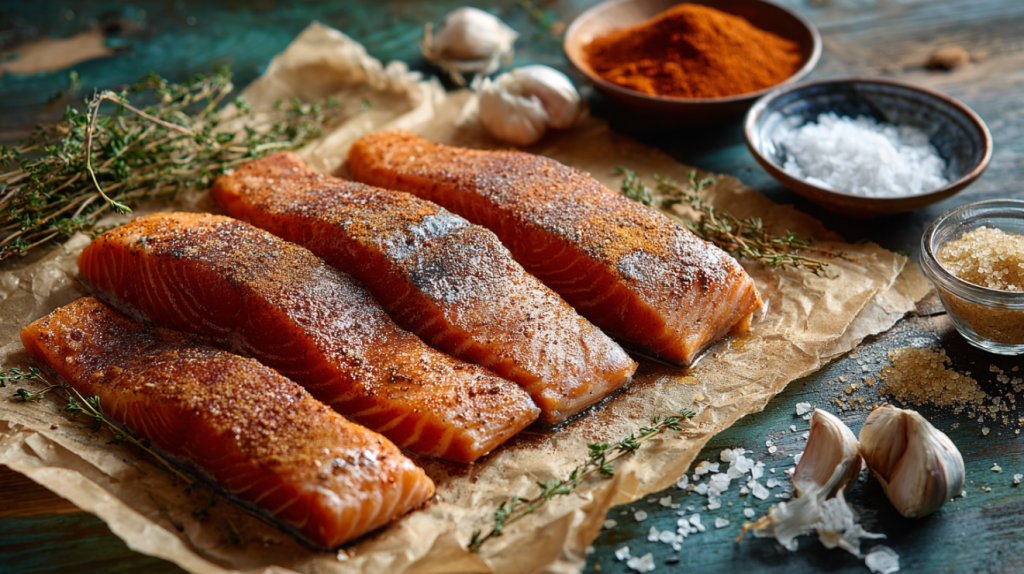
Start with the trout itself. You want skin-on fillets, and you want them fresh. Look for flesh that is firm to the touch, with a clean, almost sweet smell — no fishy odor whatsoever. If it smells like the ocean on a bad day, walk right past it. The skin should be intact and tight, not peeling or dried out. Most fillets come in around six ounces each, which is just right for a single serving.
The seasoning is purposely simple. Kosher salt is essential — it clings to the flesh better than fine table salt and gives you more control. Freshly ground black pepper adds a warmth that pre-ground pepper just cannot deliver. Smoked paprika brings a gentle smokiness that pairs perfectly with the natural sweetness of the trout, and a small amount of garlic powder builds a savory base without overpowering the fish. If you want to learn more about building seasoning blends from scratch, I cover that in detail in A Guide to Southern Seasoning Blends and How to Make Your Own.
You Must Use real Butter – NOT Margarine!
The butter is not optional — it is what transforms this from a good piece of fish into something truly memorable. As it melts and foams in the pan with the smashed garlic and fresh thyme, it becomes an aromatic basting liquid that soaks into the top of the fillet while the skin crisps underneath. Unsalted butter gives you control over the salt level, which matters when you are working with a delicate fish.
The lemon goes on at the very end — a bright, sharp squeeze of juice right when the fillets come out of the pan. It cuts through the richness of the butter and wakes the whole dish up. Do not skip it. The difference between steelhead trout with lemon and without is the difference between good and unforgettable.
Quick Substitution Guide:
- Steelhead trout — arctic char (closest match), salmon (richer, bolder), rainbow trout (smaller fillets, adjust cook time)
- Unsalted butter — ghee or clarified butter (higher smoke point, slightly nuttier)
- Fresh thyme — fresh rosemary (use sparingly, stronger flavor) or fresh dill (lighter, pairs beautifully)
- Smoked paprika — sweet paprika (less smoky) or a pinch of cayenne for heat
How to Cook Steelhead Trout With Perfectly Crispy Skin
This is where I stand right next to you at the stove and walk you through every moment. The recipe card gives you the bones of it, but this is where you learn to feel your way through the cooking — the way it was taught to me.
Getting Your Fillets Ready
Take your fillets out of the refrigerator about fifteen minutes before you plan to cook them. Cold fish hitting a hot pan drops the temperature fast, and that means the skin steams instead of searing. You do not need the fish at full room temperature — just take the deep chill off.
Now, here is the step that matters more than anything else in this entire recipe: dry the fish. I mean thoroughly, completely dry. Lay each fillet on a double layer of paper towels, skin-side down. Take another paper towel and press it firmly onto the flesh side. Then flip them over and press again on the skin side. If you see any moisture at all, get a fresh paper towel and go again. Water is the enemy of a crispy sear. Every drop of moisture on that skin turns to steam in the pan and creates a barrier between the skin and the iron. I cannot stress this enough.
Mix your spices together in a small bowl — salt, pepper, smoked paprika, garlic powder — and season the flesh side only. Not the skin side. The skin is going down on the iron first and any seasoning on it will burn before the skin has time to crisp.
The Sear — Getting That Skin Right
Set your cast iron skillet over medium-high heat and let it get properly hot. This takes a good three to four minutes, and I know the temptation is to rush it, but do not. Add the olive oil and watch it. You are waiting for the oil to shimmer — it will look like heat waves over a highway in July. That shimmer tells you the oil is ready. If you see it start to smoke, pull the pan off the heat for a moment and let it calm down. You want just below the smoke point. If you are still getting comfortable with your cast iron, I cover everything from seasoning to temperature control in Cast Iron Cooking: The Southern Way.
Lay each fillet into the pan skin-side down, going away from you so the oil does not splash toward your hands. You will hear a sharp, confident sizzle the moment the skin hits the iron. If you do not hear that sizzle, the pan is not hot enough — but at this point, if you followed the steps above, you will hear it.
Immediately take a fish spatula and press each fillet down gently for about thirty seconds. The skin wants to contract and curl when it hits the heat, and this gentle pressure keeps it flat and in full contact with the iron. After thirty seconds, let go. The skin will hold.
Allow The Steelhead Trout To Cook
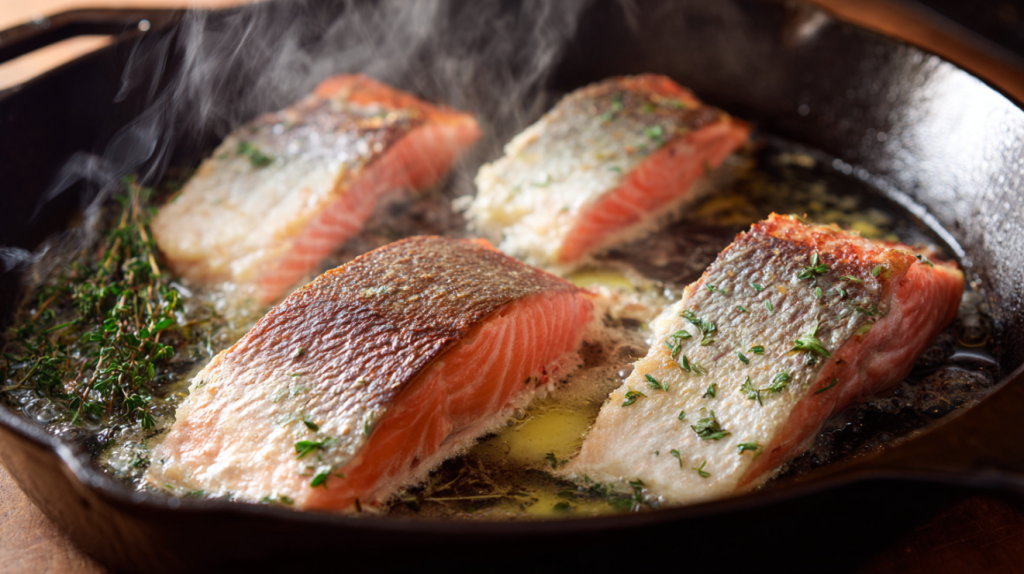
Now leave them alone. This is the hard part for a lot of people. You want to fuss, you want to peek, you want to lift the edge and check. Do not. Let the heat and the iron do the work. You are going to cook skin-side down for four to five minutes. Here is how you know when to stop waiting: look at the sides of the fillet. You will see the flesh changing color from translucent raw pink to opaque, creamy white, working its way up from the bottom. When that opaque line has climbed about two-thirds of the way up the sides of the fillet, the skin side is done.
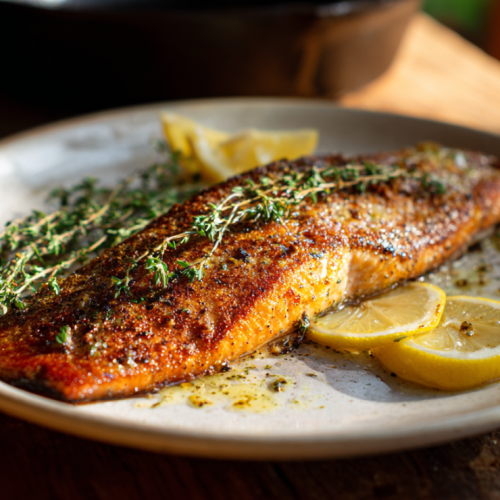
Carefully lift one edge with the fish spatula. The skin should release cleanly from the pan with no sticking. It should be deep golden brown, almost bronze, and rigid — like a thin, savory cracker. If it still feels like it is clinging to the pan, give it another thirty seconds. When skin is ready to let go, it lets go on its own.
The Butter Baste — Building Flavor Fast
With the skin beautifully crisped and the fillets still skin-side down, push them to one side of the pan and add the butter, smashed garlic, and thyme sprigs to the open space. The butter will melt fast and start foaming immediately. You will hear it sputtering and popping, and then the most beautiful aroma will fill your kitchen — toasted butter, roasted garlic, and warm herbal thyme. That smell is how you know everything is going exactly right.
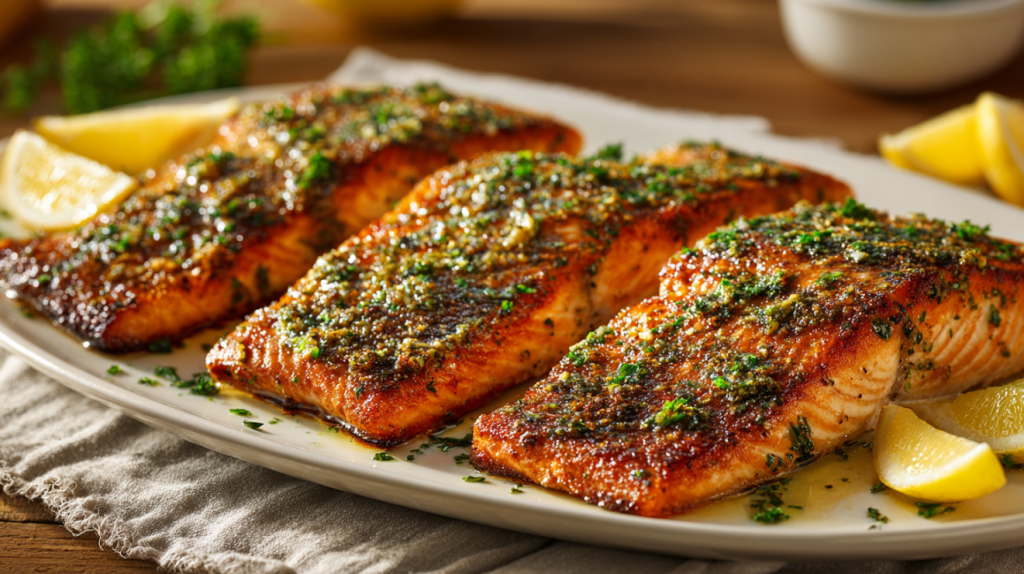
Tilt the pan slightly toward you and use a large spoon to scoop up that melted herb butter and pour it right over the tops of the fillets. Do this continuously for about a minute, basting each fillet three or four times. You are cooking the top of the fish with that hot butter while the skin stays pressed to the iron underneath. This is how you get the fish cooked through evenly without overdoing the skin. Understanding how butter behaves at high heat is part of knowing your fats, something I talk about in The Three Essential Southern Fats: Bacon Grease, Lard, and Butter.
The USDA recommends cooking fish to an internal temperature of 145°F for food safety, but many experienced cooks prefer to pull steelhead trout at 135°F, as the carryover heat will bring it up another five degrees or so off the heat. At 135°F to 140°F, the flesh is perfectly flaky, still moist, and just barely translucent at the very center.
The Flip and Finish
Now, and only now, flip the fillets. Use your fish spatula, slide it under the skin gently, and turn each piece over. Cook flesh-side down for just one to two minutes. You are not trying to sear the flesh hard — you are just finishing the cook and adding a tiny bit of color. The flesh side should be barely golden, not browned.
Pull the fillets out of the pan, set them skin-side up on the serving plate so that beautiful crispy skin is showing, and squeeze fresh lemon juice over each one immediately while they are still hot. The acid hits that butter-soaked flesh and everything comes alive. Scatter a little chopped parsley over the top, lay a couple of lemon slices alongside, and you are done.
What to Serve Alongside Steelhead Trout
This trout is rich enough from the butter baste that you want sides that bring some brightness and lightness to the plate. A simple salad of bitter greens — arugula or watercress — dressed with lemon vinaigrette is one of my favorite pairings. The peppery bite of the greens cuts right through the richness of the fish, and the citrus in the dressing echoes the lemon you squeezed over the trout.
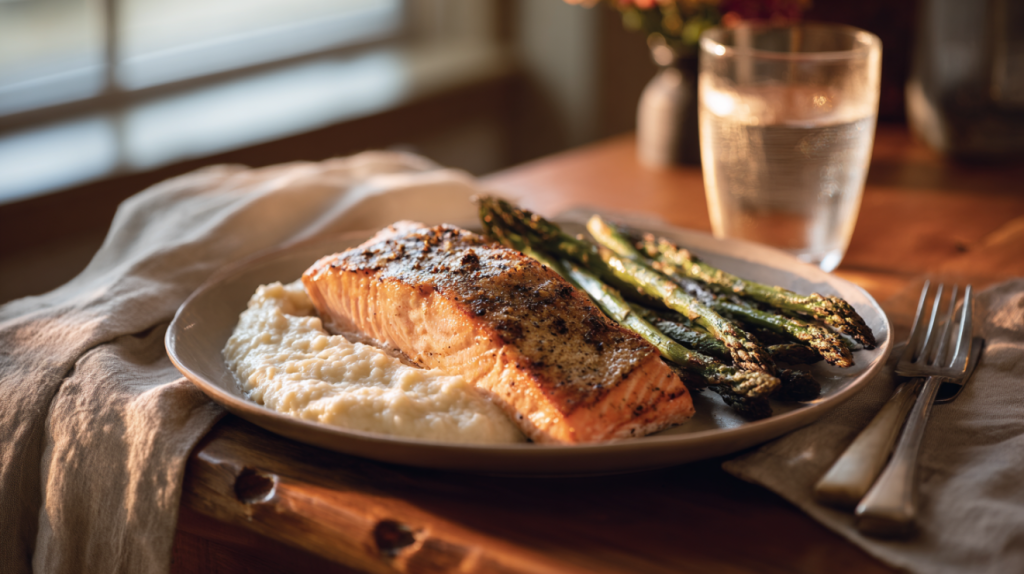
For a heartier plate, roasted asparagus or green beans work beautifully. A bed of creamy grits is another natural match — the mild corn flavor does not compete with the trout, and the creamy texture plays against that crispy skin in the most wonderful way. If you have never made proper grits from scratch, I walk through every detail in The 5 Secrets to Making Perfect, Creamy, Lump-Free Grits.
For a weeknight supper, this trout with a simple green salad and some crusty bread is all you need. For company or a Sunday dinner, add the grits, the roasted vegetables, and maybe a chilled white wine, and you have a meal that looks and tastes like you hired a caterer.
Favorite Ways to Change It Up
Cajun-Spiced Steelhead Trout
Swap the smoked paprika and garlic powder for a full tablespoon of Cajun seasoning. The heat and the earthy spice blend — cayenne, oregano, thyme, garlic — transform the fillet into something bold and lively. My son-in-law asks for this version every time he is over for dinner, and I always oblige because it takes no extra effort at all.
Brown Butter and Pecan
After you remove the fillets, let the butter in the pan cook a minute longer until it turns deep amber and smells nutty and warm. Toss in a handful of chopped pecans and let them toast for thirty seconds in the brown butter. Spoon the whole thing over the trout. The toasted nuts add crunch and a richness that makes this feel like a special occasion dish.
Lemon-Dill Steelhead Trout
Replace the thyme with generous bunches of fresh dill — both in the basting butter and as a garnish. Add a spoonful of capers to the pan along with the butter. The dill and capers bring a bright, almost Scandinavian quality to the dish that is lighter and more aromatic than the classic version.
Honey-Mustard Glazed
Mix two tablespoons of whole grain mustard with one tablespoon of honey and brush it over the flesh side before searing. The glaze caramelizes when you flip the fillet and creates a sweet-tangy crust. This one is a crowd-pleaser for folks who think they do not like fish — the glaze makes it incredibly approachable.
How to Store, Reheat, and Plan Ahead
Steelhead trout is best eaten the day you cook it — that crispy skin is at its peak right out of the pan. But life does not always cooperate with our plans, so here is how to handle leftovers and make-ahead situations.
Store leftover cooked trout in an airtight container in the refrigerator for up to two days. Lay the fillets in a single layer rather than stacking them, and place a piece of parchment paper between them if you must stack. This keeps the skin from getting soggy against another fillet.
For reheating, the best method is a low oven — 275°F for about ten minutes, placed on a wire rack set over a baking sheet. This warms the fish gently without drying it out and gives the skin a chance to re-crisp slightly. The microwave will get it hot, but the skin will be soft and the texture suffers. I always recommend the oven method.
If you want to get ahead for a dinner party, you can season the fillets and leave them uncovered on a plate in the refrigerator for up to four hours before cooking. This actually helps dry the skin out even further, which means an even crispier sear. Do not season them more than four hours ahead, though — the salt will start to cure the flesh and change the texture. For more detailed guidance on storing and reheating fish and other cooked proteins, Freezing Southern Cooked Foods: A Complete Guide covers everything you need to know.
Smart Ways to Use Leftover Steelhead Trout
Trout and Grits Bowl
Flake the leftover trout over a bowl of hot, creamy grits and top with a poached egg, a drizzle of hot sauce, and some sliced scallions. The warm grits bring the cold fish back to life, and the runny egg yolk ties the whole bowl together into something that feels brand new.
Steelhead Trout Salad
Flake the cold trout into large chunks and toss it with mixed greens, sliced avocado, cherry tomatoes, and a simple lemon vinaigrette. It makes a lunch that is light, satisfying, and far better than anything you would get at a restaurant.
Trout Tacos
Warm some small flour tortillas, pile on flaked steelhead trout, and top with shredded cabbage, a squeeze of lime, and a drizzle of crema or sour cream. A few pickled onions on top and you have a weeknight taco situation that is fast and full of flavor.
Trout Fried Rice
Flake the leftover trout into day-old rice with soy sauce, sesame oil, scrambled egg, and whatever vegetables you have on hand. The smoky, buttery flavor of the trout adds a richness that takes basic fried rice to another level entirely.
Pan-Seared Steelhead Trout Recipe
Equipment
- 12-inch cast iron skillet
- fish spatula
- Paper towels
- Meat Thermometer
Ingredients
Steelhead Trout
- 4 steelhead trout fillets skin-on, about 6 oz each
- 1 tbsp olive oil
- 2 tbsp unsalted butter
- 1 tsp kosher salt
- 0.5 tsp black pepper freshly ground
- 0.5 tsp smoked paprika
- 0.25 tsp garlic powder
Finishing Touches
- 3 garlic cloves smashed
- 4 fresh thyme sprigs
- 1 lemon half for juice, half sliced for serving
- 1 tbsp fresh parsley chopped, for garnish
Instructions
Prepare the Trout
- Pat the steelhead trout fillets completely dry on both sides with paper towels. This is the most important step for crispy skin.
- In a small bowl, mix together the kosher salt, black pepper, smoked paprika, and garlic powder. Season the flesh side of each fillet evenly with the spice mixture.
Sear the Trout
- Heat the olive oil in a 12-inch cast iron skillet over medium-high heat until the oil just begins to shimmer.
- Place the fillets skin-side down in the hot skillet. Press each fillet gently with the back of the spatula for the first 30 seconds to prevent curling.
- Cook skin-side down without moving for 4-5 minutes, until the skin is deep golden and crispy and the flesh has turned opaque about two-thirds of the way up the sides.
- Add the butter, smashed garlic cloves, and thyme sprigs to the skillet. Once the butter melts and foams, tilt the pan and baste the tops of the fillets with the herb butter for about 1 minute.
- Flip the fillets and cook flesh-side down for just 1-2 minutes more, until the internal temperature reaches 135°F at the thickest part.
Finish and Serve
- Remove the fillets from the skillet and squeeze fresh lemon juice over each one. Garnish with chopped parsley and serve immediately with lemon slices alongside.
Nutrition
Rate This Recipe
Share This Recipe With The Ones You Love!Everything You Want to Know About Cooking Steelhead Trout
What is the difference between steelhead trout and salmon?
Steelhead trout and salmon look similar with their pink flesh, but steelhead has a milder, slightly sweeter flavor and a more delicate texture. Steelhead is actually a form of rainbow trout that migrates to the ocean and back, which gives it a richer flavor than a standard freshwater trout. Both cook the same way, but steelhead is more forgiving if you accidentally go a minute too long.
Do you eat the skin on steelhead trout?
Absolutely, and you should. When it is seared properly in a hot cast iron skillet, the skin becomes thin, crispy, and full of flavor — almost like a savory chip. The skin also helps hold the fillet together while it cooks. If you pull it off, you lose the best part of the dish.
How do you keep steelhead trout skin from sticking to the pan?
Three things will prevent sticking every single time: a properly seasoned cast iron pan, oil that is heated until it shimmers, and fish that is patted completely dry. If you do all three, the skin will release on its own when it is ready. If it sticks, it just needs another thirty seconds.
What internal temperature should steelhead trout be cooked to?
The USDA recommends 145°F for all fish. Many home cooks and professional chefs pull steelhead trout from the heat at 135°F and let carryover cooking bring it up the rest of the way, which results in a moister, more tender fillet. Use a reliable instant-read thermometer inserted into the thickest part.
Can you cook steelhead trout in a regular nonstick pan instead of cast iron?
You can, but the skin will not get as crispy. Nonstick pans do not hold or transfer heat the same way cast iron does, and that intense, consistent contact heat is what creates the crispiest skin. If nonstick is all you have, it will still taste good — the skin just will not have that shatteringly crispy texture.
How do you know when steelhead trout is done without a thermometer?
Watch the sides of the fillet while it cooks skin-side down. The flesh will turn from translucent pink to opaque white from the bottom up. When the opaque line reaches about two-thirds of the way up the side and only the very top remains slightly translucent, it is time to baste and flip. After the brief flip, the fish is done. You can also gently press the thickest part — it should feel firm but still have a slight give, like pressing the pad of your thumb.
Can I bake steelhead trout instead of pan-searing it?
You can bake it at 400°F for about twelve to fifteen minutes depending on thickness. The flesh will be just as tender and flaky, but you will not get the same crispy skin you get from a hot cast iron sear. If you want the best of both worlds, sear the skin side in the skillet for three minutes, then transfer the whole skillet to a 400°F oven to finish for six to eight minutes.
Go Make This Steelhead Trout and See for Yourself
This steelhead trout recipe is the kind of meal that makes you feel like a real cook — the kind who knows their way around a hot pan and a good piece of fish. The skin shatters when you cut into it, the flesh is pink and tender, and every bite carries the warmth of butter, garlic, and thyme. It is elegant without being fussy, simple without being boring, and fast enough for a Tuesday night but impressive enough for the finest company you have.
I hope you will try this soon. And when you pull those fillets out of the pan and see that golden, crackly skin staring back at you, I hope you feel the same pride I do every time I make it. Come back and leave a note to tell me how it turned out — I read every single one, and nothing makes my day like hearing that dinner was a success.


This recipe is perfect for campfire cooking, thanks for sharing,