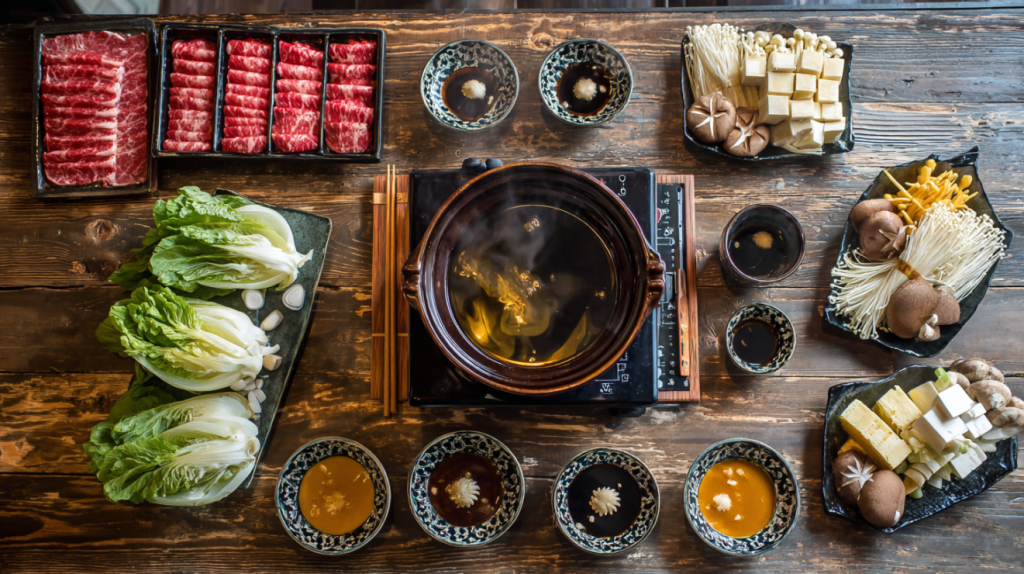
There is something almost magical about a shabu shabu recipe that brings everyone to the table and keeps them there — swishing thin slices of beef through a steaming pot of broth, laughing, reaching across for mushrooms and greens, and making the kind of meal that turns an ordinary evening into something people remember.
If you have always wanted to try making shabu shabu at home but felt like it might be too complicated or require ingredients you could not find, I want to set your mind at ease right now. This is one of the simplest and most rewarding meals you will ever put together. The real work is in the preparation — slicing, arranging, making two easy dipping sauces — and then the cooking happens at the table, together, with no one stuck in the kitchen. I will walk you through every step so you feel completely confident the first time you set that pot on the table.
Where Shabu Shabu Comes From and Why It Belongs on Your Table
Shabu shabu has its roots in Japan, though the concept of communal hot pot cooking stretches across much of Asia. The name itself comes from the sound the beef makes as you swish it through the broth — that gentle back-and-forth motion that cooks a paper-thin slice in just seconds. It became popular in Japan in the mid-twentieth century and has been a centerpiece of gatherings and celebrations ever since.
I first discovered this dish through a friend who had lived in Osaka for years. She made it for a small dinner party one winter evening, and I remember thinking how clever it was — a meal where the host does not have to stand over a stove all night. Everything was laid out beautifully, and the pot did all the work while we sat together and talked. I was taken with it immediately, and I have been making it my own way ever since.
What makes shabu shabu special is that it is not just a recipe — it is an experience. There is no plating, no rushing to get everything out hot at the same time. The table becomes the kitchen, and everyone cooks at their own pace. The broth starts simple, just kombu and water, and by the end of the meal it has absorbed the essence of everything that was cooked in it. That last bowl of soup at the end is a reward all on its own.
This version is the one I have settled on after years of making it. The broth is clean and pure. The dipping sauces — a bright ponzu and a rich sesame gomadare — cover every flavor you could want. And the ingredient spread is generous without being fussy. If you are looking for something to learn more about the deeper principles of building flavors through simple ingredients and layering, I go into all of that in The Complete Guide to Southern Cooking: Techniques, Traditions & Time-Tested Wisdom — the same ideas apply whether you are making a pot of greens or a Japanese hot pot.
The Ingredients That Make Shabu Shabu Shine
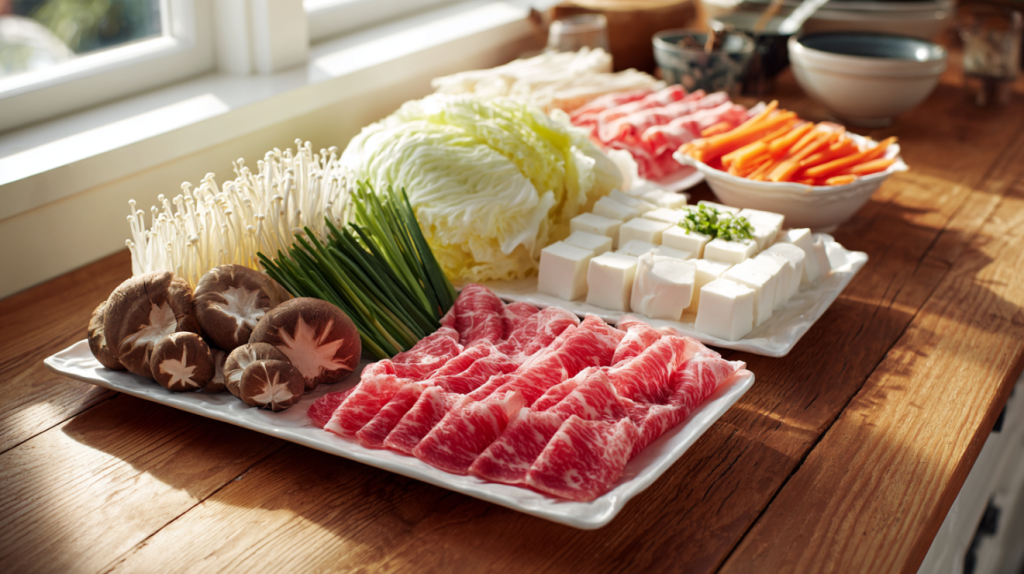
The beauty of shabu shabu is that every ingredient pulls its weight. Nothing is buried under sauce or seasoning — you taste each thing for exactly what it is. That means quality matters here more than in almost any other dish you will make.
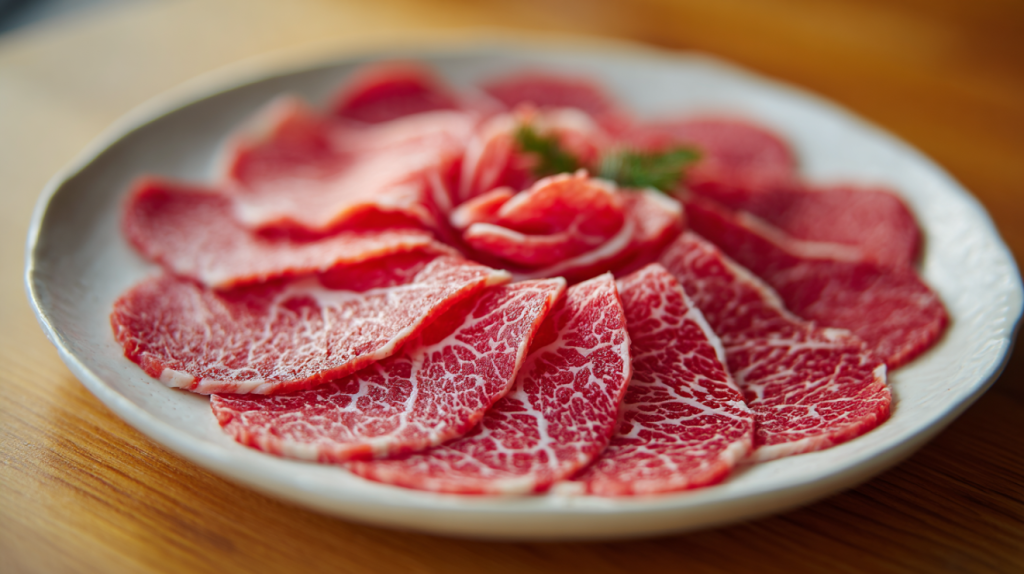
The beef is the star. You want well-marbled sirloin or ribeye, sliced so thin you can nearly see through it. Most Asian grocery stores sell beef pre-sliced and labeled for shabu shabu or sukiyaki, and I strongly recommend buying it that way if you can. If you are slicing it yourself, the trick is to partially freeze the meat for about forty-five minutes first. A sharp knife and a steady hand will get you close, but it will never be quite as uniform as what a butcher’s slicer can do. The thin cut is not just for show — it is what allows the beef to cook in seconds and stay impossibly tender.
The kombu is the foundation of your broth. This is dried kelp, and it gives the water a subtle, savory depth without making it taste fishy. You can find it in the international aisle of most grocery stores or at any Asian market. The key thing to understand about kombu is that it does its best work slowly. A long cold soak draws out the glutamates that give the broth its body. And you must — I cannot stress this enough — pull it out before the water comes to a full boil. Boiled kombu turns bitter and slimy, and it will ruin an otherwise perfect broth. The principle of building flavor gently and with patience is something I talk about in The Philosophy of Layering Flavor at Every Step, and it could not be more true here.
For the vegetables, napa cabbage is the workhorse — it wilts beautifully in the broth and absorbs all that flavor. Chrysanthemum greens add a slightly herbal, peppery note that balances the richness of the beef, though baby spinach makes a fine substitute if you cannot find them. Enoki and shiitake mushrooms bring two very different textures — the enoki are delicate and slippery while the shiitake are meaty and substantial. Firm tofu rounds things out with something hearty and mild. The glass noodles, soaked briefly in warm water, become silky and translucent in the hot broth.
The two dipping sauces give everyone options. The ponzu is bright and citrusy — perfect for the beef and lighter vegetables. The sesame gomadare is richer and nuttier, and it is wonderful with the tofu and mushrooms. Having both at the table means nobody gets bored with the same flavor bite after bite.
Quick Substitution Guide
- Beef: Pork loin sliced paper-thin works well. Chicken breast is also an option but needs slightly longer in the broth — about 30 seconds.
- Kombu: If you absolutely cannot find it, use a low-sodium chicken broth as your base, though the flavor will be different.
- Chrysanthemum greens: Baby spinach or watercress.
- Glass noodles: Thin udon noodles or rice vermicelli.
- Tahini for gomadare: Japanese sesame paste (nerigoma) is traditional, but tahini works in a pinch. The flavor will be slightly less sweet.
- Yuzu juice: Fresh lemon juice mixed with a small amount of lime juice comes close.
How to Make Shabu Shabu Step by Step
The wonderful thing about this meal is that all the real work happens before anyone sits down. Once the pot is on the table and simmering, your job is done — you just enjoy it along with everyone else. Understanding how to prepare and time everything ahead is similar to what I call getting your fixings ready, and I cover that whole approach in Mise-en-Place the Southern Way: Get Your Fixings Ready. It applies to every kind of cooking you will ever do.
Building the Broth
Start with cold water and your piece of kombu. This is not negotiable — cold water. You want to give the kombu time to release its flavor slowly. Place it in the pot and let it sit for at least thirty minutes. If you are organized enough to put it in the refrigerator a few hours ahead, even better. The broth will be noticeably richer.
When you are ready to heat it, set the pot over medium heat and bring it up slowly. You are looking for the water to start showing small bubbles around the edges. The kombu will begin to float and you might see tiny bubbles clinging to its surface. This is your signal — pull it out. If you wait until the water is at a full, rolling boil, you have gone too far. The broth will still work, but it will have a slightly bitter, vegetal taste that should not be there.
Add a splash of sake if you have it. It rounds out the broth and adds a subtle sweetness that plays beautifully against the soy-based dipping sauces. If you do not cook with alcohol, leave it out — the broth is still lovely without it.
Preparing the Spread
This is the part that takes the most time, but it is all simple knife work. Slice your beef as thin as you possibly can and lay the slices out on a platter in a single layer. Overlapping is fine, but you want each piece to be easy to grab with chopsticks. If the pieces are stuck together in a lump, people will tear them trying to separate them at the table and you lose that beautiful thin slice.
Cut the napa cabbage into pieces about two inches wide. Separate the stems from the leafy parts if you like — the stems take a bit longer to cook, so having them apart lets people add them to the broth first. Trim the root ends off your enoki mushrooms and separate them into small clusters. Remove the stems from the shiitake and slice the caps. Cut the tofu into cubes about an inch on each side. Soak the glass noodles in warm water for five minutes, then drain them.
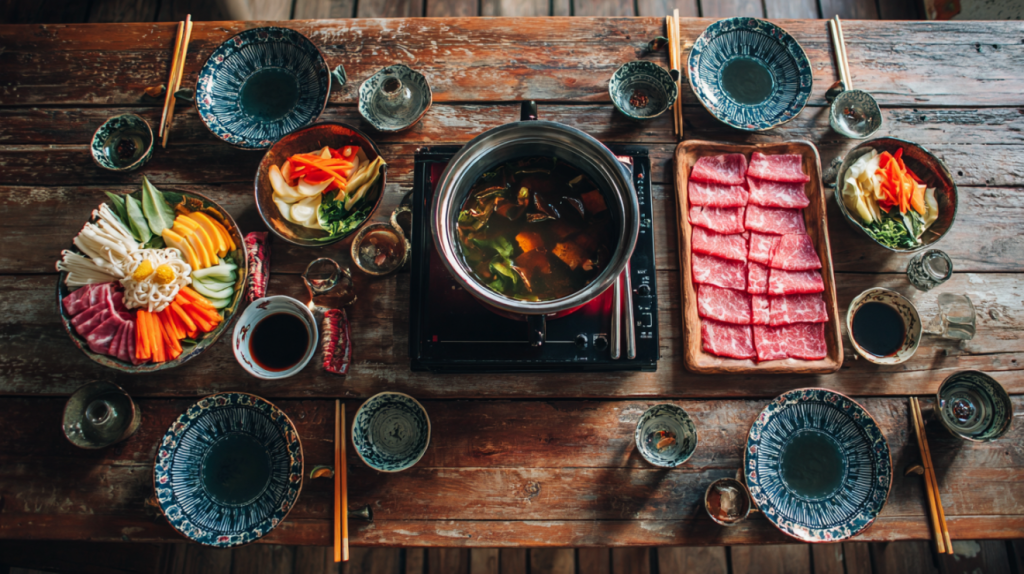
Arrange everything on one large platter or several smaller ones. There is no wrong way to do it, but grouping similar items together makes the table easier to navigate. The visual spread is part of the appeal — when people sit down and see all those colors and textures laid out, the meal feels special before anyone has taken a single bite.
Making the Dipping Sauces
The ponzu comes together in about two minutes. Whisk the soy sauce, lemon juice, rice vinegar, mirin, and dissolved dashi granules in a bowl. Taste it — it should be bright, salty, and a little sweet. If it is too sharp, add a touch more mirin. Divide it among small dipping bowls, one per person.
The sesame sauce takes just a bit more attention. Stir the tahini with the soy sauce, rice vinegar, mirin, and sugar until everything is incorporated. It will be thick. Add the warm water a tablespoon at a time, stirring after each addition, until it flows off a spoon in a smooth stream. Too thick and it will not coat the food properly. Too thin and it slides right off. You are looking for the consistency of heavy cream. This is a skill that applies across all kinds of cooking — knowing when a sauce is the right consistency by watching how it moves. I get into that more in How to Make a Perfect Emulsion for Vinaigrettes and Cream Sauces.
Both sauces can be made several hours ahead and kept in the refrigerator. Bring them to room temperature before serving.
Cooking at the Table
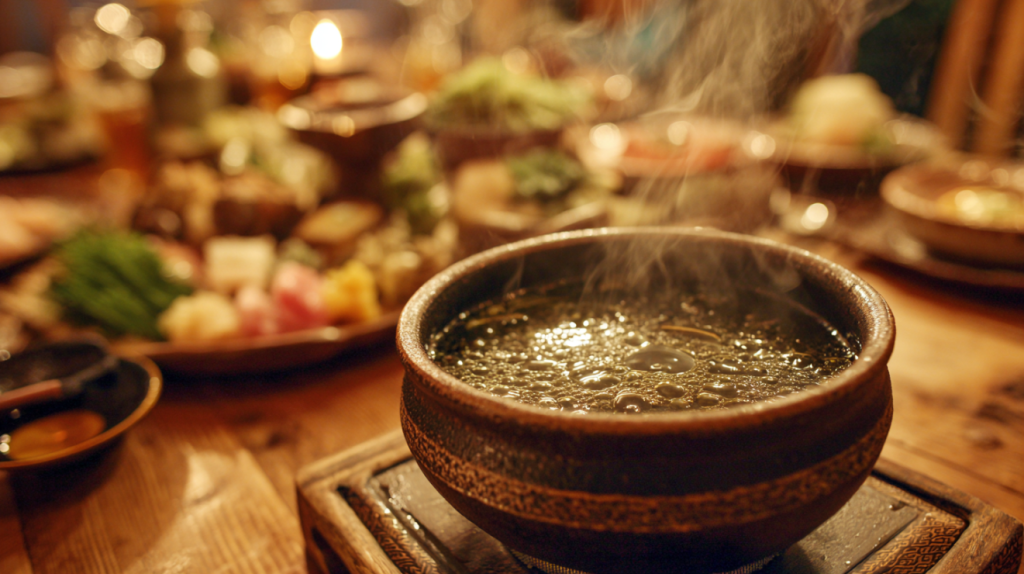
Transfer your broth to the pot you will use at the table and set it over a portable burner. Bring it to a gentle simmer — and I mean gentle. You want small, steady bubbles, not a boil. A hard boil makes the beef tough and turns the broth cloudy.
Start by adding the harder vegetables to the pot: carrot slices and the thicker napa cabbage stems. Let them cook for two or three minutes while people settle in and get their dipping sauces arranged. These vegetables will start flavoring the broth right away.
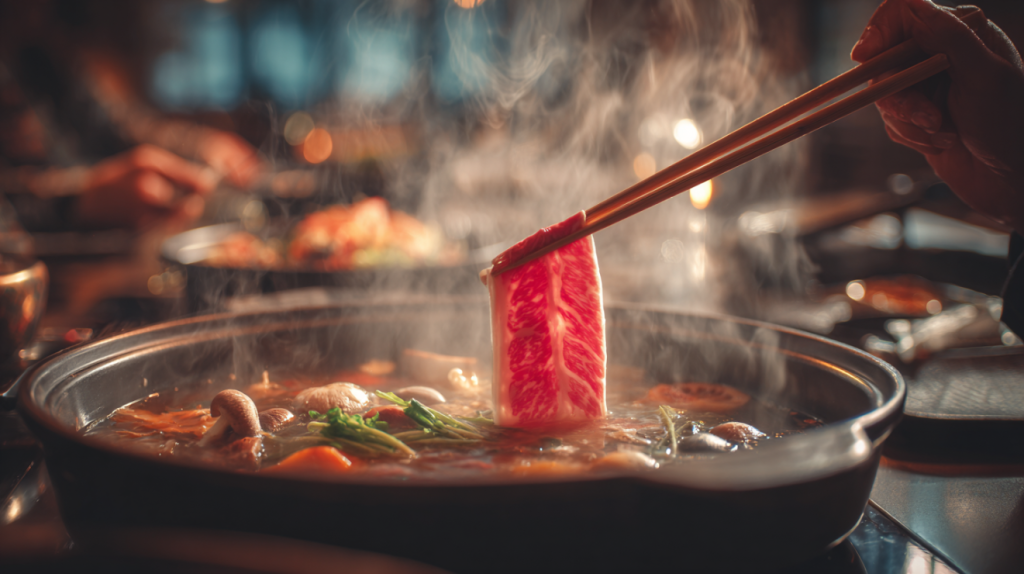
Now the fun begins. Each person picks up a slice of beef with their chopsticks and swishes it gently back and forth through the simmering broth. The name shabu shabu comes from this motion — that soft swishing sound. Ten to fifteen seconds is all it takes. The beef should just barely change color, still slightly pink in the middle. Pull it out, dip it in whichever sauce you prefer, and eat it immediately. If you leave it in the broth too long, it will tighten up and lose that silky tenderness.
As the meal goes on, people add vegetables, tofu, and noodles to the pot. The leafy parts of the napa cabbage and the chrysanthemum greens only need about thirty seconds. Enoki mushrooms are done almost instantly. Shiitake caps and tofu need a minute or two. The glass noodles go in toward the middle of the meal — they soak up the broth beautifully and become slippery and satisfying. According to the USDA Food Safety Guidelines, beef should reach an internal temperature of 145 degrees Fahrenheit. With slices this thin cooked in simmering broth, that temperature is reached almost immediately.
Keep a small strainer nearby to skim any foam that rises to the surface. This is just protein from the beef — it will not hurt anything, but removing it keeps the broth clear and pretty.
When the meat and vegetables are finished, do not throw that broth away. It has been building flavor the entire meal. Ladle it into bowls as a finishing soup. Some people add a splash of ponzu. Others drop in cooked rice or udon noodles for one final course. This last bowl of broth is honestly one of the best parts of the whole meal.
What to Serve Alongside Shabu Shabu
Shabu shabu is a complete meal on its own, but a few small additions make the table feel even more generous. A bowl of steamed short-grain Japanese rice at each place setting is traditional and gives people something to pair with their dipped beef and vegetables. The sticky texture of the rice is perfect for soaking up the dipping sauces.
A simple cucumber salad dressed with rice vinegar, a pinch of sugar, and sesame seeds is a refreshing counterpoint to the warm, savory pot. It cuts through the richness and gives your palate a reset between bites. If you want something a little more substantial, a small plate of pickled vegetables — radishes, ginger, or cucumber — adds color and acidity to the spread.
This is a wonderful meal for a small dinner party, a cozy weekend supper, or any time you want the table to be the center of the evening. It works beautifully for four to six people. Any more than that and you either need a very large pot or a second setup. The interactive nature of it makes it especially fun for families — even children who are particular about what they eat tend to enjoy choosing their own ingredients and cooking them at the table.
Ways to Change It Up
Seafood Shabu Shabu
Replace the beef with a mix of thinly sliced fish (sea bream or salmon work well), peeled shrimp, and scallops. The cooking times are similar — the fish and scallops need just seconds in the broth, and the shrimp are done as soon as they turn pink. The ponzu sauce is especially good with seafood. My daughter-in-law makes this version every New Year’s Eve and it is stunning.
Pork Shabu Shabu (Buta-shabu)
Thinly sliced pork loin or pork belly is a traditional alternative to beef in many parts of Japan. The pork belly version is richer and more indulgent, while the loin is leaner and lighter. Cook pork slices just a few seconds longer than beef — you want no pink remaining. This version pairs especially well with the ponzu and a generous amount of grated daikon on top.
Vegetarian Shabu Shabu
Skip the meat entirely and load up on extra tofu, a wider variety of mushrooms (king oyster, maitake, wood ear), sweet potato slices, and leafy greens. The kombu broth is already vegetarian, so no changes needed there. Add an extra sheet of kombu to the soaking water for a deeper, more savory base. This version is lighter but still deeply satisfying.
Spicy Shabu Shabu
Add a few dried red chilies and a tablespoon of doubanjiang (fermented chili bean paste) to the broth for a version that has real warmth. Increase the shichimi togarashi at the table. This one is not traditional, but my grandson requests it every time he visits — he likes his food with some fire. The heat mellows as the broth simmers and becomes something more complex than just spicy.
How to Store, Reheat, and Plan Ahead
Shabu shabu is best made and eaten fresh — the whole point is the communal, at-the-table cooking experience. That said, you can absolutely do most of the preparation ahead of time to make the evening easy on yourself.
The dipping sauces keep beautifully in the refrigerator for up to five days in sealed containers. The ponzu actually improves with a day of resting, as the flavors meld together. The sesame sauce may thicken in the fridge — just stir in a little warm water to loosen it before serving.
You can slice and arrange your vegetables up to a day ahead. Store them in airtight containers or wrapped on their platters with plastic wrap. The beef should be sliced and arranged no more than a few hours before serving and kept refrigerated until you are ready to set it on the table. If you want more guidance on how to keep prepped ingredients at their best, I go into that in detail in Freezing Southern Cooked Foods: A Complete Guide — the principles of proper storage carry over to any cuisine.
Leftover raw ingredients that were not dipped in the broth can be stored separately and used within a day or two. The leftover broth is liquid gold — it has absorbed the flavor of everything that cooked in it. Strain it, let it cool, and refrigerate it in a sealed container for up to three days, or freeze it for up to three months. It makes an incredible base for noodle soups, rice, or any recipe that calls for stock. I talk about how to freeze and reheat broths properly in How to Freeze and Reheat Soups, Stews & Broths the Right Way.
What to Do with Shabu Shabu Leftovers
Quick Noodle Soup
Heat the leftover broth, add cooked udon or ramen noodles, a soft-boiled egg, and whatever vegetables you have on hand. A splash of soy sauce and a drizzle of sesame oil turn it into a complete meal in under ten minutes.
Shabu Shabu Fried Rice
Chop any leftover cooked vegetables and meat into small pieces and stir-fry them with day-old rice, a little soy sauce, and a beaten egg. The flavors from the dipping sauces that cling to the leftovers give the fried rice a depth that plain leftovers never could.
Rice Porridge (Ojiya)
This is the traditional way to use the last of the broth. Add cooked rice directly to the remaining broth in the pot, along with a beaten egg stirred in slowly. Season with a little soy sauce and top with green onions. It is the most comforting possible end to the meal — or the start of the next morning.
Grain Bowl with Sesame Sauce
Layer leftover vegetables and meat over a bowl of warm rice or quinoa. Drizzle generously with the leftover sesame gomadare sauce. Add a handful of fresh greens and a sprinkle of sesame seeds. It is a completely different meal that uses the same ingredients.
Shabu Shabu
Equipment
- Large pot or donabe (clay pot)
- Portable burner or hot plate
- Chopsticks or small strainer
- Individual dipping bowls
- Sharp knife or mandoline
Ingredients
Broth
- 8 cup water
- 1 piece kombu (dried kelp) about 4x6 inches
- 2 tbsp sake optional
Meat
- 1.5 lb beef sirloin or ribeye sliced paper-thin, partially frozen for easier slicing
Vegetables and Additions
- 8 oz napa cabbage cut into 2-inch pieces
- 1 bunch chrysanthemum greens (shungiku) trimmed, or substitute baby spinach
- 8 oz enoki mushrooms root ends trimmed
- 4 oz shiitake mushrooms stems removed, caps sliced
- 1 block firm tofu about 14 oz, cut into 1-inch cubes
- 4 oz glass noodles (harusame) soaked in warm water 5 minutes and drained
- 2 green onions cut into 2-inch lengths
- 1 medium carrot peeled and sliced thin on the diagonal
Ponzu Dipping Sauce
- 0.5 cup soy sauce
- 0.25 cup fresh lemon juice or yuzu juice
- 2 tbsp rice vinegar
- 2 tbsp mirin
- 1 tbsp dashi granules dissolved in 2 tbsp warm water
Sesame Dipping Sauce (Gomadare)
- 0.33 cup tahini or ground sesame paste
- 2 tbsp soy sauce
- 1 tbsp rice vinegar
- 1 tbsp mirin
- 1 tbsp sugar
- 2 tbsp warm water to thin
Condiments
- 2 tbsp grated daikon radish
- 1 tbsp finely chopped green onion
- 1 tsp shichimi togarashi Japanese seven-spice blend
Instructions
Prepare the Broth
- Place the kombu in a large pot with 8 cups of cold water. Let it soak for at least 30 minutes, or up to several hours in the refrigerator for deeper flavor.
- Set the pot over medium heat and bring it slowly to just below a boil. Watch for small bubbles forming around the edges and the kombu beginning to float. Remove the kombu just before the water reaches a full boil. Add the sake if using.
Prepare the Ingredients
- Arrange the thinly sliced beef on a platter in a single layer so each piece is easy to pick up. If your beef is not pre-sliced, partially freeze it for about 45 minutes so you can slice it as thin as possible with a sharp knife.
- Arrange all vegetables, tofu, mushrooms, and drained glass noodles on a large platter or several smaller plates. Group similar items together for easy access at the table.
Make the Dipping Sauces
- For the ponzu sauce, whisk together the soy sauce, lemon juice, rice vinegar, mirin, and dissolved dashi granules in a small bowl. Divide among individual dipping bowls.
- For the sesame dipping sauce, stir together the tahini, soy sauce, rice vinegar, mirin, and sugar until smooth. Add warm water a little at a time until it reaches a pourable consistency. Divide among individual dipping bowls.
Cook at the Table
- Transfer the kombu broth to a portable burner set in the center of the table. Bring the broth to a gentle simmer — you want steady, small bubbles, not a rolling boil.
- Add the harder vegetables first — carrot slices and napa cabbage stems — and let them cook for 2-3 minutes to begin softening and flavoring the broth.
- Each person uses chopsticks to swish a slice of beef through the simmering broth for 10-15 seconds, until it just changes color and is still slightly pink. Dip immediately into your preferred sauce and eat.
- Continue cooking vegetables, tofu, mushrooms, and noodles in the broth as you go. Leafy greens and enoki mushrooms cook in about 30 seconds. Tofu and shiitake need 1-2 minutes. Skim any foam from the surface as needed.
- When the meat and vegetables are finished, ladle the now richly flavored broth into bowls as a finishing soup. Season with a splash of ponzu if desired. Some cooks add cooked rice or udon noodles to the remaining broth for a final course.
Nutrition
Rate This Recipe
Share This Recipe With The Ones You Love!Questions I Get Asked About Shabu Shabu
Can I make shabu shabu without a portable burner?
You can, but it changes the experience. One option is to keep the pot simmering on the stove and have people come to it, bringing their dipping bowls along. Another approach is to cook everything in the kitchen in batches and serve it plated, though you lose the interactive quality that makes shabu shabu special. A portable butane burner is an inexpensive investment that opens up a whole world of tabletop cooking.
What is the best cut of beef for shabu shabu?
Ribeye and sirloin are the most common choices. Ribeye has more marbling and therefore more flavor and tenderness. Sirloin is leaner and works well too, especially if you do not overcook it. Wagyu beef, if your budget allows, is exceptional for shabu shabu — the fat renders almost instantly in the hot broth and the texture is unbelievable.
How thin does the beef need to be sliced?
As thin as you can possibly get it — about one-sixteenth of an inch is ideal. You should be able to see light through the slices. The easiest way to achieve this at home is to partially freeze the beef for about forty-five minutes and use the sharpest knife you have. According to the Japanese External Trade Organization, proper shabu shabu beef should be sliced between 1.5 and 2 millimeters thick.
Can I use chicken broth instead of kombu broth?
You can, but understand it will be a different dish. Kombu broth is deliberately mild so the flavors of the ingredients and dipping sauces shine through. Chicken broth adds its own dominant flavor. If you go this route, use a light, low-sodium chicken broth and skip any additional salt in the sauces until you taste everything together.
How do I keep the broth from getting murky?
Three things: remove the kombu before it boils, keep the broth at a gentle simmer rather than a rolling boil, and skim the foam that rises to the surface as you cook the beef. The foam is just protein — harmless, but it clouds the broth if you leave it.
What is the difference between shabu shabu and sukiyaki?
Both are Japanese hot pot dishes, but they are quite different in flavor and technique. Sukiyaki uses a sweet soy-based cooking liquid and the ingredients simmer together in it. Shabu shabu uses a plain kombu broth and the flavor comes from the dipping sauces. Shabu shabu is lighter, cleaner-tasting, and more interactive since each person cooks their own food piece by piece.
Can I make the dipping sauces ahead of time?
Absolutely, and I recommend it. Both sauces keep well in the refrigerator for up to five days. The ponzu actually tastes better after resting for a day. The sesame sauce will thicken — just stir in a splash of warm water before serving to bring it back to the right consistency.
Now It Is Your Turn to Gather Around the Pot
Making shabu shabu at home is one of those meals that feels like you did something extraordinary when really, you just did some thoughtful preparation and let the table do the rest. The beauty of this dish is in its simplicity — a clean broth, the best ingredients you can find, and two sauces that make everything they touch taste incredible. Every time I set this up, someone at the table says it feels like a special occasion, even when it is just a Tuesday.
So go ahead and make this shabu shabu recipe. Set that pot in the center of the table, pile up the platters, and let the people you love cook their own supper right there together. I promise you, the food will be wonderful, and the evening will be even better. When you make it, come back and tell me how it turned out — I always love hearing about it.




Awesome!