This fail-proof Southern Cornbread Dressing strikes the perfect balance between moist and fluffy, ensuring you never serve a soggy side dish again.
By starting with a homemade, savory buttermilk cornbread and using a specific folding technique, this recipe creates a golden-brown masterpiece that avoids the dreaded “mushy middle.” It is the absolute centerpiece of your holiday meal and pairs beautifully with a side of Southern Collard Greens.
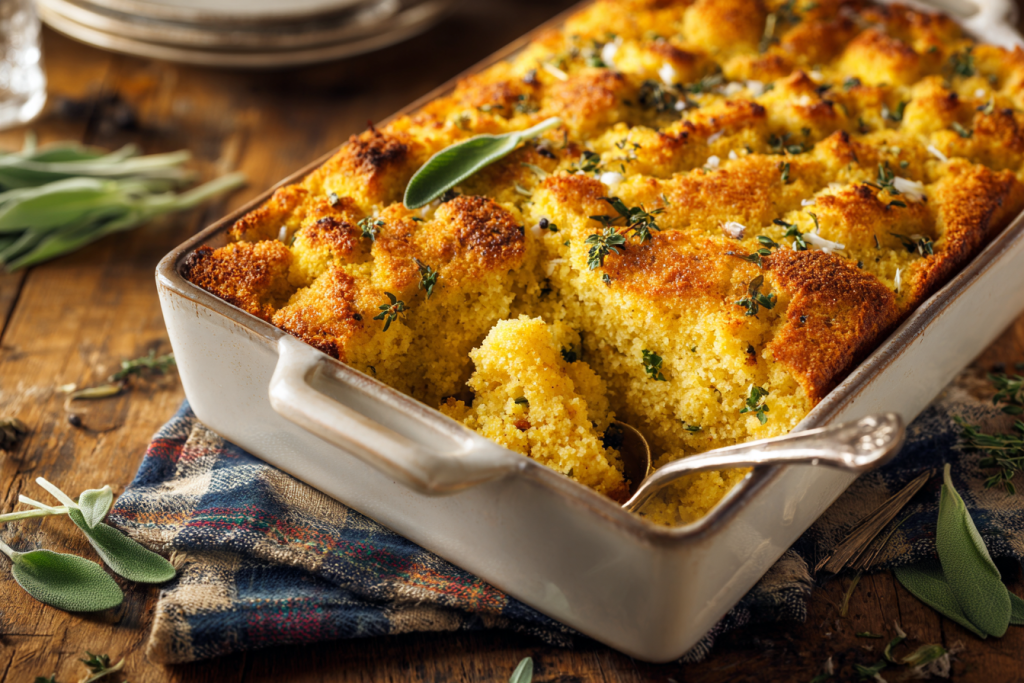
The Only Southern Cornbread Dressing Recipe You’ll Ever Need
There is no side dish that causes more quiet worry than the dressing. It sits right next to the turkey, and everyone at the table has an opinion on it. We’ve all had the dry, dusty kind that turns to powder in your mouth, and we’ve certainly had the sad, soggy kind that’s more like a wet bread pudding. The pressure to get it just right is enormous. If you’re looking for the definitive, no-fail guide to a truly perfect southern cornbread dressing, you can finally take a deep breath. This is the recipe I’ve served for more than thirty years. I am going to walk you through every single step and, more importantly, explain why we do it. This is the one that works.
What Makes This the Best Southern Cornbread Dressing?
After decades of making this dish, I can tell you that a truly great dressing comes down to three things. It’s not about a single secret ingredient, but about honoring the method.
First is the cornbread itself. This recipe starts by having you make your own for a very important reason. The foundation must be a savory, sturdy, unsweetened buttermilk cornbread. Second is the texture. We are aiming for the perfect middle ground: moist, scoopable, and fluffy, but never mushy. Third is the flavor. It’s a classic, comforting blend of sage, onion, and celery, all softened in butter, that just smells like the holidays. This recipe balances all three of those pillars perfectly.
The Heart of Your Thanksgiving & Christmas Dinner: The Cornbread
This is the part we cannot rush, and it’s the most important step. A great southern tradition is making sure that cornbread dressing is, first and foremost, savory. Many cornbread recipes, especially from a box, are loaded with sugar. That sweetness has its place, but in a dressing, it clashes with the sage and the savory profile of the meal. We must start with a cornbread that is built for the job.
The second, and most crucial, secret is that your cornbread must be stale. I always make mine at least one day ahead, crumble it, and leave it in a big bowl on the counter, uncovered. This does more than just “dry it out.” The starches in the bread change as they cool and “stale”—a process called retrogradation. This firms up the bread’s structure, allowing it to absorb all that wonderful chicken stock and egg without disintegrating. Using fresh, warm cornbread is the number one reason people end up with a pan of mush.
Insider Secret: The Hot Skillet and Bacon Grease
The secret my grandmother taught me for the cornbread itself is to use a screaming-hot, well-seasoned cast-iron skillet. We heat the skillet with the bacon grease in the oven before pouring in the batter. When that batter hits the hot grease, it sizzles and instantly forms a crunchy, golden-brown crust. That crust doesn’t just taste good; those darker, crusty bits add a wonderful, rustic texture to the final dressing.
The Flavor Base: Sautéing Your Vegetables
The comforting aroma of dressing comes from what we lovingly call the “blessed pair” in Southern cooking: onion and celery. For this recipe, we add garlic to the mix. The key is to melt your butter in a skillet and cook the onion and celery over medium heat until they are truly soft. This takes a good 8 to 10 minutes.
You don’t want any crunch left in them. We’re not making a salad; we are building a foundation of flavor that should melt into the cornbread. The garlic goes in only for the last minute or two. It’s delicate and can burn quickly, which would add a bitter taste.
How to Assemble Your Southern Cornbread Dressing for Perfect Texture
Once your cornbread is stale and crumbled, and your vegetables are soft, the assembly is where we protect that perfect texture.
Crumbling by Hand: Why It Matters
Do not, under any circumstances, use a food processor to break up your cornbread. You will end up with a uniform, sandy dust that will turn to paste. The magic is in crumbling it by hand. You want a beautiful, rustic mix of fine crumbs, medium-sized pieces, and even a few small, thumbnail-sized chunks. This variety is what creates pockets of air and allows the liquid to absorb unevenly, giving the final dish its wonderful, fluffy structure.
Folding, Not Stirring
This is the second place where dressings go wrong. You will have your cornbread and vegetables in a very large bowl. You will have your eggs and warmed stock whisked together in another. When you pour the liquid over the cornbread, you must fold it, not stir it.
Use a large spatula to go down the side of the bowl, across the bottom, and lift the crumbs up and over the liquid. Turn the bowl and repeat. Stirring, especially with a spoon, is too aggressive. It will break down those wonderful crumbs you just made and will lead to a dense, gummy result. Fold gently, and only until everything is just combined and uniformly moist.
A Note on Warmed Stock
You’ll notice the recipe calls for warmed chicken stock. Please don’t skip this. Pouring cold stock over your room-temperature cornbread can cause the starches to seize up and not absorb evenly. It’s like a little shock to the system. Gently warming the stock on the stove first helps it blend beautifully and soak into every crumb, ensuring a consistent, moist texture all the way through.
Common Mistakes to Avoid
- Using Sweet Cornbread: It will make your entire dressing taste “off” and clash with the savory herbs. Start with a savory, unsweetened cornbread.
- Over-Mixing: Be gentle! Folding is the motion. Stop as soon as the liquid is absorbed. Over-working the mixture develops gluten and breaks down the crumbs, leading to a gluey texture.
- Packing the Dish: You must spoon the dressing into your baking dish lightly. Do not, as I’ve seen some do, use a spatula to press it down flat. If you pack it in, steam cannot circulate, and the center will steam itself into a dense, wet brick. A light hand is the secret to a fluffy result.
- Under-Baking: The dressing is bound by eggs, so it must be cooked through. A thermometer inserted in the center should read 165°F. This ensures the eggs are safely cooked and set, which gives the dressing its structure. If it’s not set, it will be wet.
- Not Enough Seasoning: Stale cornbread and stock can absorb a lot of salt and sage. Don’t be shy with your seasonings. This is why we add garlic powder and onion powder in addition to the fresh-sautéed ones.
Make-Ahead and Storage Tips for Your Southern Cornbread Dressing
One of the best parts of this recipe is that it’s perfect for making ahead, which is a lifesaver for a big holiday. You can make the cornbread up to two days in advance.
You can also assemble the entire dish the day before. Mix everything, spoon it into your greased baking dish, cover it tightly, and refrigerate it. The next day, let it sit on the counter for about 30-40 minutes to take the chill off while the oven preheats, then bake as directed. You might need to add 5-10 minutes to the baking time.
Leftovers are, of course, part of the joy. Store the dressing in an airtight container in the refrigerator for up to 4 days. To reheat, I find the oven is best. Put the dressing in a baking dish, sprinkle it with a tablespoon or two of chicken stock or water to remoisten it, and cover with foil. Bake at 350°F for 15-20 minutes until hot. This is so much better than a microwave, which can make it rubbery.
If you’re looking for the main course, this dressing is the perfect partner to Our Favorite Simple Roast Turkey Recipe.
There you have it. This recipe is more than just a list of ingredients; it’s a method, a tradition, and a little piece of my heart. When you pull that bubbling, golden-brown dish from the oven, and the whole house smells like a holiday, you’ll know you’ve done it right. This isn’t just a side dish; it’s the centerpiece of the celebration, and with this guide, you now have the confidence to make it perfectly, every single time. Enjoy every bite.
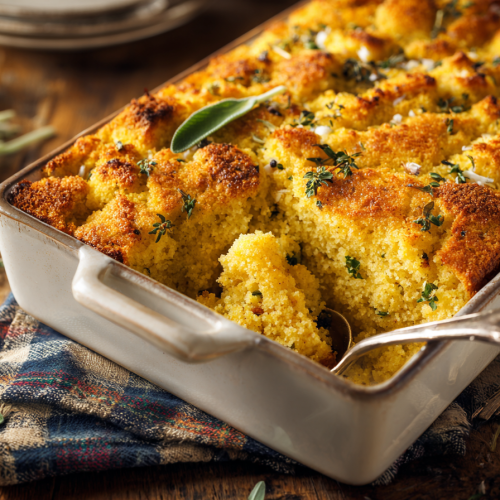
Southern Cornbread Dressing
Equipment
- 10-inch cast-iron skillet (for cornbread)
- 9x13 inch baking dish
- Large mixing bowl
- Medium skillet (for sautéing)
- Whisk
- Spatula
- Measuring cups and spoons
- Chef's knife
- Cutting board
Ingredients
For the Savory Cornbread Base: Ideally, make this one day ahead
- 1 1/2 cups yellow cornmeal
- 1 cup all-purpose flour
- 2 tsp baking powder
- 1/2 tsp baking soda
- 1 tsp salt
- 2 large eggs lightly beaten
- 1 1/2 cups low-fat buttermilk
- 1/2 cup 1 stick unsalted butter, melted
- 2 tbsp bacon grease or butter for greasing the skillet
For the Dressing:
- 1 batch of savory cornbread crumbled (should be 7-8 cups)
- 3 tbsp unsalted butter
- 1 large yellow onion finely diced
- 2 long stalks of celery finely diced (about 1 cup)
- 3-4 cloves garlic minced
- 2 1/2 cups chicken stock warmed
- 2 large eggs lightly beaten
- 2 tbsp fresh parsley minced
- 2 tsp dried sage
- 1 tsp garlic powder
- 1 tsp onion powder
- 1 tsp kosher salt or to taste
- 1/2 tsp fresh cracked black pepper
- Butter or non-stick spray for greasing the baking dish
Instructions
Prepare the Cornbread (Day Before):
- Preheat your oven to 400°F (200°C). Place the bacon grease or 2 tbsp butter in a 10-inch cast-iron skillet and put the skillet in the oven to heat up.
- In a large bowl, whisk together the dry ingredients: cornmeal, flour, baking powder, baking soda, and salt.
- In a separate medium bowl, whisk together the wet ingredients: eggs, buttermilk, and melted butter.
- Pour the wet ingredients into the dry ingredients and mix just until combined. Do not overmix; a few lumps are fine.
- Carefully remove the hot skillet from the oven. Swirl the melted grease/butter to coat the bottom and sides. Pour the cornbread batter into the hot skillet.
- Bake for 20-25 minutes, or until golden brown and a toothpick inserted in the center comes out clean.
- Let it cool completely, then crumble it by hand into a very large mixing bowl. You want a mix of small and medium crumbs. Leave it uncovered on the counter overnight if possible.
Prepare the Dressing:
- Preheat the oven to 375°F (190°C). Generously grease a 9x13 inch baking dish with butter or non-stick spray.
- In a medium skillet, melt the 3 tbsp of butter over medium heat. Add the diced onion and celery. Sauté for 8-10 minutes, stirring occasionally, until very soft and translucent.
- Add the minced garlic and cook for another 1-2 minutes until fragrant. Scrape the entire vegetable mixture (including any butter) into the large bowl with the crumbled cornbread.
- Add the seasonings to the cornbread bowl: fresh parsley, dried sage, garlic powder, onion powder, salt, and pepper. Toss gently to combine everything.
Combine and Bake:
- In a separate bowl, whisk together the 2 lightly beaten eggs and the 2 1/2 cups of warmed chicken stock.
- Pour this liquid mixture all over the cornbread and vegetable mix. Use a large spoon or spatula to gently fold everything together until the cornbread has absorbed all the liquid. It should be very moist, but not a soupy puddle.
- Spoon the dressing mixture into the prepared 9x13 baking dish. Spread it into an even layer, but do not pack it down.
- Bake, uncovered, for 35-40 minutes, or until the top is beautifully golden brown and the edges are slightly crispy. The center should be set and register at least 165°F (74°C) on an instant-read thermometer.
- Let the dressing rest for 10 minutes before serving.
Notes
Cover the baking dish tightly with foil or plastic wrap, or transfer the dressing to an airtight container. Store in the refrigerator for up to 4 days. Serving Suggestions:
This dressing is a must-have for any holiday table. Serve it alongside roasted turkey, glazed ham, or fried chicken. It’s also fantastic with a generous drizzle of turkey gravy or a side of cranberry sauce. Reheating Instructions: Oven (Best Method): Preheat to 350°F (175°C). Place the dressing in an oven-safe dish and sprinkle with 1-2 tablespoons of chicken stock to add moisture. Cover with foil and bake for 15-20 minutes, or until heated through. Remove the foil for the last 5 minutes if you want to re-crisp the top. Microwave: Place a serving on a plate. Sprinkle with a little chicken stock or water, cover with a damp paper towel, and heat in 60-second intervals until hot. Flavor Variations: Sausage: Brown 1/2 pound of breakfast sausage, drain it, and add it to the cornbread mixture with the sautéed vegetables. Pecans & Apples: For a sweet and savory crunch, add 1/2 cup of toasted chopped pecans and 1 small apple (like a Granny Smith), finely diced and sautéed with the onions and celery. Spicy: Add 1/4 teaspoon of cayenne pepper or one finely diced jalapeño (sautéed with the vegetables) for a gentle kick. Leftover Transformation Ideas: Thanksgiving Benedict: Form a patty of leftover dressing and pan-fry it in butter until crispy. Top with a slice of turkey, a poached egg, and a drizzle of gravy or hollandaise sauce. Dressing Waffles: Reheat dressing in a waffle iron until crispy. Top with leftover turkey and cranberry sauce. Stuffing Muffins: Press leftover dressing into a greased muffin tin. Bake at 375°F (190°C) for 15-20 minutes until the edges are crispy. This is great for portion control and easy serving. Troubleshooting Tips: "My dressing is too dry!" This happened either because the cornbread was too stale or you needed more liquid. Before baking, the mixture should be very moist. If it looks dry, don't be afraid to add another 1/4 to 1/2 cup of warmed stock. "My dressing is too mushy!" This is usually from over-mixing, packing the dressing into the pan, or too much liquid. Be gentle when mixing and spoon the dressing lightly into the dish. If it's already baked, try baking it uncovered longer to help some moisture evaporate. "It's bland!" You may have under-salted. Remember that the cornbread itself is seasoned, but it's absorbing a lot of liquid. Taste a tiny pinch of the unbaked mixture (before adding raw eggs!) to check for salt and sage, and adjust if needed. Recipe Notes Section: Make-Ahead: You can assemble the entire dressing (up to Step 3, before baking) one day in advance. Cover the dish tightly with plastic wrap and refrigerate. Before baking, let it sit on the counter for 30-45 minutes to come to room temperature. You may need to add 5-10 minutes to the baking time. Scaling: This recipe can be easily halved and baked in an 8x8 or 7x11 inch dish. To double it, use two 9x13 dishes; do not try to bake it in one giant, deep roasting pan, as the center will never cook properly. Substitution: You can use 1 cup of finely chopped leeks (white and light green parts only) in place of the large onion for a milder, more complex flavor.
Nutrition
Rate This Recipe
Share This Recipe With The Ones You Love!