This traditional grandma’s chicken and dumplings recipe is the best you’ll ever find, delivering a bowl of pure nostalgia with every spoonful!
If you are looking for the definitive guide to creating tender, melt-in-your-mouth dumplings swimming in a rich, velvety broth, you have come to the right place. This dish is perfect alongside a helping of Southern Collard Greens or a serving of fresh Garlic Green Beans.

We have all stood over a pot that just felt like it was… missing something. Maybe the broth was too thin, or worse, those dumplings turned into chewy little hockey pucks instead of the fluffy pillows of joy you were promised. It is frustrating to spend hours in the kitchen only to end up with a dish that doesn’t taste like the memory you were chasing. True southern comfort food cannot be rushed but is made with techniques and care that place pure love into every bite.
But don’t you worry. I am going to walk you through my family’s method for grandma’s chicken and dumplings recipe, ensuring you get it right the very first time. This isn’t just a list of ingredients; it is a lesson in patience and simple Southern technique. By the time we are done, you will have a pot of gold that tastes exactly like Sunday afternoon at Grandma’s house.
Why This Grandma’s Chicken and Dumplings Recipe Works
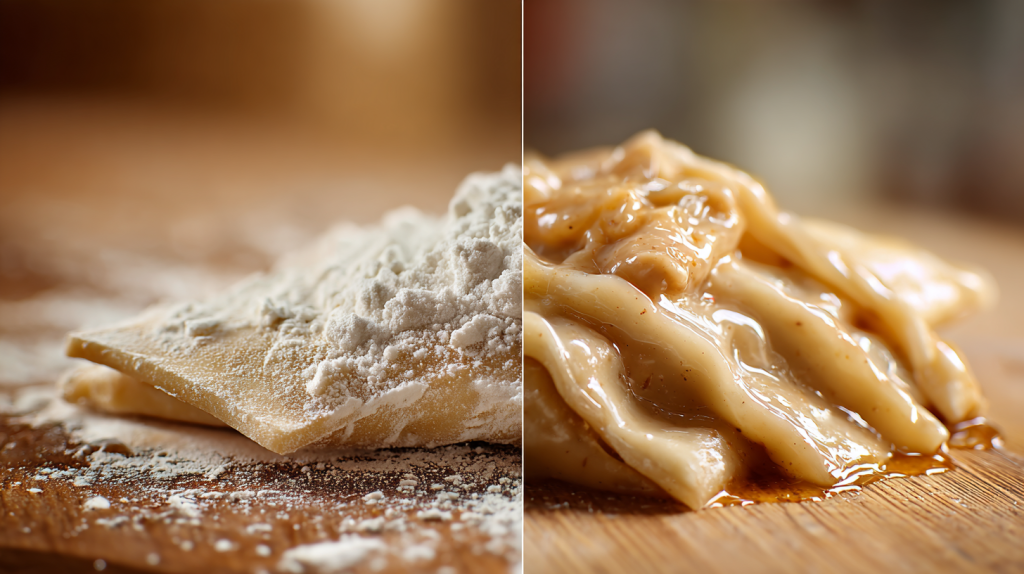
There is a distinct difference between “food” and “comfort,” and this dish sits firmly in the latter category. The “soul” of this recipe lies in its simplicity and the specific style of dumpling we are using. Unlike the “drop” biscuits you might see in quick-fix recipes, these are rolled dumplings. In the South, we sometimes call these “slick” dumplings or “pastry.” They are rolled thin, cut into strips, and boiled directly in the broth. This technique releases flour into the liquid, naturally thickening the broth into a gravy-like consistency that coats the back of a spoon perfectly.
The magic here happens in the slow simmer. We aren’t rushing the chicken. Whether you are roasting breasts or boiling a whole bird, we are extracting deep, savory notes that form the foundation of the dish. It reminds me of how my own grandmother used to cook—she never watched the clock, she watched the pot. She knew that collagen takes time to break down, and that patience rewards you with a mouthfeel that store-bought stock just cannot mimic.
Furthermore, this method balances the richness. We use a combination of chicken fat, butter in the dough, and a touch of creaminess (optional, but delicious) to create a luxurious texture. But because we season the broth heavily with simple aromatics like onion and celery before the dumplings go in, every bite is infused with flavor, not just salt. It is a harmony of starch, protein, and savory broth that warms you from the inside out.
The Key Ingredients: Secrets to Flavor
The beauty of this dish is that you likely have everything you need in your pantry right now. However, the quality and temperature of a few specific items will make all the difference in the world.
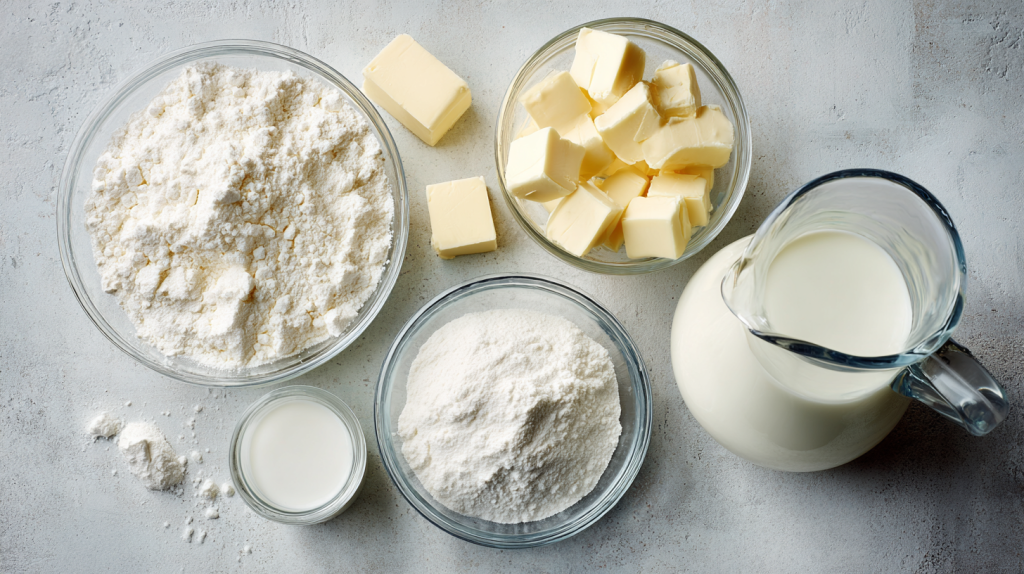
Let’s talk about the fat. This recipe calls for cold salted butter for the dumplings. This is non-negotiable. When you work cold butter into the flour, it leaves tiny pockets of fat. As the dumplings cook, that butter melts, creating steam pockets that make the dumplings tender rather than tough. If your butter is soft, you will end up with a heavy, dense dough. It’s the same principle as making a pie crust; we want tenderness, not breadiness.
For the liquid, ice-cold water or milk is essential. Keeping the dough cold prevents the gluten in the flour from developing too quickly. If you have ever had a rubbery dumpling, it was likely because the dough got too warm or was overworked. I prefer using milk for a slightly richer dough, but ice water works beautifully for a more traditional, lighter bite.
PRO-TIP: Do not skip the “chicken base” or bouillon paste. While box broth is a fine start, adding a tablespoon of concentrated base (like Better Than Bouillon) adds a depth of “roasted” flavor that simmering alone often misses. It gives the broth that golden, Sunday-dinner color.
Finally, the celery and onion used in the broth are there to give their life to the liquid. We strain them out later (if boiling a whole bird) or use them to flavor the roasting environment. They provide the aromatic backdrop that makes the chicken taste “chicken-y.” Without them, your base is just salty water.
Quick Substitution Guide:
- Chicken Base: Can be swapped for 2 bouillon cubes, but paste is superior.
- Butter: Lard or vegetable shortening can be used for an even more “old-school” flake.
- Cream of Chicken Soup: This is optional. If you prefer a purist broth without it, just increase your flour-slurry or let the dumpling flour thicken it naturally.
How to Make Grandma’s Chicken and Dumplings: My Step-by-Step Method
This process is about rhythm. You get the chicken going, then you find your peace making the dough, and finally, you bring it all together. Do not rush.
Preparing the Foundation
First, we need to handle the protein. You have two paths here, and both lead to deliciousness. If you are using a whole chicken (which I highly recommend for the collagen), you are going to give it a long, gentle bath with celery and onion. You want the meat falling off the bone. If you are using breasts, roasting them is the secret. Roasting concentrates the flavor rather than washing it out.
INSIDER SECRET: When shredding your chicken, keep the pieces slightly larger than you think you should. The chicken will break down further as it stirs in the final pot. If you shred it too fine now, it will turn into “chicken confetti” later. We want hearty bites.
The Art of the Dough
While your broth is warming, we turn to the dough. Whisk your dry ingredients to aerate them. When you cut in that cold butter, use your fingertips to snap the butter into the flour until it looks like coarse meal. This is a tactile experience—you need to feel the cold bits of butter.
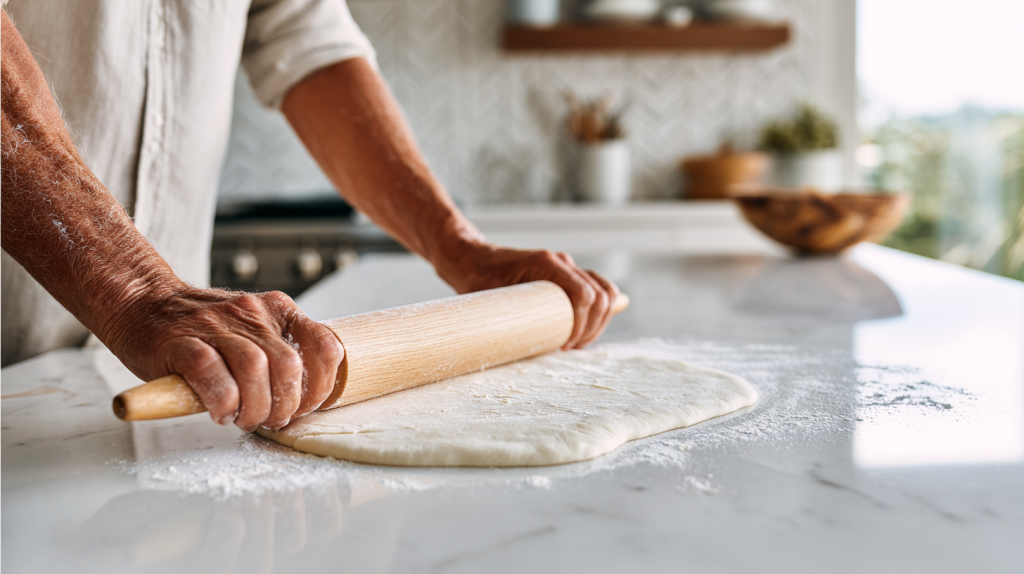
When adding the liquid, stir just until it comes together into a “shaggy” mass. It will look messy and unrefined. That is exactly what we want. Turn it out and knead it gently just two or three times to form a ball. Over-kneading develops gluten, and gluten is the enemy of tenderness here. Roll it thin—about 1/8 to 1/4 inch. Thicker dumplings take longer to cook and can be doughy in the middle; thinner ones cook fast and slick.
The Marriage of Broth and Dough
Now, bring your seasoned broth to a true, rolling boil. This is critical. If the water isn’t boiling, the dumplings will dissolve before they set. Drop them in one by one. I know it takes a minute, but if you dump them all in at once, you will have a giant dumpling ball.
As they cook, the flour from the outside of the dumplings will slough off into the broth. You will watch the liquid transform from a thin stock to a creamy white gravy. This is the alchemy of Southern cooking.
PRO-TIP: Resist the urge to stir vigorously once the dumplings are in. They are fragile until they set. Instead, use a wooden spoon to gently “swirl” the dumplings, or simply rotate the pot back and forth on the burner to keep things moving without breaking them.

Serving Suggestions & Perfect Pairings
This dish is rich and carb-heavy, so it begs for sides that provide contrast. I always look for something with a bit of acidity or crunch to cut through the creamy, savory weight of the dumplings. A simple salad with a sharp vinaigrette is often all you need to cleanse the palate between bites.
For a true Southern spread, you want to lean into the vegetables. I love serving this alongside Southern Collard Greens. The bitterness of the greens and the tang of the “pot likker” balance the mild sweetness of the dumplings perfectly. If you are feeding a crowd, a side of roasted root vegetables—carrots and parsnips—adds a nice earthiness that complements the chicken base.
While the dumplings act as the bread in this meal, no one has ever complained about an extra piece of bread for “sopping.” A crusty baguette or a hoe-cake works wonders for cleaning the bowl.
Delicious Variations to Try
Once you have mastered the classic, you can start playing with the flavors to suit your family’s palate.
Herbed Dumplings: If you want to elevate the dish, add dried herbs directly into your flour mixture. I love adding a teaspoon of dried parsley, thyme, or even cracked black pepper to the dry dough ingredients. It makes the dumplings look beautiful and adds a pop of flavor in every bite.
The Creamy Veggie Twist: While traditional recipes keep the veggies to a minimum (usually just the aromatics in the broth), you can make this a “pot pie style” dish by adding frozen peas and carrots in the last 5 minutes of cooking. It adds color and sweetness that children often love.
Spicy Cajun Kick: For a version with some heat, add a teaspoon of Cajun seasoning to the broth and a pinch of cayenne to the dumpling dough. The heat plays beautifully against the cream, and my son-in-law requests this version every time he visits. It warms you up twice!
Storage, Reheating & Make-Ahead Tips
This dish is famously better the next day, but it does require some special handling because the dumplings will continue to soak up moisture.
Storage: Store leftovers in an airtight container in the refrigerator for up to 3 days. You will notice that the broth turns into a gelatinous solid when cold—do not panic! That is just the natural gelatin from the chicken and the starch from the flour. It means you made it right.
Reheating: When you reheat this, you must add a splash of water or chicken stock. The dumplings act like sponges in the fridge. Place the leftovers in a saucepan over low heat, add about 1/4 cup of liquid, and cover it. Stir gently and often. If you microwave it, do it in 1-minute bursts, stirring in between, or the dumplings will get rubbery edges.
Make-Ahead: You can make the broth and chicken a day in advance. Store them separately or together. However, I recommend making the dough fresh when you are ready to serve. If you must prep the dough ahead, roll it out, cut it, and freeze the raw strips on a baking sheet. You can drop frozen dumplings directly into boiling broth—just add a few minutes to the cooking time.

Leftover Magic: Creative Ways to Use Chicken and Dumplings
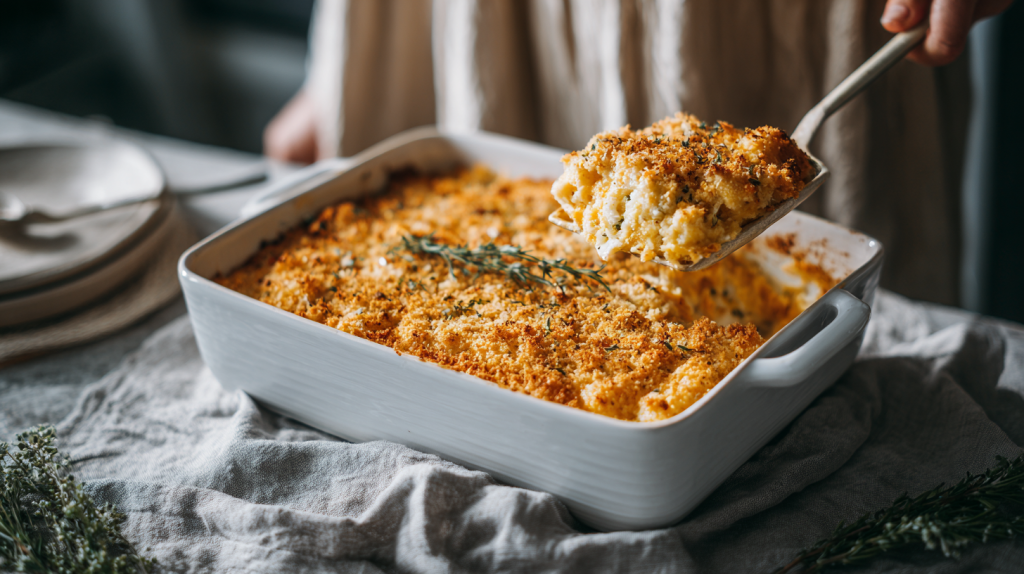
If you somehow manage to have leftovers that don’t get eaten for lunch, there is a magical transformation you can do. I love turning leftover chicken and dumplings into a Chicken and Dumpling Casserole.
Pour the cold, thick leftovers into a buttered baking dish. Top it with a mixture of crushed buttery crackers (like Ritz) and a handful of shredded cheddar cheese. Bake it at 375°F until it is bubbly and the top is golden brown. The thick sauce acts like the filling of a pot pie, and the dumplings become almost like layers of pasta.
Another option is to thin it out significantly with more vegetable broth and add a can of drained white beans and some kale. It transforms the heavy comfort food into a lighter Rustic Chicken Stew that feels completely new.
Troubleshooting: Your Questions Answered
Why are my dumplings tough or chewy?
This is almost always caused by one of two things: overworking the dough or cooking them at too high a boil for too long. Remember, mix the dough until it just comes together. If you knead it like bread, it will have the texture of a bagel. Keep a gentle hand!
Why is my broth too thin?
If your broth didn’t thicken up, you likely didn’t have enough excess flour on your dumplings when you dropped them in. You can easily fix this. Mix 1 tablespoon of cornstarch with 1 tablespoon of cold water to make a slurry, then whisk that into the bubbling pot. It will tighten up instantly.
Can I freeze this recipe?
You can, but with a caveat. Cooked dumplings can change texture when frozen and thawed, sometimes becoming a bit mushy. For the best freezer meal, freeze the broth base (chicken and broth) separately. Freeze the raw rolled dumpling strips on a sheet pan, then bag them. When you want to eat, boil the broth and drop the frozen raw dumplings in.
What if I don’t have a rolling pin?
Don’t let that stop you! I have used a sturdy wine bottle (clean, of course!) or even a large straight-sided glass jar to roll out dough in a pinch. Grandma used what she had, and so can you.
Why did my dumplings dissolve?
If your dumplings disintegrated, your pot was likely stirred too vigorously or the dough was too wet. Make sure your broth is at a boil when they go in so the outside seizes and sets immediately. And remember—stir gently!
This chicken and dumplings recipe is more than just dinner; it is an edible hug. Whether you are cooking for a sick friend, a growing family, or just need a little comfort yourself, this pot will never let you down. The smell alone is enough to cure a bad day.
I can’t wait to hear how this turns out in your kitchen! Did you add the cream of chicken soup, or keep it classic? Let me know in the comments below, and don’t forget to share this with anyone who needs a warm bowl of Southern love.
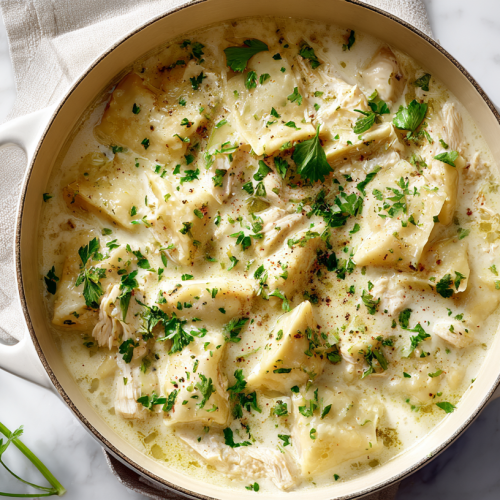
Grandma's Homemade Chicken and Dumplings
Equipment
- Large stock pot or Dutch oven
- Medium mixing bowl
- Rolling Pin
- Pizza cutter or sharp knife
- Baking Sheet
- Fork or pastry cutter
- Whisk
Ingredients
For the Chicken and Broth
- 3 pounds chicken breasts or 1 whole chicken
- 2 tablespoons oil avocado or olive oil
- 2 quarts chicken broth about 8 cups
- 3 ribs celery cut into large pieces
- 1 large onion peeled and quartered
- 1 tablespoon chicken base or bouillon like Better Than Bouillon
- 2 teaspoons salt plus more to taste
- 1 teaspoon black pepper plus more to taste
For the Dumplings
- 2 cups all-purpose flour plus extra for dusting
- 1/2 teaspoon baking powder
- 2 tablespoons cold salted butter cubed
- 3/4 cup ice cold water or milk
For Finishing
- 1 can cream of chicken soup 10.5 ounces, optional for creamier broth
- 3 tablespoons cornstarch optional for thicker broth
Instructions
- If using chicken breasts, preheat your oven to 350°F. Place the chicken on a greased baking sheet, drizzle with oil, and season generously with salt and pepper. Bake for approximately 45 minutes until the internal temperature reaches 165°F. If using a whole chicken, place it in your large stock pot with celery, quartered onion, chicken base, salt, and pepper. Pour in enough water or broth to just cover the chicken (about 12 cups). Bring to a low boil over medium heat and cook for about an hour until the meat falls off the bone easily.
- Once your chicken is fully cooked, remove it from the oven or pot and set it aside to cool slightly. If you boiled the whole chicken, strain out the celery and onion pieces from the broth using tongs or a fine mesh sieve, keeping all that flavorful liquid. When the chicken is cool enough to handle, shred it into bite-sized pieces using two forks. Discard any bones and skin.
- While your broth is warming on the stovetop over medium heat, prepare the dumpling dough. In a medium bowl, whisk together the flour and baking powder. Add the cold cubed butter and work it into the flour using your fingers, a fork, or a pastry cutter until the mixture resembles tiny pebbles or coarse crumbs.
- Pour the ice cold water or milk into the flour mixture and stir with a fork until everything comes together into a shaggy dough. Don't overmix - it should look rough and uneven at this stage. Use your hands to gently work the dough until it holds together in a ball.
- Generously flour your work surface and turn the dough out onto it. Dust the top of the dough with more flour. Using a rolling pin, roll the dough out to about 1/8 to 1/4 inch thickness, rotating it clockwise periodically to prevent sticking. Add more flour under or on top as needed to keep things moving smoothly.
- Using a pizza cutter or sharp knife, cut the rolled dough into strips about 1 inch wide, then cut across to make rectangles roughly 2 inches long. You can make them squares if you prefer - just keep them fairly uniform in size so they cook evenly. Dust the cut dumplings with a bit more flour and let them rest while you finish the broth.
- Taste your broth and adjust the seasoning - this is crucial! Add salt and pepper gradually until it tastes really good on its own. You may need up to an additional tablespoon of salt depending on your broth. If you want a creamier texture, whisk in the cream of chicken soup now. For a thicker broth, mix the cornstarch with 1/4 cup cool water to create a slurry, then whisk it into the boiling broth.
- Bring your seasoned broth up to a rolling boil. Now comes the important part: add your dumplings one at a time, dropping them into different spots in the pot so they don't stick together. Stir gently after adding several dumplings to keep them separated. Continue until all dumplings are in the pot.
- Let the dumplings cook in the boiling broth for 15-20 minutes, stirring occasionally. You'll notice the broth starting to thicken from the flour on the dumplings. The dumplings will puff up, become tender, and some may sink to the bottom as they absorb the delicious broth. Test one by taking it out and tasting - it shouldn't taste doughy or raw.
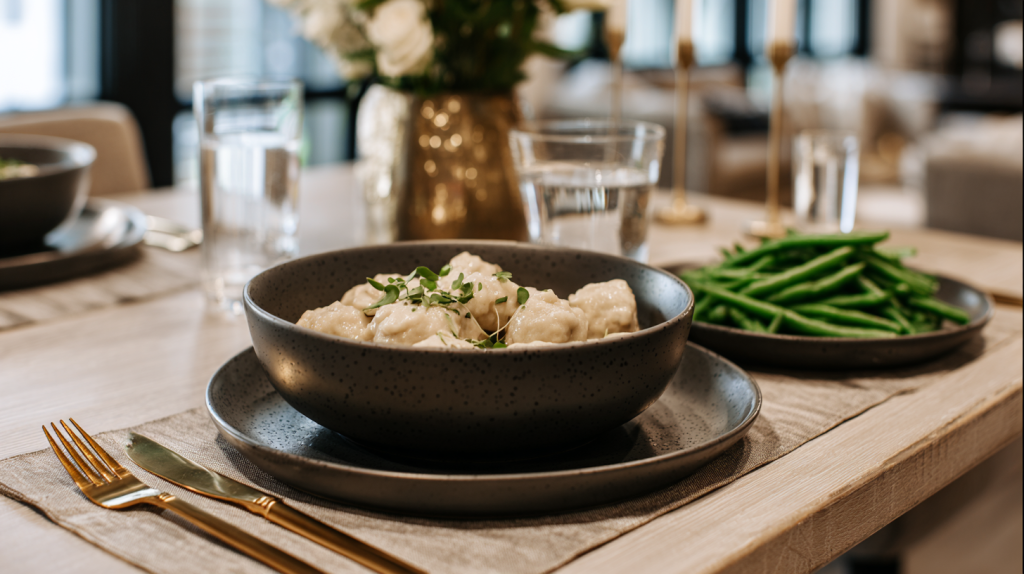
- Once the dumplings are cooked through, gently stir in your shredded chicken. Let everything simmer together for just a few minutes until the chicken is heated through. Taste one more time and adjust seasonings if needed. Serve this comforting dish hot in deep bowls, making sure everyone gets plenty of dumplings, chicken, and that wonderful broth.
Nutrition
Rate This Recipe
Share This Recipe With The Ones You Love!