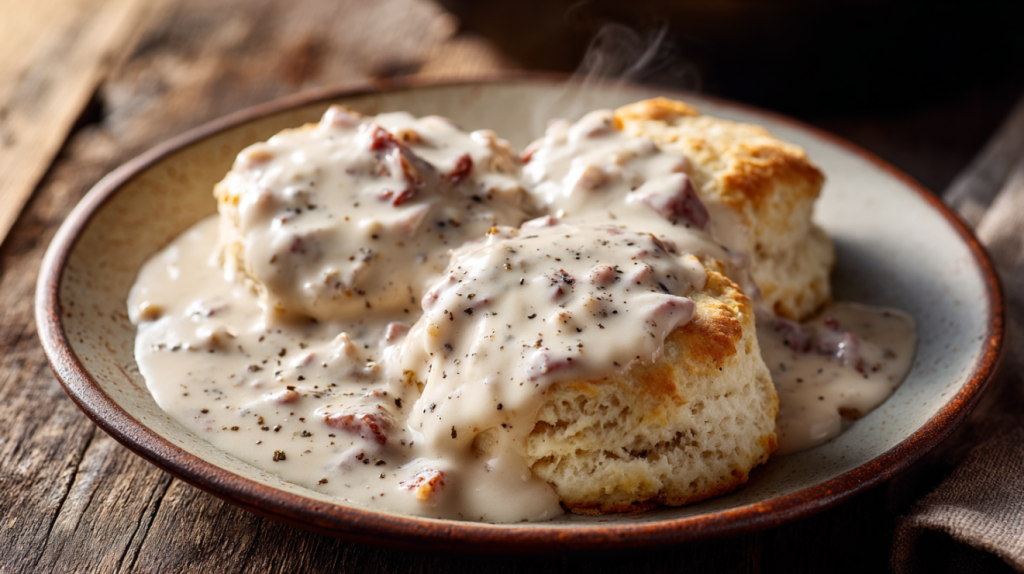
There is nothing quite like a plate of squirrel gravy and biscuits to remind you what real Southern cooking tastes like — the kind of food that fed families long before grocery stores had a deli counter. This is the dish that connected generations to the land, to the hunt, and to the table where everyone gathered.
If you have ever wondered whether squirrel is actually worth cooking, or you have tried it before and it came out tough and gamey, I am going to walk you through everything you need to know. This is a recipe that has been in my family longer than I have been alive, and I have spent decades getting it exactly right. By the time you finish reading this, you will have the confidence to cook squirrel gravy and biscuits that would make any old-timer proud.
Why Squirrel Gravy and Biscuits Is Worth Every Minute
This dish goes back to a time when people ate what the land gave them. In the hills of Appalachia and all across the rural South, squirrel was not a novelty — it was a staple. My grandfather hunted squirrel every fall, and my grandmother turned it into this gravy like it was the most natural thing in the world. Because it was.
What makes squirrel gravy and biscuits special is the flavor of the meat itself. Squirrel is lean, fine-grained, and has a mild, slightly sweet taste — closer to dark-meat chicken or rabbit than anything else. When you braise it low and slow until it is falling off the bone and then fold that tender meat into a rich milk gravy made with the pan drippings, something happens that no chicken gravy will ever match. There is a depth there that comes from the animal’s diet of acorns, hickory nuts, and whatever else the woods provided.
This version is the one I have made more times than I can count. It is simple, it is honest, and it works. If you are exploring the world of wild game cooking, this is one of the very best places to start. I cover many of the techniques and traditions that make wild game shine in The Complete Guide to Southern Cooking: Techniques, Traditions & Time-Tested Wisdom — but this recipe stands beautifully on its own.
The Ingredients That Make This Recipe Sing
The ingredient list for squirrel gravy and biscuits is short and honest, but each one pulls its weight. Let me walk you through what matters and why.
The squirrel itself is the heart of the dish. Two squirrels will feed about six people generously when you are making gravy and biscuits, because the gravy stretches the meat. Young squirrels are more tender, but older ones have deeper flavor — just plan on a longer braise if yours are on the mature side. If you cannot source squirrel, rabbit is the closest substitution and will give you a very similar result. Chicken thighs will work in a pinch, though you will lose that distinctive wild-game depth.
Bacon grease is what I use for browning, and it is not negotiable in my kitchen. It gives that first layer of flavor that sets the whole dish up for success. If you have been saving your drippings (and I hope you have), this is exactly the kind of recipe where they earn their keep. I talk about why this matters in The Three Essential Southern Fats: Bacon Grease, Lard, and Butter — it is one of the foundations of cooking this way.
Use Rich Flavorful Whole Milk – Not None Of That Low-Fat Or Skim Milk Nonsense!
For the gravy, whole milk is essential. Do not try this with skim or low-fat milk — the gravy will be thin and taste like it is apologizing for itself. The braising liquid that you reserve from cooking the squirrel is the secret ingredient. It is concentrated flavor, and when you stir it into the milk gravy, that is where the magic happens.
For the biscuits, self-rising flour is what I reach for every time. White Lily, if you can find it, makes the lightest biscuits you will ever eat because of its low protein content. Cold buttermilk and cold fat are the other keys — if you are curious about the science behind why that matters, I go deeper in Why Cold Fat and Soft Flour Make a Better Biscuit.
Quick Substitution Guide:
- Squirrel → Rabbit (best substitute), chicken thighs (decent but different)
- Bacon grease → Lard (good), butter (acceptable but less flavor)
- Self-rising flour → 2 cups all-purpose + 1 tbsp baking powder + 1/2 tsp salt
- Buttermilk → 3/4 cup whole milk + 2 tsp white vinegar (let sit 5 minutes)
How to Make Squirrel Gravy and Biscuits the Right Way
This is where I am going to stand right next to you and walk you through every step. The recipe card above gives you the basics, but here is where I teach you what to pay attention to — the things that make the difference between a good plate and a great one.
Prepping and Browning the Squirrel
Start by rinsing your squirrel pieces under cold water and patting them bone dry with paper towels. I mean dry. If there is moisture on that meat, it will steam instead of sear, and you will miss out on the browned crust that gives this whole dish its backbone.
Mix your dredging flour with the salt, pepper, garlic powder, and cayenne. Dredge each piece thoroughly, pressing the flour into the meat and shaking off the excess. You want a thin, even coat — not clumps of raw flour hanging off the edges.
Now get your cast iron skillet good and hot over medium-high heat with the bacon grease. If you do not have a well-seasoned cast iron, this recipe is a fine reason to learn. I cover everything you need to know in Cast Iron Cooking: The Southern Way. When the grease shimmers and a tiny pinch of flour flicked into the pan sizzles immediately, you are ready.
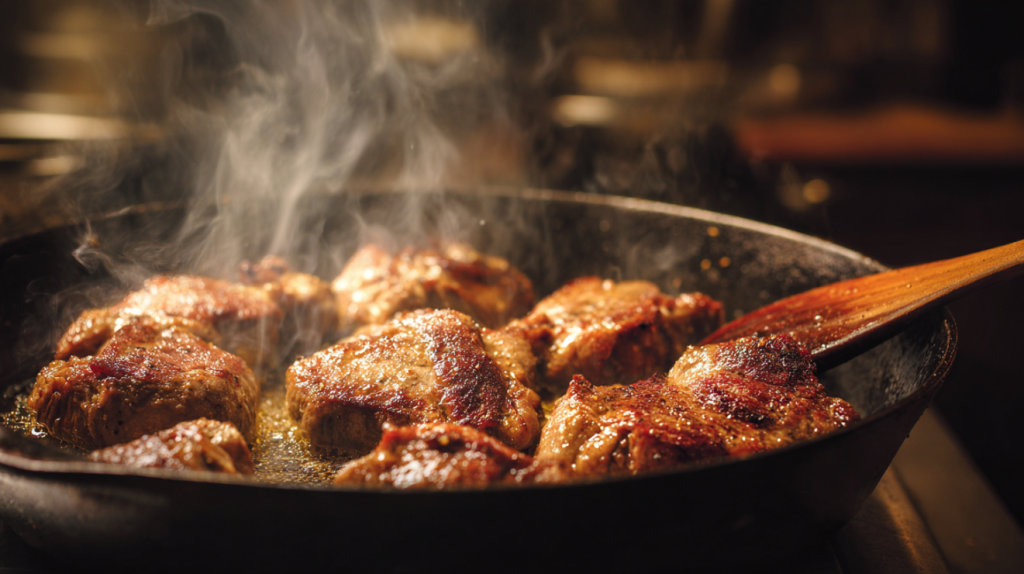
Lay the squirrel pieces in the pan without crowding — work in batches if you need to. Here is what you are listening for: a steady, confident sizzle. If it goes quiet, your pan is too cool. If it is popping and spitting aggressively, back the heat down just a touch. Let each side cook undisturbed for three to four minutes. When the meat releases from the pan on its own and you see a deep golden-brown crust, it is time to turn. Do not force it. If it sticks, it is not ready.
The Low and Slow Braise
Transfer your browned squirrel to a Dutch oven or heavy-bottomed pot. Pour in two cups of water or chicken broth — enough to come about halfway up the meat. Bring it to a boil, then immediately drop it to a bare simmer. You want to see a lazy bubble breaking the surface now and then, nothing more. Cover the pot tightly.
Now comes the patience. Squirrel needs time. Depending on the age of your squirrels, this will take anywhere from an hour and a half to a full two hours. You will know it is done when you can pull a leg and the meat slides right off the bone with no resistance. If it is still clinging, give it more time. This is a technique I rely on for all kinds of Southern braised meats — the approach is the same whether it is squirrel, oxtails, or neck bones. If you want to go deeper on the method, Low & Slow on the Stovetop: Mastering Patience for Meat and Vegetables covers it all.
When the squirrel is tender, pull the pieces out and let them cool enough to handle. Pull the meat from the bones and shred it into bite-sized pieces. Do not chop it too fine — you want to see and taste distinct pieces of meat in the gravy. Strain and reserve at least half a cup of the braising liquid. That liquid is gold.
Building the Gravy
This is where everything comes together, and it is worth paying close attention. Go back to the cast iron skillet you browned the squirrel in — all those beautiful drippings and fond are still in there. Set it over medium heat with about three tablespoons of the drippings.
Sprinkle in the flour and start stirring with a wooden spoon. Do not stop stirring. You are making a roux, and the difference between a good gravy and a paste-flavored disaster is about two minutes of attention. Stir that flour and fat together and watch the color. It should go from pale and pasty to a light golden, and your kitchen should start smelling toasted and nutty. That takes two to three minutes. If it smells even slightly burnt, you have gone too far — start over with fresh drippings and flour. A burnt roux will ruin everything. For a thorough walk-through, I have a whole piece on Roux: The Foundation of Southern Cooking.
Making a Lump-Free Gravy
Now — and this is the critical moment — slowly pour in the warmed milk while stirring constantly. I warm my milk in a small saucepan first because pouring cold milk into a hot roux is the fastest way to get lumps. Pour in a thin, steady stream, stirring the whole time. You will feel the gravy tighten up and then loosen as you add more milk. Once all the milk is in, stir in that reserved braising liquid.
Keep the heat at medium and stir regularly. The gravy will thicken over the next five to seven minutes. You are looking for a consistency that coats the back of your spoon — drag your finger through it and the line should hold for a second before the gravy creeps back together. Taste it now and adjust your salt and pepper. The gravy should be savory and peppery with a richness that makes your mouth water.
Fold the shredded squirrel meat into the gravy gently. Let it warm through on low heat while you turn your attention to the biscuits.
The Biscuits
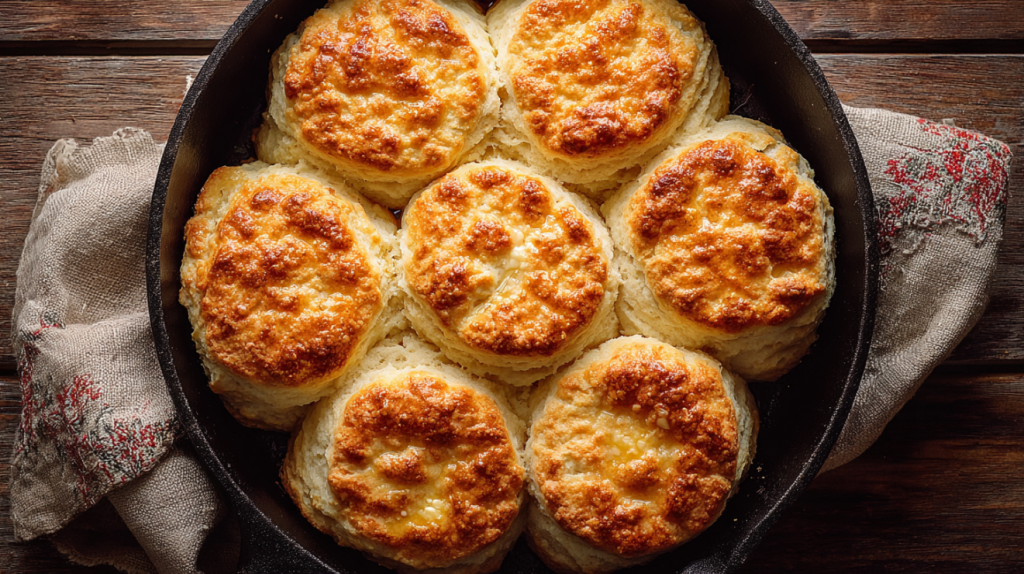
Preheat your oven to 450°F. Put your self-rising flour in a bowl and add your cold fat — lard or butter, cut into small pieces. Work it in with your fingertips, pinching and pressing until the mixture looks like coarse crumbs with some pea-sized pieces of fat still visible. Those little pockets of fat are what create flaky layers.
Pour the cold buttermilk into a well in the center and stir gently with a fork. Stop the moment the dough comes together — it should look shaggy and rough, not smooth. Overworked biscuit dough is tough biscuit dough. Turn it out onto a floured surface, pat it to about three-quarters of an inch thick, fold it once, and pat it again. Cut with a biscuit cutter or the rim of a drinking glass, pressing straight down without twisting.
Brush the tops with melted butter and bake at 450°F for twelve to fifteen minutes. You are watching for tall, golden-brown tops with pale, soft sides where they pressed against each other. They should sound slightly hollow when you tap the top.
What to Serve Alongside Squirrel Gravy and Biscuits
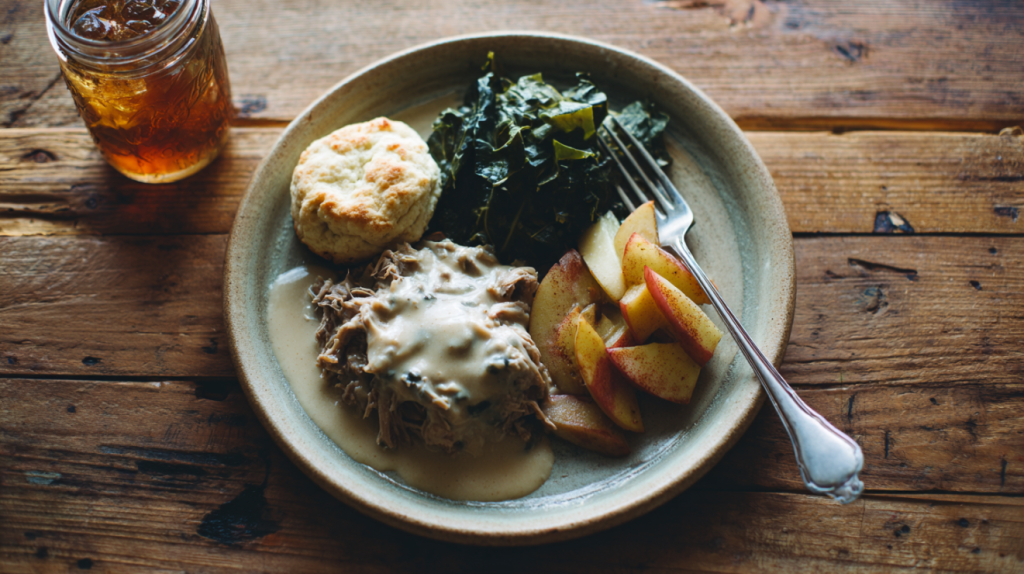
This dish is a meal on its own, but if you want to build a full plate around it, keep the sides simple and let the gravy be the star. A mess of sautéed greens — collards or mustard greens cooked down with a little bit of pork — is about as natural a pairing as you will find. The bitterness of the greens cuts through the richness of the gravy beautifully.
Fried apples are another pairing that my family has always loved with game meat. The sweetness and the soft texture of the apples alongside the savory, peppery gravy is the kind of combination that just works, and it has been showing up on Southern tables alongside wild game for as long as anyone can remember.
For a weeknight supper, this is everything you need. For a Sunday morning or a special breakfast, add some fried eggs and a pot of strong coffee. If you are feeding a crowd or bringing it to a gathering, the gravy holds well in a slow cooker on the warm setting for a couple of hours.
Flavor Variations to Try
Sage and Thyme Cream Gravy
Add a teaspoon of dried sage and half a teaspoon of dried thyme to the roux before you pour in the milk. These two herbs have an old, earthy quality that pairs perfectly with wild game. This is the version I make in late fall when the air is cool and the kitchen smells like the holidays are coming.
Mushroom and Onion Squirrel Gravy
After browning the squirrel, sauté a cup of sliced mushrooms and a diced onion in the drippings before making the roux. The mushrooms add an earthy depth that makes the gravy feel even more like something that came straight out of the woods. My oldest son requests this version every time he visits.
Spicy Cajun-Style Squirrel Gravy
Double the cayenne in the dredge and add a generous pinch to the finished gravy along with half a teaspoon of smoked paprika. This gives the gravy a warm heat that builds with each bite. It is not traditional in my part of the South, but it is mighty good, and it brings a little Louisiana influence to an Appalachian classic.
Red-Eye Style Squirrel Gravy
Replace half a cup of the milk with strong black coffee and skip the flour roux — just deglaze the pan drippings with the coffee and braising liquid, then stir in the milk. The result is thinner than a traditional milk gravy but has a bold, slightly bitter edge that wakes up your whole plate. If you have never tried red-eye style gravy, How to Make Red-Eye Gravy and What to Serve it With is where I walk through the full technique.
Storing, Reheating, and Making Ahead
Squirrel gravy stores well in the refrigerator for three to four days in a tightly sealed container. The gravy will thicken considerably as it cools — that is normal. When you reheat it, do so over medium-low heat on the stove and stir in a splash of milk to loosen it back to the right consistency. Microwave reheating works but can make the gravy break if you heat it too aggressively, so use medium power and stir between intervals.
The biscuits are best fresh, but leftovers can be wrapped tightly in foil and stored at room temperature for a day, or in the refrigerator for up to three days. Reheat wrapped in foil in a 350°F oven for about ten minutes. Do not microwave biscuits if you can help it — they go rubbery.
For make-ahead convenience, braise the squirrel and shred the meat up to two days in advance. Store the shredded meat and braising liquid separately in the refrigerator. When you are ready to eat, make the gravy fresh — it only takes about fifteen minutes. You can also mix the dry biscuit ingredients ahead of time and store them in the refrigerator, then add the buttermilk and bake when you are ready.
The gravy freezes well for up to three months. Freeze it in portions in freezer-safe containers. Thaw overnight in the refrigerator and reheat on the stove with a splash of milk. The biscuits freeze well too — bake them, cool completely, and freeze individually wrapped. Reheat from frozen in a 375°F oven for about twelve minutes.
Creative Ways to Use Leftover Squirrel Gravy and Biscuits
Squirrel Gravy Pot Pie
Spoon the leftover gravy into individual ramekins or a baking dish, add a handful of frozen peas and diced carrots, and top with biscuit dough rounds or a sheet of pie crust. Bake at 400°F until the topping is golden and the gravy is bubbling. It transforms yesterday’s supper into something entirely new.
Open-Faced Gravy Toast
Toast thick slices of bread, lay them on a plate, and ladle the warmed squirrel gravy over the top. A fried egg on top of that is not required, but I would not argue against it. This is the fastest lunch you will ever put together with leftovers.
Squirrel Gravy Rice Bowl
Spoon the gravy over a bowl of hot white rice with a splash of hot sauce on top. The rice soaks up every bit of that gravy, and it stretches one serving into a surprisingly filling meal. My grandchildren eat it this way more often than they eat it over biscuits.
Stuffed Biscuit Pockets
Flatten leftover biscuit dough (or crumble and re-press stale biscuits with a little buttermilk), spoon in some thickened gravy, fold over, seal the edges with a fork, and pan-fry in butter until golden on both sides. Crispy on the outside, warm gravy on the inside.
Squirrel Gravy and Biscuits
Equipment
- Large cast iron skillet (12-inch)
- Dutch oven or heavy-bottomed pot with lid
- Mixing Bowl
- Biscuit cutter or drinking glass
- Baking sheet or cast iron skillet for biscuits
- Tongs
- Wooden Spoon
Ingredients
For the Squirrel
- 2 squirrels cleaned, dressed, and cut into pieces (about 2 lbs total)
- 1 cup all-purpose flour for dredging
- 1 tsp salt
- 1 tsp black pepper
- 0.5 tsp garlic powder
- 0.25 tsp cayenne pepper optional
- 4 tbsp bacon grease or lard for browning
- 2 cups water or chicken broth for braising
For the Milk Gravy
- 3 tbsp pan drippings reserved from browning the squirrel
- 3 tbsp all-purpose flour
- 2.5 cups whole milk warmed slightly
- 0.5 cup braising liquid reserved from cooking the squirrel
- 0.5 tsp salt or to taste
- 0.5 tsp black pepper or to taste
For the Buttermilk Biscuits
- 2 cups self-rising flour White Lily preferred
- 0.25 cup cold lard or butter cut into small pieces
- 0.75 cup cold buttermilk
- 2 tbsp melted butter for brushing tops
Instructions
Prepare and Brown the Squirrel
- Rinse squirrel pieces and pat completely dry with paper towels. Mix the dredging flour, salt, black pepper, garlic powder, and cayenne in a shallow dish. Dredge each piece of squirrel thoroughly in the seasoned flour, shaking off excess.
- Heat the bacon grease in a large cast iron skillet over medium-high heat until it shimmers. Brown the squirrel pieces on all sides, working in batches to avoid crowding the pan, about 3-4 minutes per side. Transfer browned pieces to a Dutch oven or heavy-bottomed pot.
Braise the Squirrel
- Pour the water or chicken broth into the Dutch oven with the browned squirrel. Bring to a boil, then reduce to a low simmer. Cover tightly and cook for 1.5 to 2 hours, until the meat is falling-off-the-bone tender.
- Remove squirrel pieces and let cool slightly. Pull the meat from the bones and shred or chop into bite-sized pieces. Reserve 1/2 cup of the braising liquid for the gravy.
Make the Milk Gravy
- In the cast iron skillet used for browning, heat 3 tablespoons of the reserved pan drippings over medium heat. Sprinkle in the flour and stir constantly with a wooden spoon until the roux turns a light golden color and smells nutty, about 2-3 minutes.
- Slowly pour in the warmed milk, stirring constantly to prevent lumps. Add the reserved braising liquid. Continue stirring over medium heat until the gravy thickens enough to coat the back of a spoon, about 5-7 minutes. Season with salt and pepper.
- Fold the shredded squirrel meat into the gravy. Reduce heat to low and keep warm while you bake the biscuits.
Make the Buttermilk Biscuits
- Preheat oven to 450°F (230°C). Place the self-rising flour in a mixing bowl. Cut in the cold lard or butter using your fingertips or a pastry cutter until the mixture resembles coarse crumbs with some pea-sized pieces remaining.
- Make a well in the center and pour in the cold buttermilk. Stir gently with a fork until just combined — do not overwork the dough. Turn out onto a floured surface and pat to about 3/4-inch thickness. Fold once, pat again, and cut with a biscuit cutter. Do not twist the cutter.
- Place biscuits touching in a cast iron skillet or close together on a baking sheet. Brush tops with melted butter. Bake at 450°F for 12-15 minutes until golden brown on top.
Serve
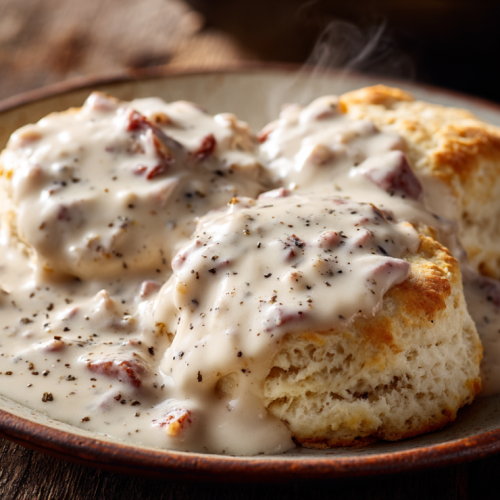
- Split the hot biscuits open and ladle the squirrel gravy generously over the top. Serve immediately with a crack of fresh black pepper.
Nutrition
Rate This Recipe
Share This Recipe With The Ones You Love!Your Squirrel Gravy Questions, Answered
Does squirrel meat taste gamey?
Squirrel is one of the mildest game meats you will find. It tastes closer to dark-meat chicken or rabbit than to venison or duck. The flavor is slightly sweet and nutty, influenced by the squirrel’s diet of acorns and nuts. If you braise it properly, there is nothing off-putting about it at all.
How many squirrels do I need for gravy and biscuits?
Two squirrels will give you enough meat to make gravy that serves about six people generously. If you are feeding a larger group or want leftover gravy, use three. One squirrel yields roughly six to eight ounces of boneless meat depending on size.
Can I use a slow cooker instead of braising on the stove?
Absolutely. Brown the squirrel in the skillet as directed, then transfer to a slow cooker with the liquid. Cook on low for six to eight hours or on high for three to four hours. The meat should be falling off the bone when it is done. Make the gravy on the stove in the cast iron skillet — you still want those pan drippings.
What if my gravy is too thick or too thin?
If the gravy is too thick, stir in a splash of warm milk until it reaches the consistency you want. If it is too thin, let it simmer uncovered for a few more minutes — the liquid will reduce and the gravy will thicken.
Can I make the gravy without the braising liquid?
You can, but you will notice the difference. The braising liquid carries all the concentrated flavor of the meat and bones. If you do not have it — say you braised the squirrel for another purpose and only have the shredded meat — add a tablespoon of better-than-bouillon or a splash of chicken stock to make up for it.
Is squirrel safe to eat?
Squirrel has been eaten safely for centuries across the South and beyond. As with any wild game, proper field dressing and cleaning are important. Cook squirrel to an internal temperature of 165°F, which the long braise in this recipe exceeds by a significant margin. If you are new to processing wild game, a seasoned hunter in your community is the best teacher you will find.
Can I substitute the biscuits for something else?
Toast, cornbread, or rice all work well underneath the gravy. But I will say this — there is something about a hot buttermilk biscuit splitting open under that gravy that nothing else quite replicates. The biscuit absorbs the gravy, the edges stay just barely crisp, and it all comes together in a way that toast simply cannot.
Go Make This — You Will Not Regret It
Squirrel gravy and biscuits is not a relic or a curiosity. It is a real dish that real families have eaten and loved for a very long time, and it deserves a place at your table. The meat is tender. The gravy is rich, peppery, and full of a depth that grocery store poultry just cannot deliver. And those biscuits — hot, golden, and splitting open under a ladle of that gravy — that is the kind of eating that stays with you.
If you have never cooked squirrel before, I want you to know that you can do this. The braise does most of the work, the gravy comes together in minutes, and the biscuits are as simple as they come. Make it once, and I think you will understand why this recipe has been passed down for generations. Come back and tell me how it turned out — I would love to hear about it.