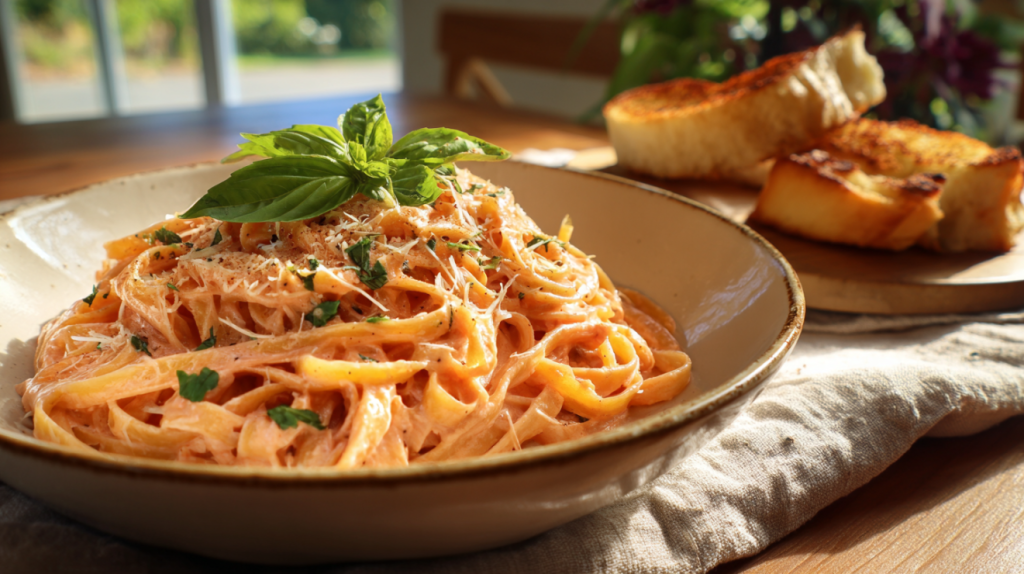
Tomato Alfredo sauce is one of those recipes that sounds fancy but comes together faster than you can set the table — and it tastes like something you would pay good money for at a restaurant. This is the kind of sauce that makes people push back from the table and ask for the recipe before they have even finished their plate.
If you have ever stood in the pasta aisle wondering whether you wanted a red sauce or a cream sauce and wished you could just have both, this is your answer. Tomato Alfredo brings the richness of a classic Alfredo together with the brightness of tomatoes, and the result is a rosy, velvety sauce that clings to every noodle. I am going to walk you through exactly how I make it — the way I have made it for years — so that yours turns out perfect the very first time.
Where Cream Meets Tomato — The Story Behind This Tomato Alfredo Sauce
This sauce started showing up on my table about twenty years ago, back when my youngest granddaughter decided she did not like red sauce but also did not like plain Alfredo. She was about six at the time and very particular about the color of her food. I stirred some of my canned fire-roasted tomatoes into a pot of Alfredo one evening just to see what would happen, and she cleaned her plate without a single complaint. That was the end of the argument.
The truth is, combining tomatoes and cream sauce is nothing new. Italian-Americans have been doing it for generations under names like rosa sauce or pink sauce. But the version I have landed on after years of adjusting is something a little different — it leans heavier on the Parmesan than most, uses fire-roasted tomatoes for depth, and builds a flavor base with tomato paste that gives the whole thing a richness you will not get from just dumping a can of tomatoes into cream.
What I love most about this sauce is that it bridges the gap between a light pasta night and a heavy one. It is rich enough to feel indulgent but has enough acidity from the tomatoes to keep it from sitting heavy. And it takes about thirty minutes from start to table, which means it has earned a permanent spot in my weeknight rotation. For more of the recipes and techniques that anchor my kitchen, you will find everything gathered together in The Complete Guide to Southern Cooking: Techniques, Traditions & Time-Tested Wisdom.
The Ingredients That Make This Tomato Alfredo Sauce Worth Making
Every ingredient in this sauce pulls its weight, and understanding what each one does will help you make smart decisions if you need to swap something out.
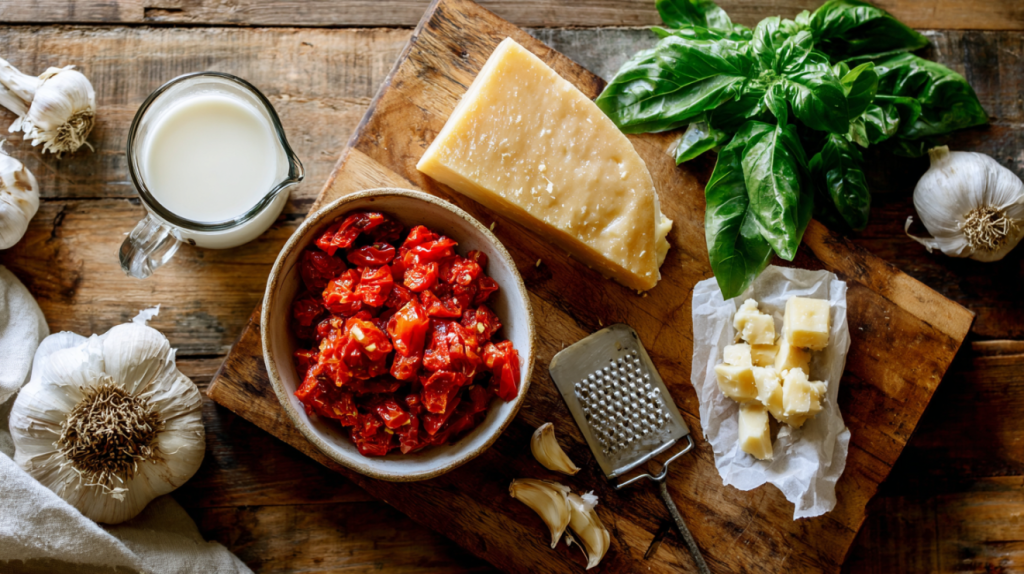
The butter is your foundation. I use unsalted so I can control the salt myself — between the Parmesan and the tomatoes, there is already a fair amount of sodium coming into the sauce. Four tablespoons sounds like a lot, but it is spread across six servings, and it is what gives the sauce that silky, restaurant-quality finish. The butter also serves as the cooking fat for blooming the garlic and toasting the tomato paste, which is where a tremendous amount of flavor gets built. If you want to understand more about how fats work in Southern cooking, I go deep into it in The Three Essential Southern Fats: Bacon Grease, Lard, and Butter.
The fire-roasted tomatoes are not optional in my book. Regular diced tomatoes will work if that is what you have, but the fire-roasted ones bring a subtle smokiness and a deeper, more complex tomato flavor that lifts the whole sauce. Drain them well — I cannot stress this enough. Excess tomato liquid will thin your sauce and fight against the creaminess you are trying to build. The tomato paste is working alongside those tomatoes, acting as a flavor concentrator. When you cook it in butter for a minute or two, it caramelizes just slightly and adds a sweetness and depth that raw tomato paste cannot touch.
Be Sure To Use High Quality Heavy Cream!
Heavy cream is what makes this an Alfredo. There is no substitute that gives you the same result. Half-and-half will thin out and will not reduce properly. Whole milk will break when you add the cheese. If you need a lighter version, I will give you some options in the variations section, but I want to be honest — the best version of this sauce uses real heavy cream. The Parmesan is the other non-negotiable. I mean real Parmigiano-Reggiano or at minimum a good-quality hard Italian cheese, grated fresh right before it goes in. Those pre-shredded bags from the store have anti-caking agents on them that prevent the cheese from melting smoothly, and you will end up with a grainy sauce instead of a silky one.
Here is a quick substitution guide if you need to make adjustments:
- Fire-roasted tomatoes: Regular diced tomatoes work but add a pinch of smoked paprika for depth. San Marzano tomatoes, drained and roughly chopped, are excellent.
- Heavy cream: In a pinch, full-fat coconut cream works for dairy-free. The flavor will be different but still good. Do not use half-and-half.
- Parmesan: Pecorino Romano is a great swap — it is saltier and sharper, so use a little less. Asiago works too but melts less smoothly.
- Butter: Olive oil will work for the sautéing stage, but the sauce will lack some of the richness. For best results, use at least half butter.
How to Make Tomato Alfredo Sauce — Step by Step at the Stove
This is where I stand right next to you and walk you through every single thing you need to watch for. The recipe card has the bones of it, but this is where you learn to feel the sauce and know exactly what is happening at every stage.
Building the Flavor Base
Set a large skillet or a wide saucepan over medium heat. Medium, not medium-high — you are going to be cooking garlic in a minute, and if the pan is too hot, the garlic will burn before you can blink. Drop in the four tablespoons of butter and let them melt completely. You want the butter foamy but not browning. If it starts turning golden before you have added the garlic, pull the pan off the heat for a few seconds and let it settle.
Add the minced garlic and stir it immediately. Keep it moving. You are cooking it just until you can smell it — that warm, toasty garlic aroma that fills the whole kitchen. That takes about sixty seconds. The garlic should look translucent and soft, not brown. If you see any dark spots, your heat is too high. Brown garlic turns bitter, and that bitterness will carry through the entire sauce. Understanding how to build flavor at the base of a dish is one of the most important cooking skills there is, and I cover it thoroughly in The Skill of Layering: How to Build Flavor from the Ground Up.
Simmering The Flavor Base
Now add the tomato paste. Stir it right into the butter and garlic and let it cook for one to two minutes. You will notice the paste darkens from bright red to a deeper, almost brick-red color. That is caramelization happening, and it is exactly what you want. The kitchen will start smelling richer, almost sweet. This step is what separates a good tomato cream sauce from a great one — most recipes skip it entirely, and you can taste the difference.
Add the drained fire-roasted tomatoes and stir everything together. Let the tomatoes cook in that butter-paste mixture for three to four minutes. They will start to soften and break down around the edges. You will hear them sizzle gently. Stir them occasionally and press a few against the side of the pan with your spoon if you want a smoother sauce, or leave them chunkier if you prefer more texture.
Bringing the Cream Together
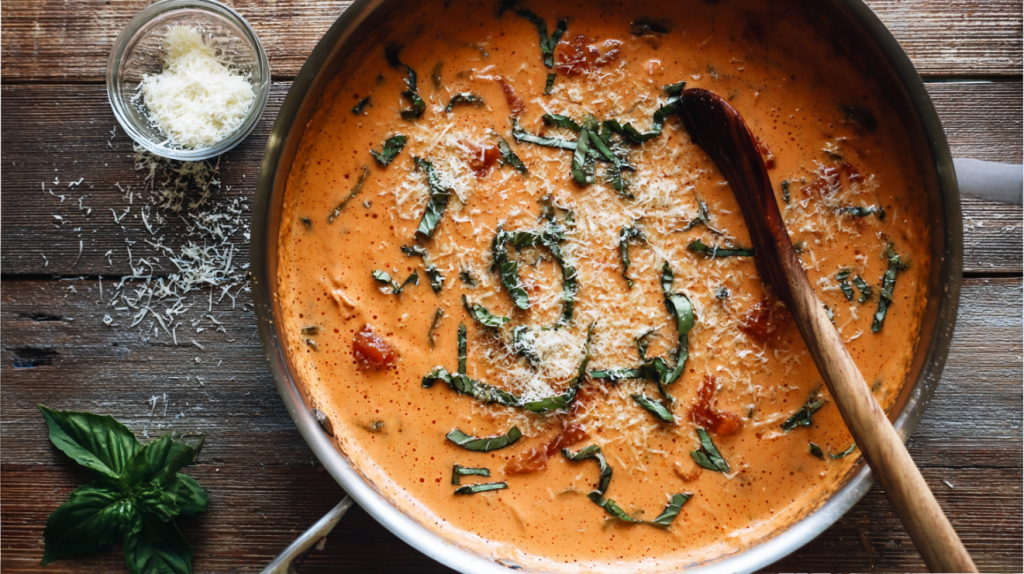
Pour in the two cups of heavy cream. It will sizzle slightly when it hits the hot pan — that is normal. Stir everything together thoroughly. Add your Italian seasoning and the red pepper flakes if you are using them. The sauce will look loose and pale pink at this point, almost like it will never come together. Trust the process.
Bring the sauce to a gentle simmer. You are looking for tiny bubbles breaking at the edges, not a rolling boil. If it starts boiling hard, turn the heat down immediately. A hard boil can cause the cream to break, which means the fat separates out and you end up with an oily, grainy sauce instead of a smooth one. This is the number one mistake people make with cream sauces, and it is easy to avoid — just keep it at a lazy simmer. I talk more about what a proper simmer looks like and how to maintain it in The Art of the Simmer: What Barely a Bubble Looks Like.
Let it simmer gently for eight to ten minutes, stirring every couple of minutes. You will see the sauce start to thicken gradually. The color will deepen from pale pink to a richer, more opaque rosy hue. To test whether it is ready, dip your wooden spoon in the sauce and run your finger across the back. If the line holds and the sauce does not immediately run back together, it is thick enough for the cheese.
Adding the Cheese — The Make or Break Moment
Turn your heat down to low. This is not a suggestion — it is the most important instruction in this entire recipe. High heat and Parmesan are enemies. The proteins in the cheese will seize up and clump if the sauce is too hot, and there is no fixing it once it happens.
Add the Parmesan in small handfuls, about a quarter cup at a time. Stir constantly after each addition, making smooth circles around the pan. Wait until each handful is completely melted and incorporated before you add the next one. You should see the sauce become glossier and thicker with every addition. The whole process takes about three to four minutes if you are patient. If you dump all the cheese in at once, it will clump into a stringy mass at the bottom of the pan, and you will spend the next ten minutes trying to rescue it. According to the USDA Food Safety Guidelines, keeping dairy-based sauces at proper temperatures during preparation is also important for food safety.
Delicious Creamy Cheese Sauce
Once all the cheese is in and the sauce is smooth and creamy, taste it. Season with salt and pepper. If the tomatoes are tasting a little sharp or acidic, add just a tiny pinch of sugar — no more than a quarter teaspoon. It will not make the sauce sweet; it just rounds off that sharp edge. If you are having trouble dialing in the balance of flavors, the principles I lay out in Balancing Sweet, Savory, Salty, and Sour will help you understand exactly what your sauce needs.
What to Serve with Tomato Alfredo Sauce — Pairings That Work
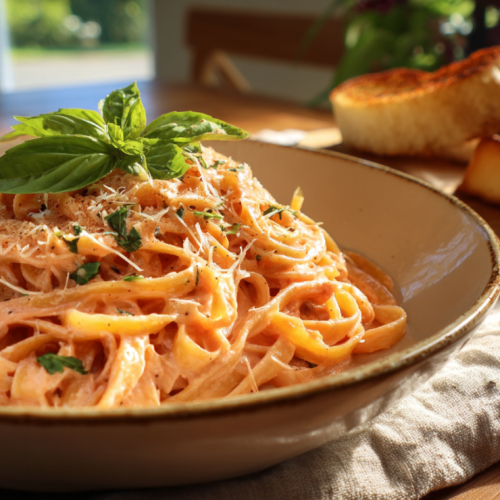
This sauce was born on fettuccine in my kitchen, and that is still my favorite way to serve it. The wide, flat noodles give the sauce something to grab onto, and every bite is properly coated. But penne is a close second — those little tubes fill up with sauce, and you get a burst of flavor with every one. Rigatoni works beautifully for the same reason.
On the side, keep things simple. A crisp green salad with a sharp vinaigrette cuts through the richness of the cream and makes the whole meal feel balanced. Garlic bread is the obvious companion, and I will not pretend I do not make it every single time. If you want something a little more substantial, roasted broccoli or sautéed zucchini alongside the pasta adds color and freshness without competing with the sauce.
For occasions, this is one of those recipes that works everywhere. It is quick enough for a Tuesday night but impressive enough for company. I have taken it to potlucks in a slow cooker on warm and come home with an empty pot every time. It is also a favorite at our house on Valentine’s Day — there is something about that rosy pink color that feels just right for the occasion.
Five Ways to Change Up Your Tomato Alfredo Sauce
Spicy Tomato Alfredo with Italian Sausage
Brown a half pound of hot Italian sausage in the skillet before you start the sauce, crumbling it into small pieces as it cooks. Remove it, build the sauce in the same pan using all those flavorful drippings, and stir the sausage back in at the end. My oldest grandson requests this version at least twice a month, and it turns a simple pasta night into something that feels like a real event.
Roasted Red Pepper Tomato Alfredo
Replace the fire-roasted tomatoes with a cup of jarred roasted red peppers, drained and roughly chopped. The peppers add a sweeter, smokier flavor and turn the sauce a deeper orange-pink. It pairs especially well with chicken or shrimp tossed in at the end.
Sun-Dried Tomato Alfredo
Swap the diced tomatoes for a third of a cup of oil-packed sun-dried tomatoes, chopped fine. The flavor is more concentrated and intense — almost nutty. Use a tablespoon of the oil from the jar in place of one tablespoon of the butter for extra depth. This version is rich, so a little goes a long way.
Lighter Tomato Alfredo with Cream Cheese
For a lighter take, use one cup of heavy cream instead of two, and stir in four ounces of cream cheese (cut into cubes) along with the Parmesan. The cream cheese gives body and creaminess without the same heaviness. It is not quite the same as the full version, but it is genuinely good and I have served it to people who had no idea it was the lighter option.
Tomato Alfredo with Fresh Tomatoes and Basil
In the summer when the garden is producing, skip the canned tomatoes entirely. Use two cups of fresh Roma tomatoes, seeded and diced. Sauté them a minute or two longer since fresh tomatoes have more moisture. Stir in a generous handful of torn fresh basil right at the end, off the heat. This version tastes like summer in a bowl.
Storing, Reheating, and Making Tomato Alfredo Sauce Ahead
This sauce stores well in the refrigerator for three to four days in an airtight container. It will thicken considerably as it cools — that is perfectly normal and not a sign of anything wrong. The Parmesan and butter solidify when cold, which is exactly what they are supposed to do.
To reheat, put it in a saucepan over low heat and add a splash of cream or milk to loosen it back up. Stir frequently and be patient — low and slow is the key. Do not microwave it if you can avoid it. Microwaves heat unevenly and tend to break cream sauces, leaving you with oily patches and grainy spots. If the microwave is your only option, heat it in thirty-second bursts and stir well between each one. For a deeper dive into reheating techniques that keep food tasting fresh, take a look at How to Freeze and Reheat Soups, Stews & Broths the Right Way.
For make-ahead, you can prepare the sauce completely and refrigerate it. It actually tastes wonderful the next day — the flavors marry overnight and the tomatoes meld more fully into the cream. Just reheat gently and toss with freshly cooked pasta. I do not recommend making the pasta ahead and storing it in the sauce, though. The noodles will absorb the sauce and you will end up with a dry, starchy mess.
Freezing is possible but not ideal. Cream-based sauces can separate when frozen and thawed. If you do freeze it, use a freezer-safe container and leave a half inch of headspace. Thaw overnight in the refrigerator and reheat over low heat, whisking constantly. It may not be as silky smooth as fresh, but it will still taste good.
Leftover Tomato Alfredo Sauce — Do Not Let a Drop Go to Waste
Quick Weeknight Egg Drop Soup
This might sound unexpected, but heat a cup of leftover sauce with a cup of chicken broth until it is thin enough to be soupy. Drizzle in a beaten egg while stirring, and you have a creamy, tomatoey egg drop soup that takes five minutes and tastes far better than it has any right to.
Tomato Alfredo Pizza Base
Spread leftover sauce on store-bought or homemade pizza dough instead of traditional pizza sauce. Top with mozzarella, fresh basil, and whatever else you like. The cream in the sauce makes the pizza taste gourmet with zero extra effort.
Baked Tomato Alfredo Chicken
Pour leftover sauce over seasoned chicken breasts in a baking dish. Top with mozzarella and bake at 375 degrees for 25 to 30 minutes until the chicken is cooked through and the cheese is bubbly. Serve over rice or with a piece of crusty bread to soak up every last bit.
Creamy Tomato Alfredo Dip
Warm leftover sauce in a small cast iron skillet, stir in some extra Parmesan and a handful of shredded mozzarella, and serve it with crusty bread, breadsticks, or tortilla chips. It disappears fast at any gathering.
Tomato Alfredo Sauce
Equipment
- Large skillet or saucepan
- Wooden Spoon
- Cheese grater or Microplane
Ingredients
The Sauce
- 4 tbsp unsalted butter
- 4 cloves garlic minced
- 1 cup fire-roasted diced tomatoes drained, or one 14.5 oz can drained
- 2 tbsp tomato paste
- 2 cup heavy cream
- 1.5 cup freshly grated Parmesan cheese use real Parmigiano-Reggiano if possible
- 0.5 tsp salt or to taste
- 0.25 tsp black pepper freshly ground
- 0.25 tsp red pepper flakes optional
- 0.25 tsp Italian seasoning
- 1 pinch sugar only if tomatoes taste sharp
For Serving
- 1 lb fettuccine or penne pasta cooked al dente
- 0.5 cup reserved pasta water
- fresh basil for garnish
Instructions
Build the Base
- Melt the butter in a large skillet or saucepan over medium heat. Add the minced garlic and cook, stirring constantly, for about 60 seconds until fragrant but not browned.
- Add the tomato paste and stir it into the butter and garlic. Cook for 1 to 2 minutes, stirring often, until the paste darkens slightly and becomes fragrant.
- Add the drained fire-roasted tomatoes and stir to combine. Cook for 3 to 4 minutes, letting the tomatoes soften and meld with the butter mixture.
Make the Cream Sauce
- Pour in the heavy cream and stir everything together. Add the Italian seasoning and red pepper flakes if using. Bring the sauce to a gentle simmer — do not let it boil.
- Let the sauce simmer gently for 8 to 10 minutes, stirring occasionally, until it thickens enough to coat the back of a spoon.
- Reduce heat to low. Gradually add the grated Parmesan cheese in small handfuls, stirring constantly until each addition is fully melted and smooth before adding more.
Finish and Serve
- Taste the sauce and season with salt, pepper, and a pinch of sugar if the tomatoes taste too sharp. The sauce should be creamy, smooth, and a beautiful rosy pink.
- Toss the cooked pasta directly into the sauce. Add reserved pasta water a splash at a time if the sauce needs loosening. Serve immediately with extra Parmesan and fresh basil.
Nutrition
Rate This Recipe
Share This Recipe With The Ones You Love!Your Tomato Alfredo Sauce Questions — Answered
Can I make tomato Alfredo sauce ahead of time?
Absolutely. Make the sauce completely, let it cool, and store it in the refrigerator for up to four days. It thickens when cold, so reheat it gently over low heat with a splash of cream or pasta water. The flavors actually improve after a day in the fridge.
Why did my tomato Alfredo sauce get grainy?
The most common cause is adding the cheese when the heat is too high. Parmesan proteins clump at high temperatures. Always reduce your heat to low before adding the cheese, and add it in small handfuls, stirring between each addition. Pre-shredded cheese can also cause this because of the anti-caking coatings — always grate your own. If the sauce has already gone grainy, you can sometimes rescue it by transferring it to a blender and blending on low until smooth.
Can I use half-and-half instead of heavy cream?
I do not recommend it. Half-and-half does not have enough fat to create the proper emulsion, and it will not thicken the same way heavy cream does. Your sauce will be thinner and may separate. If you want to lighten it up, use one cup of heavy cream plus four ounces of cream cheese instead of two cups of cream. According to the USDA Dairy Products Guide, heavy cream contains about 36 percent milkfat, which is what gives cream sauces their stability.
What pasta shape works best with tomato Alfredo sauce?
Fettuccine is the classic choice because the wide noodles hold onto the creamy sauce beautifully. Penne and rigatoni are also excellent because the sauce gets inside the tubes. For a lighter meal, angel hair works but eat it quickly — it absorbs sauce fast. I would avoid very small shapes like orzo or elbows, which tend to get lost in a sauce this rich.
Can I add protein to this sauce?
Grilled or pan-seared chicken, sliced thin and added at the end, is the most popular option. Shrimp works wonderfully — sauté them separately and toss them in right before serving so they stay tender. Crumbled Italian sausage cooked in the skillet before building the sauce adds incredible flavor. Just be sure to cook your protein separately rather than simmering it in the sauce, which can dilute the flavor and change the texture.
How do I keep the sauce from getting too thick?
The sauce continues to thicken as it sits, especially once the cheese is added. Keep that reserved pasta water handy and add it a tablespoon at a time. The starch in the water helps maintain the creamy consistency without diluting the flavor the way plain water would. If reheating, always add a splash of liquid to compensate for thickening.
Is tomato Alfredo sauce the same as pink sauce or rosa sauce?
They are very close relatives. Pink sauce and rosa sauce are both terms for tomato-cream pasta sauces, though the exact ratios vary. My tomato Alfredo leans more heavily on the Parmesan and uses fire-roasted tomatoes for a deeper, smokier flavor than a typical pink sauce. The technique is also slightly different — I build a flavor base with toasted tomato paste rather than simply mixing marinara and Alfredo together.
Go Make This Sauce — Your Kitchen Is Waiting
This tomato Alfredo sauce has been feeding my family for two decades, and I have yet to find a person who does not come back for seconds. It is the kind of recipe that looks and tastes like you spent hours in the kitchen, but the reality is you are sitting down to eat in thirty minutes. That is the best kind of cooking — impressive results without the fuss.
I hope you will give this one a try and make it your own. Change the tomatoes, swap in a different cheese, throw some shrimp on top — it is your kitchen and your table. Just remember the two rules that matter most: keep the heat low when you add the cheese, and drain those tomatoes. Do that, and everything else falls right into place. When you make it, come back and tell me how it turned out. I love hearing from the people who cook from this site — it is the best part of what I do.