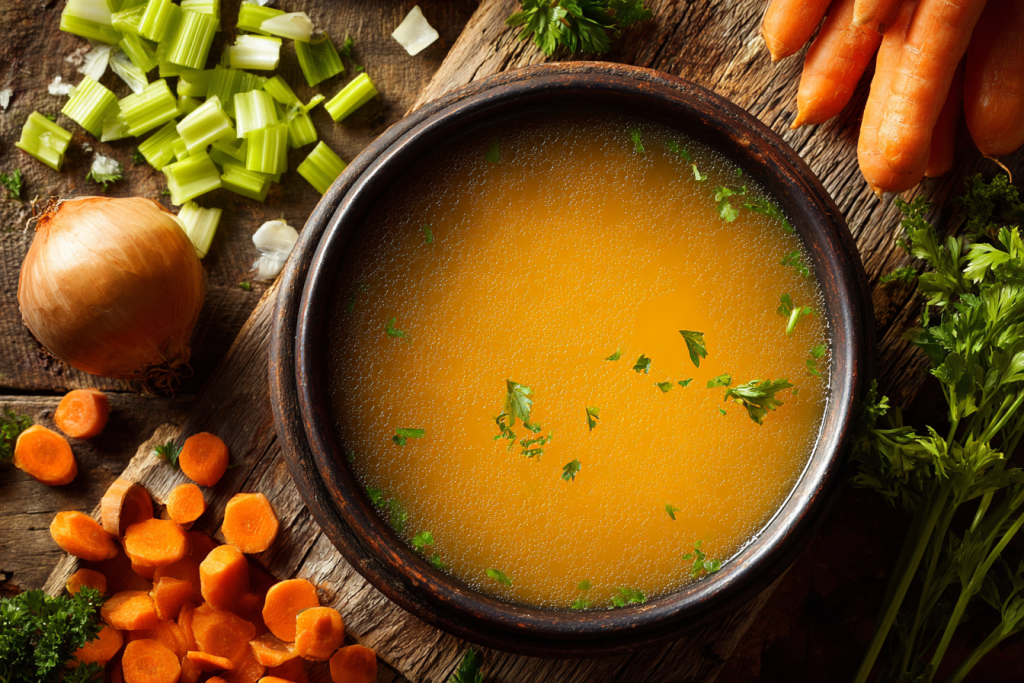
If you’ve been searching for a vegetable broth recipe that delivers deep, savory flavor without a laundry list of fancy ingredients, you’ve come to the right place. This isn’t just a list of instructions; this is the method that will give you a perfect, reliable broth every single time. I’m going to walk you through it, step-by-step, just as if you were standing right here beside me.
There are few things more disappointing in the kitchen than reaching for vegetable broth only to find the boxed kind is either saltier than the sea or tastes faintly of, well, cardboard. It can leave a good soup feeling flat and a risotto tasting hollow. For years, I watched my own mother turn a humble pile of vegetable peels and ends into the most beautiful, fragrant golden broth, and I’ve come to believe that this is one of the foundational secrets to a truly soulful kitchen.
My Time-Tested Vegetable Broth Recipe
The beauty of this recipe is its forgiving nature. It’s a framework for you to use what you have, reducing waste and creating something wonderful in the process. The measurements are a guide, but don’t feel shy about adjusting them based on the vegetable scraps you’ve saved.
The real magic begins before any water ever touches the pot. We start by gently coaxing the sweetness out of our vegetables. This slow caramelization is what builds the first and most important layer of flavor. It’s a quiet step, but it’s the one that makes all the difference between a watery stock and a rich, complex broth. You’ll know it’s working when a wonderfully sweet and earthy aroma begins to fill your kitchen.
The Simple Joy of Homemade Broth
There is a deep satisfaction that comes from making things from scratch. Creating your own homemade broth is a simple act of turning what many would discard—onion skins, carrot peels, celery ends—into liquid gold. It connects you to the food you cook in a more meaningful way.
This broth becomes the heart of so many other dishes. It’s the base for weeknight soups that need a little boost, the liquid that makes your risotto creamy and flavorful, and a wonderful, light sauce for steamed vegetables. Once you have a few jars of this in your freezer, you’ll find a hundred different ways to use it. It’s like having a little bit of kitchen insurance on hand.

Choosing Your Vegetables for the Best Vegetable Broth Recipe
While you can use many different vegetables, a few form the essential foundation. Think of these as your non-negotiables for a balanced, savory flavor.
- Onions: Absolutely essential. They provide the deep, sweet, savory backbone. And please, leave the skins on! The dry, papery skins are what will give your broth that beautiful, rich golden color.
- Carrots: These lend a wonderful, earthy sweetness that balances the onion. No need to peel them; just give them a good scrub.
- Celery: This provides a clean, slightly peppery note that brightens everything up. The leafy ends are particularly full of flavor, so be sure to toss those in.
Vegetable Scraps to Save (and Which to Avoid)
This is where you can get creative and make the broth your own. Keep a large bag or container in your freezer and add to it throughout the week.
- Good to Add: Leek tops, mushroom stems, parsley stems, fennel fronds, corn cobs (for a lovely sweetness!), and clean potato peels.
- Avoid at All Costs: Cruciferous vegetables like broccoli, cauliflower, cabbage, or Brussels sprouts. They release sulfur compounds when cooked for a long time, which will make your broth taste unpleasantly bitter. It’s a lesson most of us only need to learn once.
Insider Secret: For an incredible depth of flavor that mimics meat-based stocks, add a handful of dried shiitake mushrooms or a few fresh mushroom stems to your pot. They release a wonderful umami flavor that makes the broth taste exceptionally rich and satisfying.
Common Mistakes to Avoid
 Making broth is simple, but a few common missteps can be the difference between success and disappointment.
- Boiling Instead of Simmering: This is the most common mistake. A rolling boil will make your broth cloudy and can break the vegetables down too aggressively. You want a gentle, lazy simmer—just a few bubbles breaking the surface now and then. This patiently coaxes the flavor out. To be honest, I have found simmering my vegetables in a crock-pot for 8 hours makes the most delicious broth ever!
- Salting Too Early: Never salt your broth while it’s cooking. This broth is a building block for other recipes. By leaving it unsalted, you have complete control over the seasoning of your final dish, whether it’s a delicate soup or a hearty stew.
- Pressing the Vegetables When Straining: It’s tempting to push on the cooked vegetables to get every last drop of liquid out, but this will press tiny particles through the strainer and make your broth cloudy. Simply let it drain naturally.
Storing and Using Your Vegetable Broth Recipe
Once your beautiful broth has been strained and cooled, it’s ready to be stored. It will keep in an airtight container in the refrigerator for about a week.
For longer storage, the freezer is your best friend. I like to freeze it in a few different portion sizes. Large containers are perfect for big batches of soup and rice stock, while smaller portions frozen in ice cube trays are perfect for deglazing a pan or thinning out a sauce.
Pro-Tip: The reason we start with cold water instead of hot is a bit of kitchen science. As the cold water slowly heats, it more effectively dissolves the flavorful compounds from the vegetables, resulting in a more robust and well-rounded broth. It’s a small detail that comes from understanding the science behind that beautiful browning and flavor extraction.
This broth is more than an ingredient; it’s a starting point for so much creativity in the kitchen. It’s a testament to the idea that with a little time and care, even the most humble ingredients can be transformed into something truly special. For more ideas on using every last scrap, you might enjoy these Tips for a No-Waste Kitchen.
A Foundation of Goodness
There you have it. This simple, honest vegetable broth recipe is a quiet workhorse in my kitchen, and I hope it becomes one in yours, too. It’s a little ritual that pays you back in flavor tenfold. It’s the warm, reassuring base that will make everything you cook just a little bit better, a little more nourishing, and a little more delicious. Take this method, make it your own, and enjoy the simple, profound pleasure of a well-made broth.
The Delicious Guide to Golden Vegetable Broth: From Scraps to Liquid Gold
Equipment
- Large stockpot or Dutch oven (at least 8 quarts)
- Cutting board
- Chef's knife
- Vegetable peeler
- Large wooden spoon
- Fine-mesh strainer or colander lined with cheesecloth
- Large bowl or container to catch the strained broth
- Storage containers or jars (for freezing or refrigeration)
Ingredients
- 2 tablespoons olive oil
- 2 large yellow onions skins on, quartered
- 3-4 large carrots unpeeled, roughly chopped
- 3-4 celery stalks with leaves, roughly chopped
- 1 leek white and light green parts, washed thoroughly and chopped
- 5-6 cloves garlic skins on, smashed
- 1 large bunch of parsley stems or whole parsley
- 8-10 whole black peppercorns
- 2 bay leaves
- 4 quarts 16 cups cold water
Instructions
- Optional Vegetable Scraps: clean peels from carrots and potatoes, mushroom stems, fennel fronds, corn cobs (for sweetness). Avoid: cruciferous vegetables like broccoli, cabbage, or cauliflower as they can make the broth bitter.
- Sauté the Aromatics: Heat the olive oil in the large stockpot over medium-high heat. Add the onions, carrots, and celery. Cook for 8-10 minutes, stirring occasionally, until the vegetables are softened and have started to brown and caramelize. This step is crucial for developing a deep, rich flavor.
- Add Remaining Ingredients: Add the chopped leek, smashed garlic cloves, parsley, peppercorns, and bay leaves to the pot. Stir everything together for another minute until fragrant.
- Cover and Simmer: Pour the cold water over the vegetables, ensuring they are fully submerged. Bring the mixture to a boil, then immediately reduce the heat to low. Let it gently simmer, partially covered, for at least 1 to 1.5 hours. Do not let it boil rapidly, as this can make the broth cloudy.
- Strain the Broth: Turn off the heat. Carefully pour the broth through a fine-mesh strainer or a colander lined with cheesecloth into a large bowl. For an extra clear broth, don't press down on the vegetables in the strainer, as this can push through unwanted solids.
- Cool and Store: Let the broth cool to room temperature before transferring it to jars or airtight containers for storage.
Notes
Nutrition
Rate This Recipe
Share This Recipe With The Ones You Love!