There is nothing quite as disappointing as a bowl of soggy cabbage at a barbecue, but finding a truly reliable, crisp, and flavor-packed easy coleslaw recipe can feel like searching for a needle in a haystack.
This guide promises to not only give you the exact ratios for the perfect creamy dressing but also the technique to ensure every bite stays crunchy for days. While you are planning your menu, this dish pairs perfectly with delicious BBQ Pulled Pork Sliders!
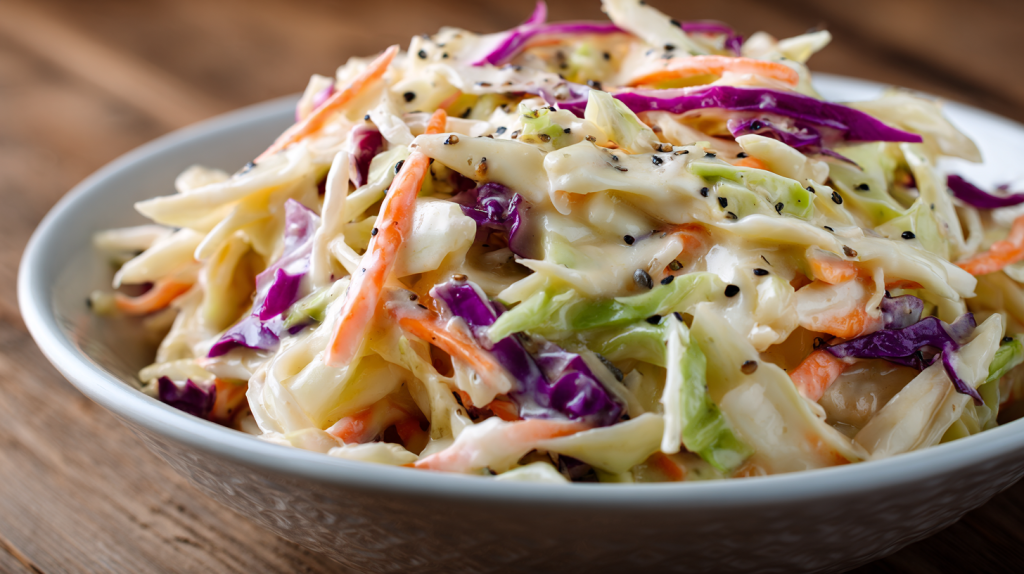
If I had a nickel for every time I’ve seen a beautiful bowl of slaw turned into a watery soup by the time the burgers hit the grill, I’d be a wealthy woman. We have all been there—stuck with a side dish that is overly sweet, devoid of flavor, or just plain limp. It is frustrating to spend time chopping fresh vegetables only to have the dressing fail you.
But I am here to tell you that it doesn’t have to be that way. Over decades of feeding family reunions and church potlucks, I have refined a method that guarantees a slaw that stands up to the heat. The secret isn’t just in the cabbage; it is in the delicate balance of the dressing. By marrying the sharp bite of Dijon with the earthy sweetness of maple syrup, we create a depth of flavor that simple sugar just can’t provide. This isn’t just another side dish; it is about to become the most requested bowl on your table.
Why This Easy Coleslaw Recipe Will Change Your Summer
There is a deep, abiding soul to good southern food, and coleslaw sits right at the heart of it. It is the humble workhorse of the Sunday dinner, providing that necessary cold, acidic crunch to cut through the richness of fried chicken or smoked pork. But too often, it is treated as an afterthought. I believe that when you treat simple ingredients with respect, they sing.
The magic of this particular recipe lies in the science of the dressing. We aren’t just mixing mayonnaise and vinegar here; we are creating an emulsion that coats the cabbage without drowning it. The addition of maple syrup offers a complexity—a hint of woodsy caramel—that plays beautifully against the sharp, sinus-clearing heat of Dijon mustard. It is a technique I started using years ago when I ran out of honey, and I have never looked back. It elevates the dish from “picnic filler” to “gourmet side” without adding any extra work.
Furthermore, we need to talk about texture. The “crunch” is not an accident; it is an engineering marvel of the kitchen. By slicing the cabbage correctly and dressing it at the right moment, we preserve the cell structure of the vegetable. This means that even three hours into the cookout, your slaw still has that satisfying snap that makes people go back for seconds.
The Ingredients: Sourcing the Soul of Your Slaw
When a recipe is this simple, the quality of your ingredients tells the whole story. You cannot hide behind heavy sauces or frying batter here. Every element needs to stand on its own two feet.
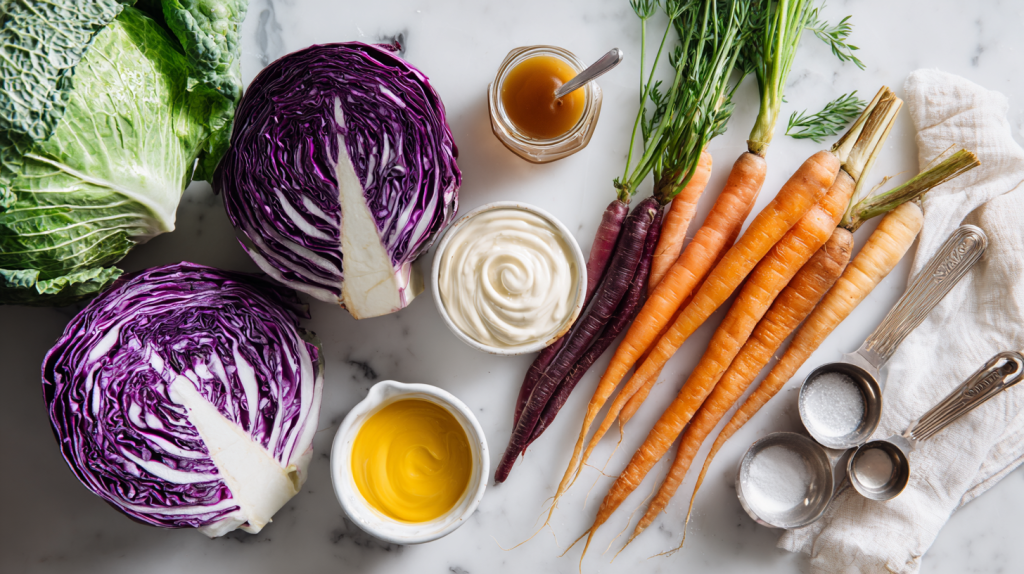
First and foremost, let’s talk about the mayonnaise. In my kitchen, mayonnaise is a food group, not just a condiment. You need a high-quality, full-fat mayonnaise to act as the binder. I have found that the lower-fat versions contain too much water and fillers, which will break your emulsion and lead to that dreaded watery bottom in the bowl. If you can, reach for a brand known for its egg-yolk richness.
Then there is the cabbage. While those bags of pre-shredded mix are convenient in a pinch, I strongly urge you to buy the whole heads. Pre-bagged cabbage is often dry and has lost a good deal of its natural sweetness. Slicing it fresh releases natural sugars and oils that are essential for the flavor profile.
Finally, the secret weapons: celery seeds and pure maple syrup. Celery seeds might seem insignificant, but they provide a savory, herbal punch that cuts through the creaminess. And please, do not use pancake syrup. We need the real deal—pure maple syrup—for that earthy sweetness that balances the apple cider vinegar. If you are unsure about the differences in syrup grades, The USDA Grading Standards for Maple Syrup offers a wonderful explanation of flavor profiles.
Quick Substitution Guide
- Mayonnaise: Can be swapped for high-quality Greek yogurt for a lighter version, though the taste will be tangier.
- Maple Syrup: Honey or agave nectar work, but you lose the woodsy note.
- Apple Cider Vinegar: White vinegar is too harsh; try rice wine vinegar if you are out of cider vinegar.
Mastering the Method: More Than Just Mixing
Making this easy coleslaw recipe is not just about dumping things in a bowl; it is about technique and timing. The way you handle the vegetables determines the final texture.
Preparing the Canvas
Start by preparing your vegetables. When you are shredding the cabbage, you are looking for uniformity. I prefer to cut the cabbage in half, remove that tough core (it never softens enough to be pleasant), and slice it into thin ribbons. You want them thin enough to bend, but thick enough to crunch. If you cut them too fine, they turn to mush; too thick, and it feels like you’re eating raw salad.
Add your shredded carrots and scallions to the bowl. I always toss the vegetables together with my hands before adding any liquid. This ensures that you have a beautiful confetti of green, purple, and orange evenly distributed, so no one gets a scoop of just plain cabbage.
The Emulsion
In a separate bowl, we build the dressing. Whisk the mayonnaise, apple cider vinegar, Dijon, maple syrup, sugar, lemon juice, and spices together. You want to whisk this vigorously. You are looking for a transformation here—the mixture should go from separate ingredients to a smooth, glossy ribbons of ivory sauce. It should smell bright and vinegary with a sweet undertone.
The Marriage
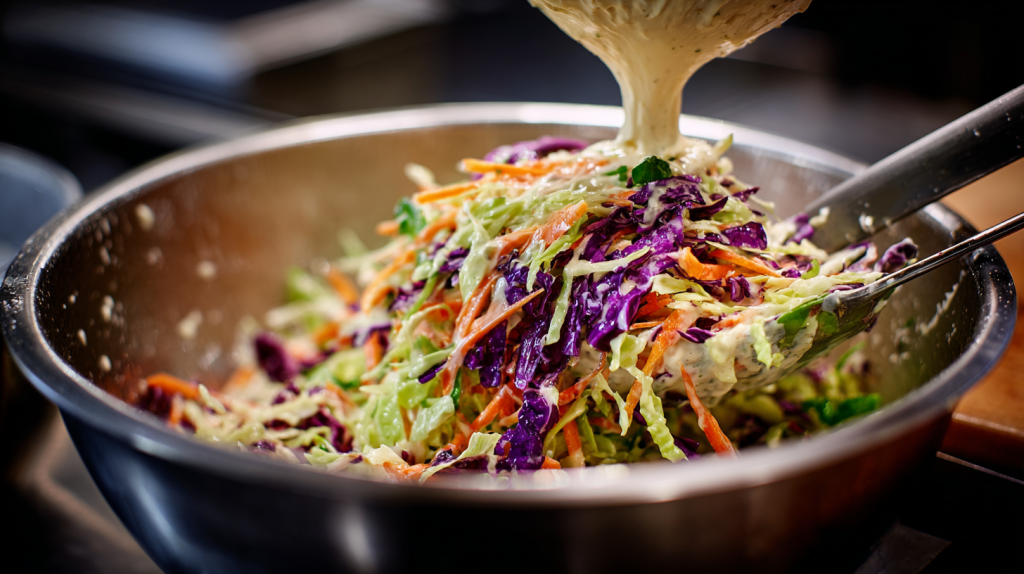
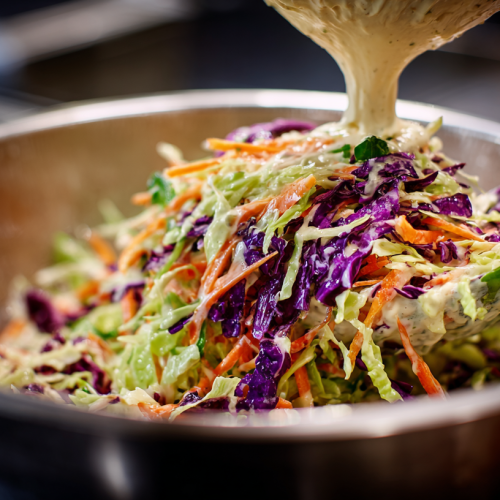
Pour the dressing over the vegetables. Using a spatula, fold it in from the bottom up. Do not mash it; fold it like you are folding egg whites into a cake batter. You want to coat every strand. Now, here is the hardest part: wait. Cover the bowl and put it in the fridge for at least 30 minutes. This is the “marriage” period where the salt draws out just enough moisture from the cabbage to tenderize it, and the flavors meld into something greater than the sum of their parts.
Serving Suggestions: Bringing Southern Food to the Table
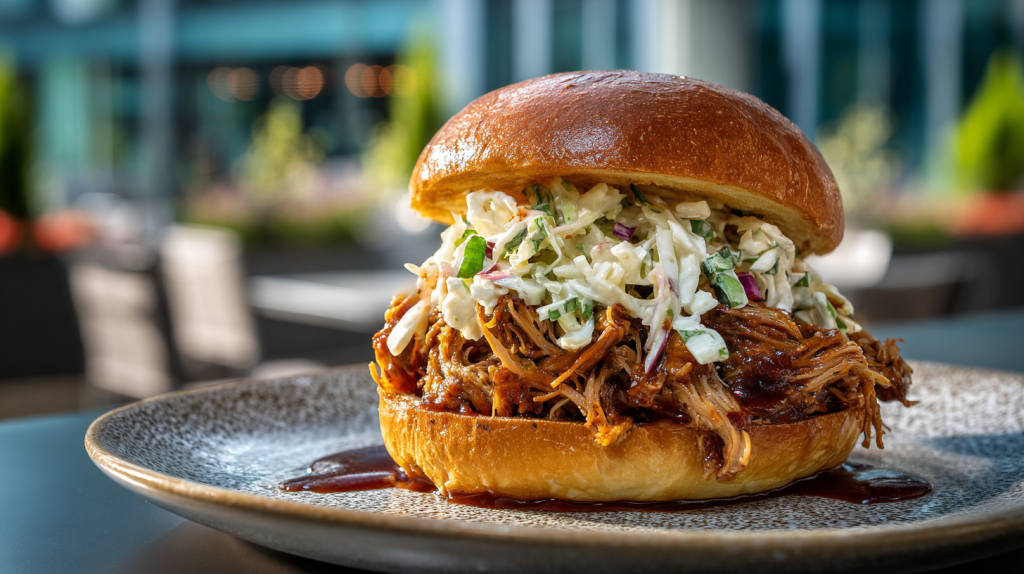
This slaw is a chameleon. It is perfectly at home next to a burger on a paper plate, but it is elegant enough for crystal bowls on Sunday. Because of the maple and mustard notes, it pairs exceptionally well with smoked meats. The acid cuts right through the fat of a pulled pork sandwich or a rack of ribs.
I also love serving this alongside seafood. The lemon juice in the dressing echoes the lemon you squeeze on fish, making it a natural companion for fried catfish or shrimp tacos. If you are hosting a fish fry, serve this with my Classic Hush Puppies with Onion for the full experience.
Insider Secret: If you are serving this outdoors, nestle your serving bowl inside a larger bowl filled with crushed ice. Mayo-based salads need to stay cool, and this keeps it crisp and safe to eat all afternoon.
Variations on a Classic
While I stand by this recipe as the gold standard, my kitchen is a place of experimentation. Once you have mastered the base, you can take this easy coleslaw recipe in a few different directions.
The Spicy Kick
For those who like a little heat, I add a teaspoon of Cajun seasoning and a pinch of cayenne pepper to the dressing. The creamy mayo cools the spice, but you get a lovely warmth at the back of your throat. My nephew calls this “Bayou Slaw,” and he puts it on everything from hot dogs to chili.
The Orchard Twist
Since we are already using maple and cider vinegar, apples are a natural friend here. Julienne a crisp Granny Smith apple and toss it in with the cabbage. It adds a tart, fruity crunch that is absolutely delightful in the autumn months. Just be sure to toss the apple in a little lemon juice first so it doesn’t brown.
The Herb Garden
If you want something fresher, perhaps to go with grilled chicken, double the celery seed and add a handful of chopped fresh dill and parsley. It transforms the dish into something very bright and garden-fresh.
Storage and Refreshing for Later
One of the best things about this slaw is that it is sturdy. However, storage is key. You should store leftovers in an airtight container in the refrigerator. It will keep well for about 3 days.
Now, a word of caution: as the slaw sits, the cabbage will release more water. By day two, the dressing might look a little thinner. This is normal. Before serving leftovers, I like to give it a good stir and sometimes add a tiny dollop of fresh mayo to bring the creaminess back.
Pro-Tip: Do not freeze this slaw. The freezing process bursts the cell walls of the cabbage and causes the mayonnaise to separate. You will end up with a watery, grainy mess that no amount of stirring can fix.
Giving Leftovers a New Life
If you find yourself with leftover slaw, do not throw it out! It is a fantastic ingredient in its own right. One of my favorite quick lunches is to use the leftover slaw as a topping for fish tacos. The cabbage has already softened slightly, making it the perfect texture for a taco.
Another favorite in our house is the “Southern Reuben.” Use this slaw instead of sauerkraut on a grilled corned beef sandwich. The creamy sweetness balances the salty meat in a way that traditional sauerkraut just can’t.

Troubleshooting Your Slaw: Frequently Asked Questions
Why is my coleslaw watery?
This usually happens for two reasons: either the cabbage was too wet when you dressed it, or it has been sitting too long. To prevent this, you can salt your cabbage shreds and let them sit in a colander for an hour, then rinse and dry them before dressing. However, with my robust dressing recipe, you usually don’t need this extra step if you plan to eat it within a few hours.
Can I make this easy coleslaw recipe ahead of time?
Yes, and you should! Making it 3-4 hours ahead is actually ideal for flavor development. If you need to prep it a day in advance, I suggest chopping all the vegetables and making the dressing, but keeping them in separate containers until about an hour before serving.
What if I don’t have buttermilk?
Good news—this recipe doesn’t use buttermilk! We rely on the interplay of mayonnaise and apple cider vinegar for that tang. It makes the slaw slightly more stable in warm weather compared to dairy-heavy versions.
How do I fix a bland coleslaw?
If you taste your slaw and it feels “flat,” it is almost always a lack of acid or salt. Try adding another splash of lemon juice or a pinch of salt. Sometimes, a tiny bit more Dijon mustard can wake up the flavors without making it taste like mustard.
Is this recipe gluten-free?
Naturally, yes. All the fresh ingredients are gluten-free. Just double-check your Dijon mustard and mayonnaise labels to be sure no thickeners containing wheat were used, but standard brands are usually safe.
Confidence in the Kitchen
Mastering this easy coleslaw recipe gives you a secret weapon for every gathering on your calendar. It is reliable, it is affordable, and it brings a freshness to the table that balances out heavy comfort foods. When you see your family scraping the bowl clean, you’ll know you have cracked the code.
I hope this recipe brings as much joy to your table as it has to mine. There is something special about passing down these techniques, ensuring that good, homemade food continues to be the centerpiece of our gatherings. So go ahead, chop that cabbage, whisk that dressing, and watch the smiles appear. I can’t wait to hear how this turns out in your kitchen!
The Best Creamy Coleslaw with Tangy Maple Dijon Dressing
Equipment
- Large mixing bowl
- Medium bowl
- Whisk
- Sharp knife or mandoline
- Box grater or food processor
Ingredients
For the Slaw
- 5 cups green cabbage finely shredded
- 2 cups red cabbage finely shredded
- 2 medium carrots peeled and shredded
- 3 scallions thinly sliced
For the Dressing
- 1 cup mayonnaise use high-quality mayo for best results
- 2 tablespoons apple cider vinegar
- 1 tablespoon Dijon mustard
- 1 tablespoon pure maple syrup
- 2 tablespoons granulated sugar
- 1 teaspoon fresh lemon juice
- 3/4 teaspoon celery seeds
- 3/4 teaspoon sea salt adjust to taste
- 1/4 teaspoon freshly ground black pepper
Instructions
- Begin by preparing your vegetables. Remove any wilted outer leaves from both cabbages, then slice them in half and cut out the tough core. Using a sharp knife, mandoline, or food processor fitted with a slicing blade, shred the cabbage into thin, uniform strips. Transfer to a large mixing bowl.
- Add the shredded carrots and sliced scallions to the bowl with the cabbage. Gently toss the vegetables together with your hands or tongs to distribute the colors evenly throughout the mixture.
- In a separate medium bowl, prepare the dressing by adding the mayonnaise, apple cider vinegar, Dijon mustard, maple syrup, sugar, lemon juice, celery seeds, salt, and pepper. Whisk vigorously until all ingredients are fully incorporated and the dressing is smooth and creamy with no lumps remaining.
- Pour the prepared dressing over the shredded vegetable mixture. Using a large spoon or spatula, fold the dressing into the slaw, turning from the bottom up to ensure every strand of cabbage gets coated with the creamy dressing.
- Taste the coleslaw and adjust the seasoning as needed – add more salt for depth, extra pepper for bite, or a touch more vinegar if you prefer a tangier flavor profile.
- Cover the bowl tightly with plastic wrap and refrigerate for at least 30 minutes before serving. This resting time allows the flavors to meld together and the cabbage to soften slightly while still maintaining its satisfying crunch.
Nutrition
Rate This Recipe
Share This Recipe With The Ones You Love!