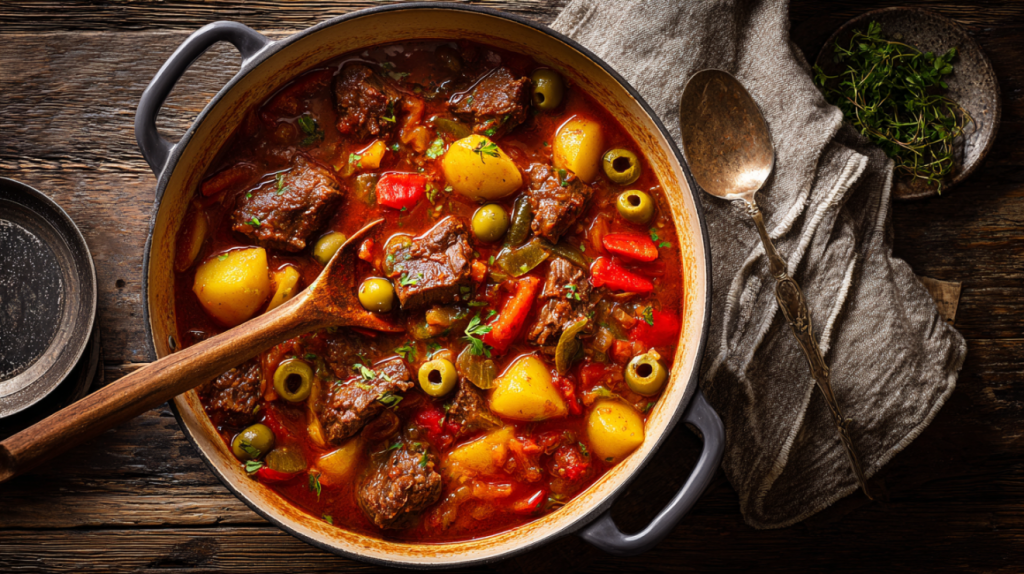
There is something about a big pot of beef caldereta simmering on the stove that makes the whole house feel warmer — the tomatoes and peppers filling the kitchen with a rich, deep smell that tells everyone supper is going to be something special.
If you have ever tried to make beef caldereta at home and ended up with tough meat swimming in a thin, watery sauce that tasted like canned tomatoes and not much else, I understand the frustration. This recipe is going to change that for you. I am going to walk you through every step — from getting a real sear on that beef to building the kind of thick, complex sauce that clings to every piece of meat and potato on the plate.
This is the beef caldereta recipe I have been making for years, and it is the one people come back for. The meat falls apart at the touch of a fork, the sauce is rich and layered with flavor, and the whole thing comes together in one pot. Whether you are feeding your family on a weeknight or putting this out for a gathering, this is the recipe that delivers every single time.
Where Beef Caldereta Comes From and Why It Belongs on Your Table
Caldereta has deep roots in Filipino cooking, and the name itself comes from the Spanish word “caldera,” meaning cauldron. It is a dish born from the blending of Spanish and Filipino food traditions — a hearty meat stew that has been adapted and passed down through generations of home cooks across the Philippines. Every family has their own version, and that is part of what makes it special.
I first came across beef caldereta through a neighbor who had grown up in Manila and married a man from right here in the South. She brought a pot to a church supper one evening, and I remember standing over that dish thinking, “This is the kind of cooking I understand.” It was slow-cooked, it was rich, it was generous. The flavors reminded me of the tomato-based stews and braised meats I had grown up with, but with something different — that savory depth from the liver spread and the brightness from the peppers and olives that made me pay attention.
What makes this version worth making is the time and care that goes into it. There are no shortcuts here that I would recommend. You sear the beef properly, you build the sauce from real tomatoes and good broth, and you let it all come together slowly on the stove until everything is exactly where it needs to be. This is one-pot cooking at its finest, and it is a dish that connects to a broader tradition of The Complete Guide to Southern Cooking: Techniques, Traditions & Time-Tested Wisdom — the idea that the best meals come from patience, good ingredients, and a willingness to stand at the stove and pay attention.
The Ingredients That Make This Beef Caldereta Sing
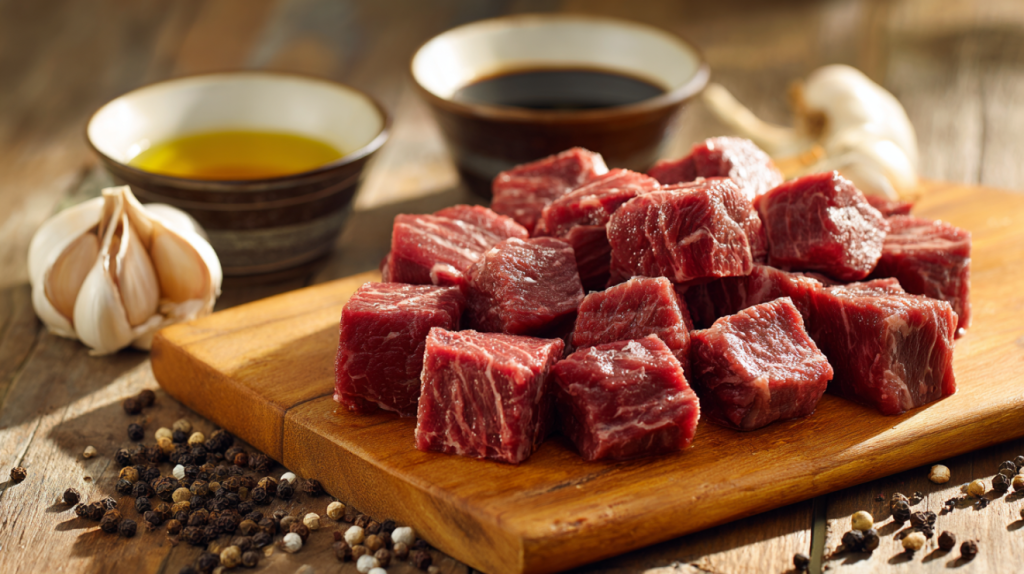
The star of this dish is the beef, and you want to use chuck roast. Chuck has the right amount of fat and connective tissue that breaks down during the long, slow simmer and turns into something silky and rich. Do not use a lean cut like top round or sirloin — it will dry out and turn tough no matter how long you cook it. Chuck is your friend here.
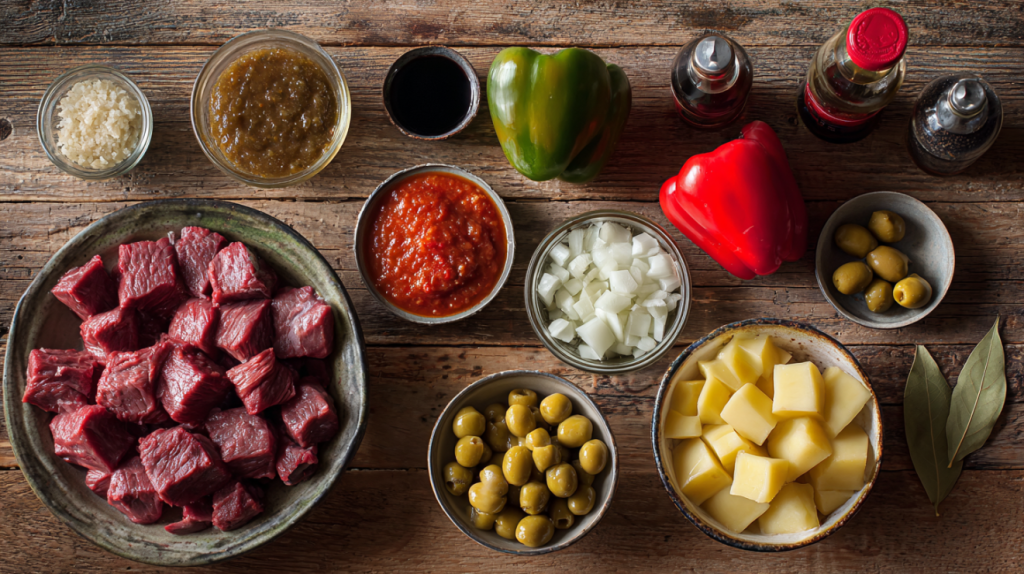
The liver spread is the ingredient that makes caldereta taste like caldereta. I know it sounds unusual if you have never cooked with it before, but trust me on this. It dissolves into the sauce and gives it a deep, savory richness that you simply cannot get any other way. In the Philippines, Reno brand liver spread is the standard, but any smooth liver pâté works. If you truly cannot stomach the idea of liver spread, you can substitute a few tablespoons of peanut butter — it will give you body and richness, though the flavor will be different.
The Delicious Three-Fold Tomato Base Is The Secret!
The tomato base here is threefold: tomato paste for concentrated depth, crushed tomatoes for body, and tomato sauce for a smooth background. Layering tomatoes this way is something I learned early on, and it is the same principle behind any good tomato-based braise. If you want to understand more about why this works, I get into the method in Using Umami in Southern Cooking: Tomato Paste, Mushrooms & MSG — tomato paste in particular is an umami powerhouse when you cook it down properly.
The bell peppers — both red and green — add sweetness and a fresh, almost roasted quality when they soften in that sauce. The green olives bring a briny sharpness that cuts through all that richness, and the optional cheddar cheese stirred in at the end adds a creamy, slightly tangy finish that rounds everything out. Fish sauce is the quiet backbone — just a couple of tablespoons deepen the flavor without making anything taste fishy.
Quick Substitution Guide:
- Liver spread → 2 tablespoons creamy peanut butter (different flavor, similar body)
- Calamansi juice → fresh lemon juice or lime juice
- Fish sauce → 1 tablespoon soy sauce plus a pinch of salt
- Beef chuck → beef stew meat (will work but may be less tender)
- Green olives → capers (use half the amount, they are stronger)
- Cheddar cheese → skip it entirely if you prefer a cleaner sauce
How to Make Beef Caldereta That Falls Apart on the Fork
This is where we get to work. I am going to walk you through every step of this beef caldereta recipe the way I would if you were standing right next to me at the stove. The recipe card gives you the bones of it, but this is where you learn what to watch for, what to listen for, and how to know when things are right.
Getting the Sear Right
Start by getting your beef out of that marinade and letting the pieces sit on a paper towel for a minute. You want the surface dry enough to sear properly — wet meat steams instead of browning, and you will miss out on all that flavor. Heat your Dutch oven over medium-high heat with the cooking oil until you see the faintest wisp of smoke rising from the surface. That is your signal.
Now, lay the beef pieces in the pot in a single layer with space between them. Do not crowd them. If you have to do two or three batches, do two or three batches. Each piece needs to sit flat against the hot surface and stay there without being disturbed for a good three to four minutes. You will hear a strong, steady sizzle — that is the sound of the The Maillard Reaction: How Browning Creates Flavor doing its work. When you see dark golden-brown edges forming and the meat releases from the pot without sticking, flip it. If it sticks, it is not ready yet.
Once every piece has that deep crust on at least two sides, pull them out and set them on a plate. Do not worry about them being cooked through — they are going back in the pot for a long simmer. What matters right now is that crust.
Building the Sauce from the Ground Up
In the same pot — and this is important, do not wipe it out — you have all that browned fond stuck to the bottom. That is pure flavor. Drop in your diced onion and let it cook until it goes soft and translucent, about four to five minutes. You will hear it sizzle when it hits the pot, and as it cooks, the moisture from the onion will start to lift that fond off the bottom. Stir it around with a wooden spoon.
Add the garlic and cook it just until you catch that sharp, roasted garlic smell — about a minute. Not longer. Burnt garlic is bitter and there is no fixing it.
Be Sure To Use Rich High-Quality Tomato Paste
Now comes the tomato paste. Push the onions and garlic to the side and drop the paste right onto the exposed surface of the pot. Let it sit there and cook for two full minutes, stirring it occasionally. You are watching for the color to shift from bright red to a deeper, almost brick-red shade. The smell will change too — it goes from sharp and raw to something warmer, almost sweet. This step concentrates the tomato flavor and removes that tinny, raw taste that tomato paste can have straight from the can.
Pour in the crushed tomatoes, tomato sauce, and beef broth. Stir everything together and use your spoon to scrape up every last bit of fond from the bottom of the pot. The liquid should turn a deep, reddish-brown. This is your braising liquid, and everything from this point forward builds on this base. According to the USDA, beef stews and braised meats should reach an internal temperature of 145°F at minimum, but with a long braise like this, you will be well past that — you are cooking for tenderness, not just safety.
The Low and Slow Simmer
Return all the seared beef and any juices that collected on the plate back into the pot. Drop in the bay leaves. Bring everything to a boil, then turn the heat down to low — you want the gentlest simmer you can manage. I cover this in detail in Low & Slow on the Stovetop: Mastering Patience for Meat and Vegetables, but the short version is this: you want to see a lazy bubble breaking the surface every few seconds, not a rolling boil.
Cover the pot and let it go for an hour and a half to two hours. Check on it every thirty minutes or so, giving it a stir to make sure nothing is sticking to the bottom. The beef is done when you can press on a piece with the back of a spoon and it yields easily, almost breaking apart. If it feels firm or bouncy, it needs more time. Patience here is not optional — it is the whole point.
Once the beef is tender, add the quartered potatoes. They need about fifteen to twenty minutes at a simmer to cook through. You will know they are ready when a fork slides into the center with no resistance.
Bringing It All Together
This is the finish line, and it is where the dish transforms from a good beef stew into a proper caldereta. Stir in the liver spread — it will look a little strange going in, but within a minute or two of stirring it will dissolve completely into the sauce, giving it a darker color and a velvety richness that is unmistakable.
Add the bell pepper pieces, the olives, the fish sauce, and the sugar. If you like heat, drop in your chili peppers now. Let everything simmer uncovered for about eight to ten minutes. The peppers should be tender but still have some structure to them — not limp and faded, but softened with bright color. The sauce will thicken as it simmers uncovered.
If you are using the cheddar cheese, stir it in now. It melts into the sauce and adds a subtle creaminess that balances the acidity of the tomatoes. Taste the sauce and adjust — a little more fish sauce for depth, a pinch more salt, a crack of pepper. You are looking for a balance where the tomato, the savory liver spread, and the brightness of the peppers all come through.
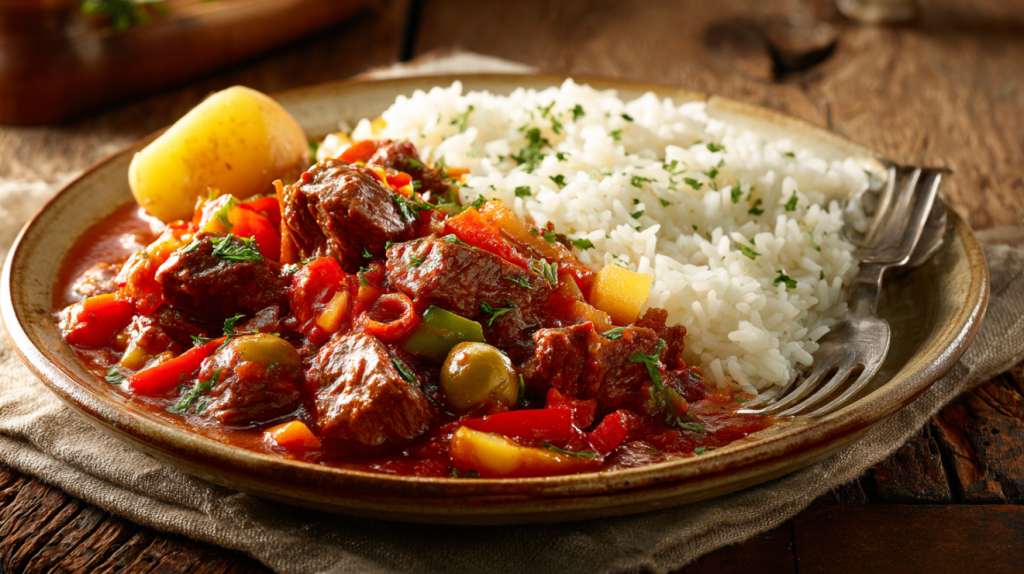
Remove the bay leaves and serve this hot over steamed white rice. That rice is not optional — it catches the sauce and makes every bite complete.
What to Put on the Table Alongside Beef Caldereta
The rice is essential — I cannot stress that enough. Steamed jasmine rice is traditional and it works perfectly, but I have also served this over plain long-grain white rice and it is just as good. The starch soaks up that thick tomato sauce and makes sure nothing goes to waste on the plate.
For sides, keep it simple. A fresh green salad with a bright vinaigrette cuts through the richness beautifully. If you want something warm, steamed green beans or sautéed bok choy add a clean, fresh contrast without competing with the bold flavors of the caldereta. A few slices of good bread on the table are never a bad idea either — there will be sauce worth sopping up.
This is a dish that works beautifully for a Sunday dinner when you have time to let it simmer properly, but it also reheats so well that you can make it on a Saturday afternoon and serve it throughout the week. It is the kind of meal that welcomes a crowd — set the pot on the table with a big bowl of rice and let everyone serve themselves.
Flavor Variations Worth Trying
Goat Caldereta (Kalderetang Kambing)
The original and most traditional version of caldereta in the Philippines uses goat meat instead of beef. If you can find bone-in goat shoulder or leg, cut it into pieces and follow the same process. Goat has a stronger, gamier flavor that stands up to the bold sauce beautifully. You may need to simmer it a bit longer — goat can take two to two and a half hours to get truly tender.
Pork Caldereta
Pork shoulder works wonderfully here, cut into the same sized chunks as the beef. It cooks a bit faster and has a milder flavor that lets the sauce take center stage. This is a great option if you are cooking for people who prefer pork over beef, and it stretches the budget a little further too.
Spicy Caldereta
If you want real heat, go beyond the optional bird’s eye chilies and add a couple of tablespoons of chili garlic paste along with the tomato paste. You can also stir in a teaspoon of crushed red pepper flakes during the simmer. The heat builds into the sauce over time and pairs incredibly well with the richness of the liver spread. My nephew requests this version every time he comes over.
Chicken Caldereta
For a lighter, faster version, use bone-in chicken thighs and reduce the simmer time to about 45 minutes. Chicken thighs have enough fat to stay moist and flavorful, and they soak up that tomato sauce like nothing else. This is the weeknight version when you want the caldereta flavor without the long cook time.
How to Store, Reheat, and Make This Ahead
Beef caldereta keeps beautifully in the refrigerator for four to five days in an airtight container. In fact, I strongly recommend making this a day ahead if you can — the flavors marry overnight and the sauce develops even more depth after sitting. When you open that container the next day, you will notice the sauce has thickened and the beef has absorbed even more flavor.
To reheat, pour a serving into a pot on the stove over medium-low heat, adding a splash of beef broth or water if the sauce has thickened too much. Stir gently to keep the potatoes from breaking apart. Avoid the microwave if you can — it heats unevenly and the potatoes tend to get rubbery around the edges. The stove gives you control and keeps everything at the right texture. For more detailed guidance on reheating stews properly, I cover the principles in How to Freeze and Reheat Soups, Stews & Broths the Right Way.
For freezing, caldereta freezes well for up to three months. I recommend freezing it before adding the bell peppers and olives — those ingredients lose their texture in the freezer. When you are ready to serve, thaw overnight in the refrigerator, reheat on the stove, and add fresh peppers and olives during the last ten minutes of reheating. This way you get the convenience of a freezer meal with the quality of a freshly finished dish.
What to Do with Leftover Beef Caldereta
Caldereta Pasta
Shred the leftover beef and toss it with the sauce and cooked penne or rigatoni. The thick tomato sauce coats the pasta beautifully, and the shredded meat gives it a bolognese-like quality. Add a sprinkle of parmesan on top and you have a completely different meal from the same pot of caldereta.
Caldereta Rice Bowl
Spoon leftover caldereta over fresh steamed rice, top it with a fried egg, and add a drizzle of hot sauce. The runny yolk mixes into the sauce and creates something almost decadent. This is my favorite way to eat the leftovers, and it comes together in five minutes.
Caldereta Stuffed Peppers
Hollow out large bell peppers, fill them with a mixture of leftover caldereta and cooked rice, top with shredded cheese, and bake at 375°F until the peppers are tender and the cheese is bubbling. It is a smart way to stretch the leftovers into a whole new presentation.
Caldereta Empanada Filling
Chop the leftover beef small, mix it with the thickened sauce, and use it as filling for empanadas. Whether you use store-bought pie dough or make your own, the caldereta filling bakes up rich and savory inside that flaky crust.
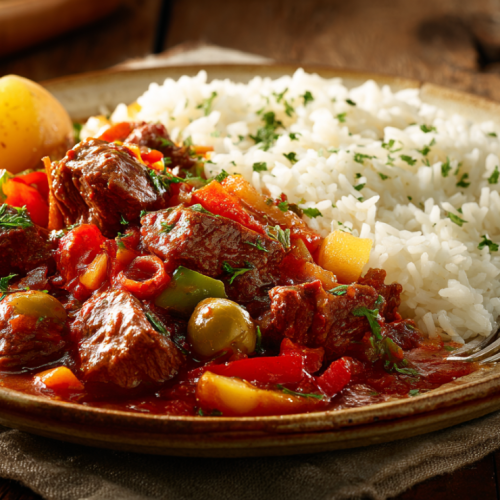
Beef Caldereta Recipe
Equipment
- Large Dutch Oven or Heavy-Bottomed Pot
- Sharp Chef's Knife
- Wooden Spoon
- Cutting board
Ingredients
Beef and Marinade
- 3 lbs beef chuck roast cut into 1.5-inch cubes
- 3 tablespoons soy sauce
- 2 tablespoons calamansi juice or lemon juice
- 1 teaspoon black pepper freshly ground
Sauce Base
- 3 tablespoons cooking oil
- 1 large yellow onion diced
- 6 cloves garlic minced
- 2 tablespoons tomato paste
- 1 14.5-ounce can crushed tomatoes
- 1 cup tomato sauce
- 2 cups beef broth
- 2 tablespoons liver spread such as Reno or any canned liver pâté
- 2 bay leaves
Vegetables and Finishing
- 3 medium Yukon Gold potatoes peeled and quartered
- 2 large red bell peppers cut into large pieces
- 1 large green bell pepper cut into large pieces
- 0.5 cup green olives whole or sliced
- 0.25 cup grated cheddar cheese optional, for stirring in at the end
- 2 tablespoons fish sauce adjust to taste
- 1 tablespoon sugar
- salt and pepper to taste
- 2 Thai chili peppers or bird's eye chilies optional, for heat
Instructions
Marinate the Beef
- Combine the cubed beef chuck with soy sauce, calamansi or lemon juice, and black pepper in a large bowl. Toss to coat evenly. Let it marinate for at least 20 minutes at room temperature, or up to overnight in the refrigerator.
Sear and Build the Base
- Heat cooking oil in a large Dutch oven or heavy-bottomed pot over medium-high heat. Working in batches so as not to crowd the pot, sear the marinated beef on all sides until deep golden brown, about 3-4 minutes per side. Remove the beef and set aside.
- In the same pot, add the diced onion and cook until softened and translucent, about 4-5 minutes. Add the minced garlic and cook for 1 minute until fragrant.
- Stir in the tomato paste and cook for 2 minutes, stirring constantly, until it darkens slightly. Add the crushed tomatoes, tomato sauce, and beef broth. Stir to combine and scrape up any browned bits from the bottom of the pot.
Simmer Low and Slow
- Return the seared beef and any accumulated juices to the pot. Add the bay leaves. Bring to a boil, then reduce heat to low. Cover and simmer for 1.5 to 2 hours, stirring occasionally, until the beef is fork-tender.
- Add the quartered potatoes and continue simmering for 15-20 minutes until the potatoes are just tender when pierced with a fork.
Finish the Caldereta
- Stir in the liver spread until fully dissolved into the sauce. Add the bell peppers, green olives, fish sauce, and sugar. If using chili peppers, add them now. Simmer uncovered for 8-10 minutes until the peppers are tender-crisp and the sauce has thickened.
- If using cheddar cheese, stir it in until melted and incorporated. Taste and adjust seasoning with salt, pepper, and additional fish sauce as needed. Remove the bay leaves before serving.
- Serve hot over steamed white rice.
Nutrition
Rate This Recipe
Share This Recipe With The Ones You Love!Your Beef Caldereta Questions, Answered
What cut of beef is best for caldereta?
Chuck roast is the best choice. It has the right balance of meat, fat, and connective tissue that breaks down during the long simmer and gives you that melt-in-your-mouth texture. Beef stew meat works in a pinch, but the results will not be quite as tender or flavorful.
What does liver spread do in beef caldereta?
Liver spread is the secret weapon that gives caldereta its signature rich, savory depth. It dissolves completely into the sauce during cooking, thickening it and adding a complex umami quality that you cannot replicate with any other single ingredient. Think of it as the ingredient that takes the sauce from good to unforgettable.
Can I make beef caldereta without liver spread?
You can, but the flavor will be noticeably different. The best substitute is two tablespoons of creamy peanut butter, which gives body and a subtle nutty richness. Some cooks use cream cheese for thickness, but it changes the flavor profile significantly. I always recommend trying it with the liver spread at least once before deciding to leave it out.
How do I keep the beef from being tough?
Two things matter most: the cut and the cook time. Use chuck roast, and give it a full hour and a half to two hours at a low, gentle simmer. If you rush the cooking or use too high a heat, the meat tightens up. Low and slow is the only way to get tender, falling-apart beef in a braise like this.
Can I make beef caldereta in a slow cooker?
Absolutely. Sear the beef and build the sauce base on the stovetop first, then transfer everything to the slow cooker. Cook on low for seven to eight hours or on high for four to five hours. Add the potatoes during the last hour and the peppers during the last thirty minutes. The results are excellent, and it frees up your stove for the rest of the day.
How long does beef caldereta last in the refrigerator?
It keeps well for four to five days in a sealed container in the refrigerator. The flavors actually improve after a day of sitting, so leftovers are a genuine bonus with this dish. Just reheat gently on the stove with a splash of broth to loosen the sauce.
Is caldereta the same as mechado or menudo?
They are related but distinct. All three are Filipino tomato-based meat stews, but caldereta is distinguished by the liver spread, olives, and bell peppers. Mechado is a soy sauce-forward beef stew, and menudo uses pork with liver and chickpeas. Each has its own character, and each is worth making.
Now It Is Your Turn at the Stove
This beef caldereta recipe is the kind of cooking I love most — one pot, real ingredients, patience, and a result that makes people go quiet at the table because they are too busy eating to talk. Every bit of effort you put into searing that beef, building the sauce, and letting it simmer until everything is exactly right pays off in a dish that is rich, satisfying, and deeply flavorful.
You do not need to be an experienced cook to make this well. You just need a good heavy pot, some time on a weekend afternoon, and the willingness to trust the process. Make it once, and I promise you will be making it again. When you do, come back and tell me how it turned out — I would love to hear about it.

Not really a southern recipe but it tastes good.