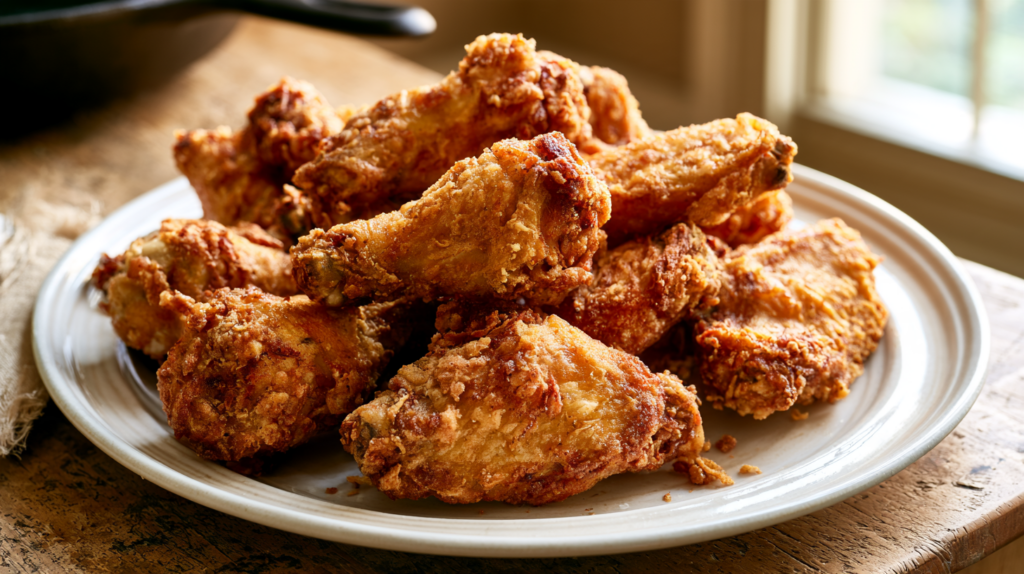
Southern fried chicken wings done right have a crust that cracks when you bite into it and meat so juicy the flavor runs clear down your fingers. This is not complicated food, but it does ask you to pay attention — and when you do, these wings come out better than anything you have ever brought home in a box.
A good fried chicken wing starts long before the oil gets hot. It starts with how you season, how you coat, and how patient you are willing to be with a skillet full of bubbling oil. Most folks who end up with soggy breading or dried-out meat made one of a handful of small mistakes that are easy to fix once you know what to watch for. This recipe walks through every one of those moments so you get it right the first time and every time after that.
What I am giving you here is a straightforward approach that has worked in my kitchen more times than I can count. Good chicken, well-seasoned flour, hot oil, and a little bit of patience. That is the whole recipe. The rest is just the teaching.
Stay with me through the next few sections and you will know exactly what to look for at every stage — from the first shake of seasoning to the moment you pull those golden wings out of the oil.
What Makes These Wings Worth the Trouble
Southern fried chicken wings hold a place on the table that no other dish quite fills. They are the thing people reach for first at a cookout and the last thing to disappear from the plate. There is something about a well-fried wing — small enough to eat with your hands, big enough in flavor to carry the whole meal — that brings people right to the kitchen.
What sets a truly good fried wing apart from a forgettable one is the crust. Not thick, not heavy, not falling off in sheets. A thin, well-seasoned coat of flour that fries up tight against the skin and shatters when you bite through it. That is what you are after. The meat underneath stays tender and full of juice because the crust seals everything in while the oil does its work.
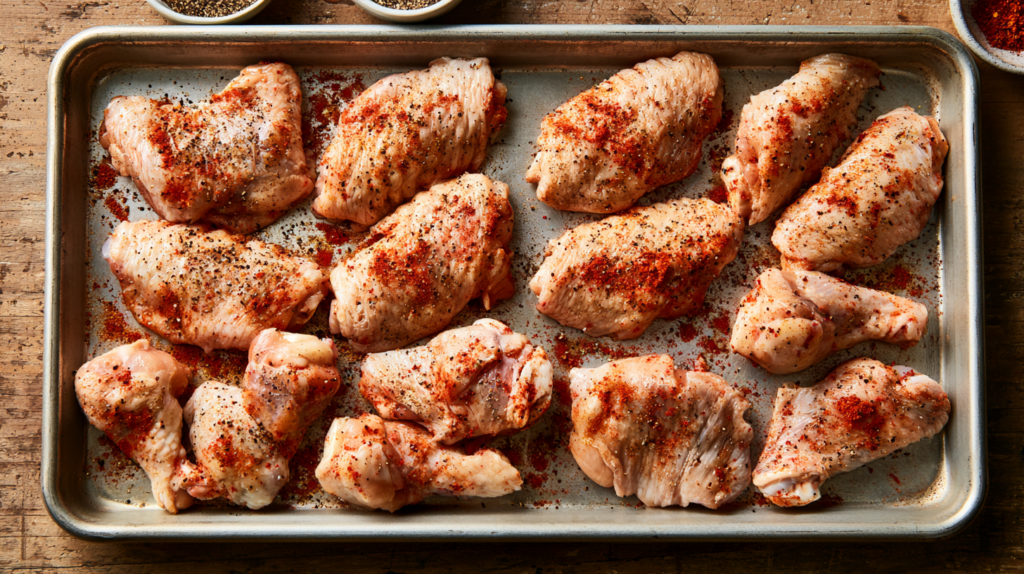
The version I make starts with seasoning the wings themselves before they ever touch the flour. Salt, black pepper, garlic powder, and paprika go directly onto the meat first. Then the flour gets its own round of seasoning. That way, every layer of the wing carries flavor — not just the outside. It is a small extra step that changes the whole outcome.
The Ingredients and What They Do
Chicken wings are forgiving to cook, but the ingredients you pair with them matter more than people think. Start with whole wings and separate them yourself into flats and drumettes. Pre-cut wings from the store work fine, but when you break them down at home, you get cleaner cuts and more even pieces, which means more even frying.
The flour is your crust. All-purpose flour is all you need — no cornstarch, no rice flour, no special blends. A cup and a half of good all-purpose flour seasoned well will coat about two pounds of wings and give you a crust that is thin, even, and crispy without being heavy or cakey.
Seasoning goes in two places. The wings get a direct rub of salt, black pepper, garlic powder, and paprika before they go into the flour. Then the flour itself gets a second dose of the same seasonings plus a pinch of cayenne if you want a little warmth underneath the crust. This double-seasoning approach is what keeps the flavor from sitting only on the surface.
For the oil, you want something with a high smoke point and a neutral flavor. Peanut oil is my first choice — it fries clean and handles high heat without breaking down. Canola oil and vegetable oil both work well too. You need enough oil to come about halfway up the sides of the wings in whatever pan you are using. A deep cast iron skillet or a heavy Dutch oven holds heat the best.
Quick Substitution Guide:
- No peanut oil — use canola or vegetable oil
- No paprika — smoked paprika adds a deeper note, or skip it entirely
- No garlic powder — onion powder in the same amount works as a stand-in
- No cayenne — leave it out for mild wings, or add a half teaspoon more for heat
How to Fry Wings That Stay Crispy
Season the Wings Before Anything Else
Lay your wings out on a sheet pan and pat every one of them dry. Season all sides with salt, black pepper, garlic powder, and paprika. Let them sit at room temperature for about fifteen minutes while you get the flour and the oil ready. This short rest lets the seasoning start to pull into the surface of the meat instead of just sitting on top.
Build the Seasoned Flour Dredge
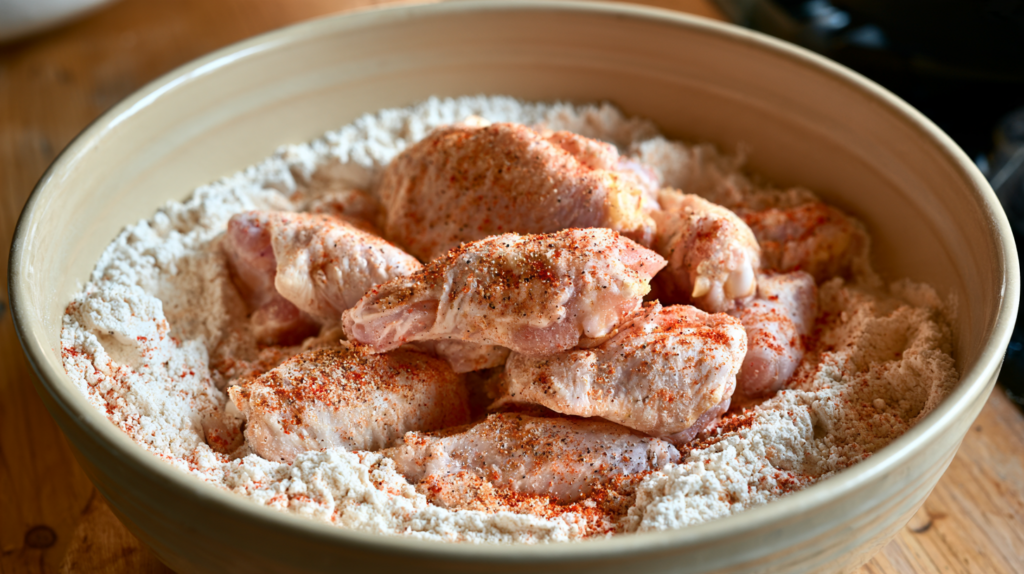
In a wide shallow bowl or a paper bag, combine your flour with another round of salt, black pepper, garlic powder, paprika, and cayenne. Whisk it or shake it until the seasonings are evenly spread through the flour. Drop the wings in a few at a time and press the flour onto every surface. You want a full even coat — no bare patches, no clumps. Shake off the extra flour gently before the wing goes anywhere near the oil.
Get the Oil Right and Keep It There
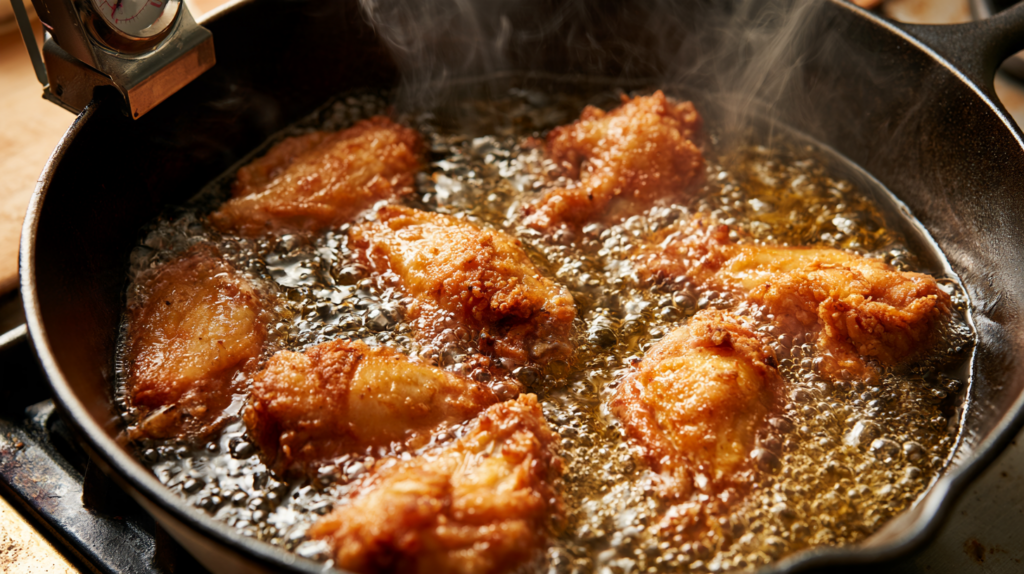
Pour your oil into a deep cast iron skillet or Dutch oven and bring it to 350 degrees. Use a thermometer — do not guess. Oil that is too cool gives you greasy, soggy wings. Oil that is too hot burns the outside before the inside cooks through. Three hundred and fifty degrees is where you want to be when the first wing goes in.
When you lower the wings into the oil, the temperature will drop. That is normal. It will come back up within a minute or two as long as you have not put too many wings in at once. Work in batches of four to six wings depending on the size of your pan. Every wing needs space to be surrounded by hot oil on all sides. If they are crowded together, they steam instead of fry and the crust goes soft.
Fry Until the Crust Tells You
Each batch takes about ten to twelve minutes. Turn the wings once or twice during that time so they color evenly. You are looking for a deep golden brown — not pale, not dark. When the bubbling around the wings slows down and gets quieter, that is a good sign the moisture has cooked out of the crust and it is setting up crisp.
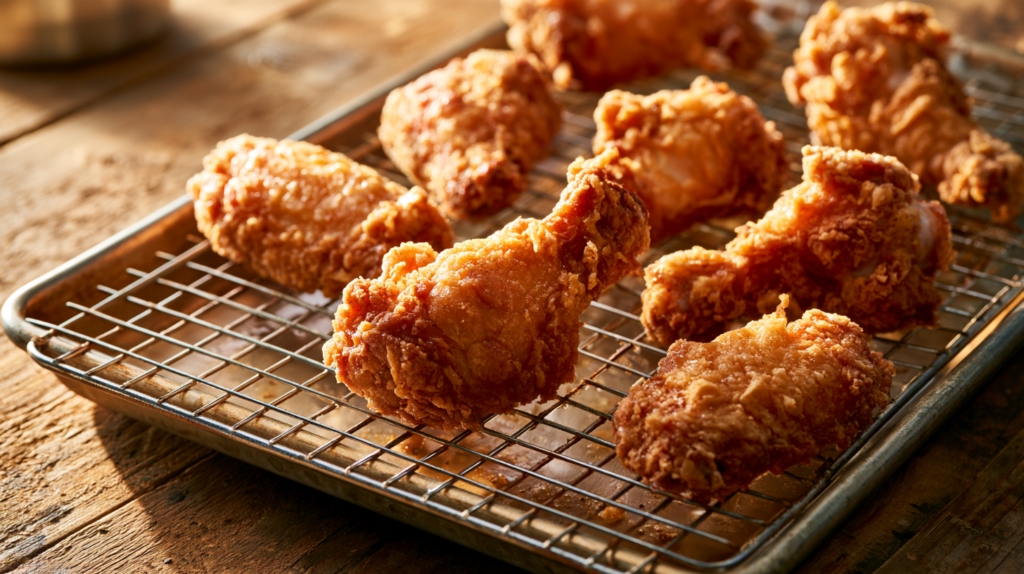
Do not rely on color alone to tell you the wings are done. Use an instant-read thermometer and check the thickest part of the meat near the bone. You need 165 degrees inside. Pull them out of the oil and set them on a wire rack over a sheet pan — not directly on paper towels. A wire rack lets air circulate underneath so the bottom of the wing stays just as crispy as the top.
Serve Them While the Crust Is Alive
Fried chicken wings are at their absolute best within the first fifteen minutes after they come out of the oil. The crust is still audibly crispy, the meat is hot and juicy, and every bit of seasoning is right where it should be. If you need to hold them for a short time, keep them on the wire rack in a 200-degree oven with the door cracked. That will hold the crunch for another twenty minutes or so without drying anything out.
Sides That Belong Next to Fried Wings
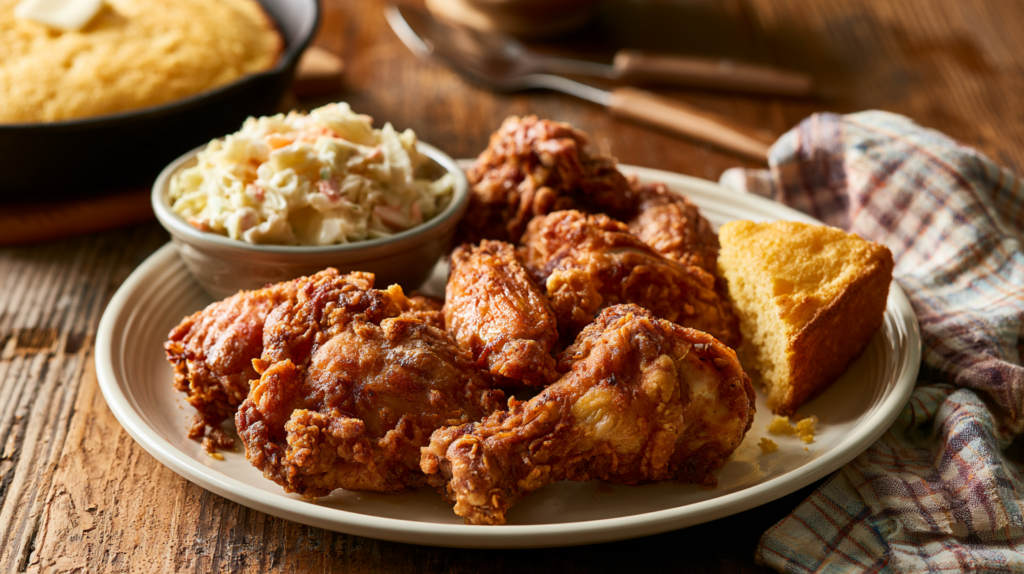
Southern fried chicken wings want sides that either cool them down or stand up right alongside them. Creamy coleslaw is the classic pairing for a reason — the cool, tangy crunch of the slaw plays against the hot, crispy, salty wing in a way that makes you reach for both at the same time. Potato salad works the same way, especially one with a vinegar-mustard base that cuts through the richness of the fried coating.
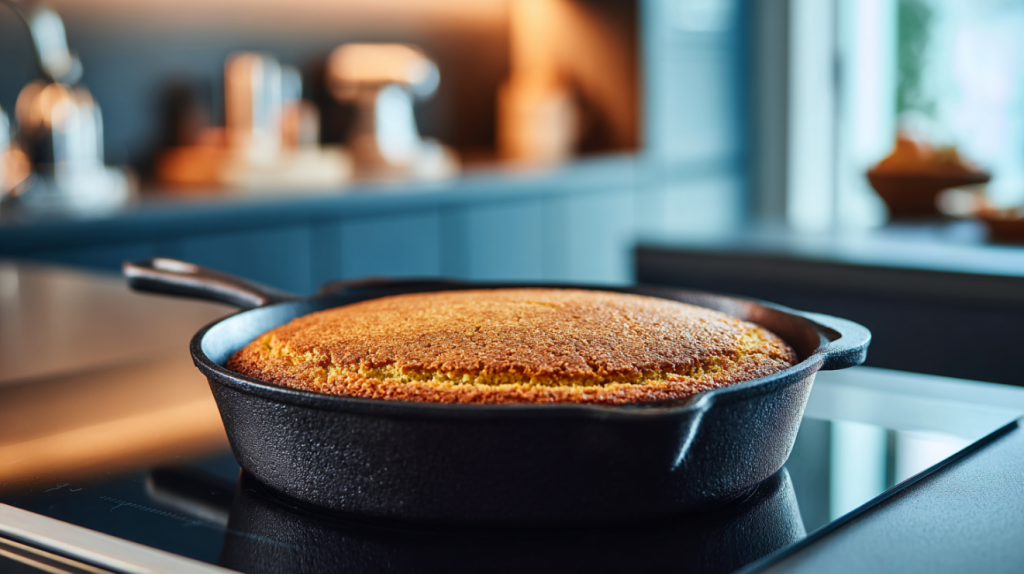
Cornbread belongs on that plate like it was born there. A wedge of hot skillet cornbread with a little butter soaks up any leftover seasoning and gives you something to eat between wings when your fingers need a break. For a bigger spread — a cookout, a game day table, a church supper — add baked beans, pickles, and a cold cucumber salad. The pickles especially do real work next to fried food, giving your mouth a quick bright reset between bites.
If you are making these wings the centerpiece of a weeknight dinner, keep it simple. A pile of wings, a bowl of slaw, and some buttered white bread is a complete meal that does not need a single thing more.
Ways to Change Up the Recipe
Nashville Hot Fried Chicken Wings
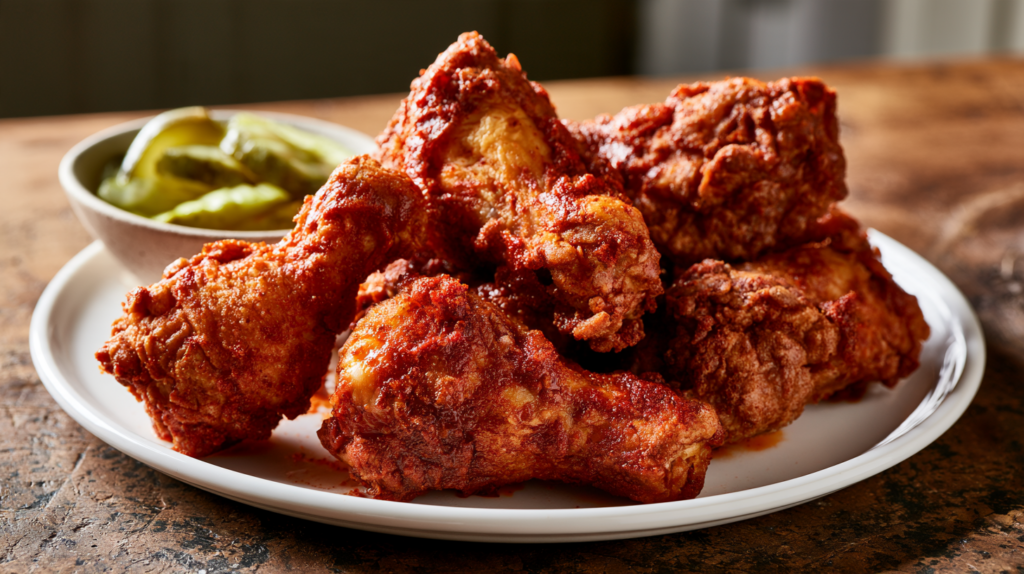
After the wings come out of the oil, brush them with a paste made from cayenne pepper, brown sugar, paprika, and a few tablespoons of the hot frying oil. The paste clings to the fresh crust and sets up into a spicy, slightly sweet glaze. This is not a sauce — it is a dry heat that builds. Start with a tablespoon of cayenne and work up from there. The brown sugar tempers the burn just enough to keep you reaching for the next wing.
Lemon Pepper Wings Southern Style
Toss the freshly fried wings in melted butter mixed with a generous amount of cracked black pepper and fresh lemon zest. The butter melts into the crust without softening it if you serve the wings right away. This variation leans bright and sharp instead of deep and spicy. It has become a staple across the South, particularly in Atlanta, where the combination of lemon pepper and butter on a fried wing has taken on a life of its own.
Buttermilk Brined Wings Before Frying
Soak the wings in buttermilk with a splash of hot sauce for four to eight hours before seasoning and dredging. The acid in the buttermilk tenderizes the meat and adds a slight tang that carries through even after frying. The milk proteins also help the flour grab onto the surface more tightly, which builds a slightly thicker, more textured crust. This is a good option when you want the wings a little more tender and the crust a little more substantial.
Garlic Parmesan Fried Wings
As soon as the wings come out of the oil, toss them in a bowl with melted butter, finely minced garlic, grated Parmesan cheese, and a pinch of dried parsley. The cheese sticks to the hot crust and the garlic butter soaks into the first layer without breaking it down. These are richer than the standard version and lean savory instead of spicy. They disappear fast at gatherings where heat is not everyone’s preference.
Storing Wings and Keeping Them Good
Leftover fried chicken wings go into an airtight container in the refrigerator as soon as they cool down to room temperature. Do not stack them on top of each other with the lid sealed while they are still warm — the trapped steam will turn the crust soft before they even get cold. Lay them in a single layer if you can, or put a piece of parchment between layers. They keep well for three to four days refrigerated.
To reheat, spread the wings on a wire rack set over a sheet pan and put them in a 375-degree oven for about eight to ten minutes. The oven dries the surface back out and brings the crust close to its original crunch. An air fryer works even better if you have one — five to seven minutes at 375 degrees with a little space between the wings. The microwave will heat them through, but the crust will not survive it. Use the oven or the air fryer every time.
For freezing, arrange the fully cooled wings in a single layer on a sheet pan and freeze them solid before transferring to a freezer bag. That keeps them from sticking together in one block. They hold up well for two to three months in the freezer. Reheat from frozen by adding a few extra minutes to the oven method — no need to thaw first.
Leftover Southern Fried Chicken Wings Ideas
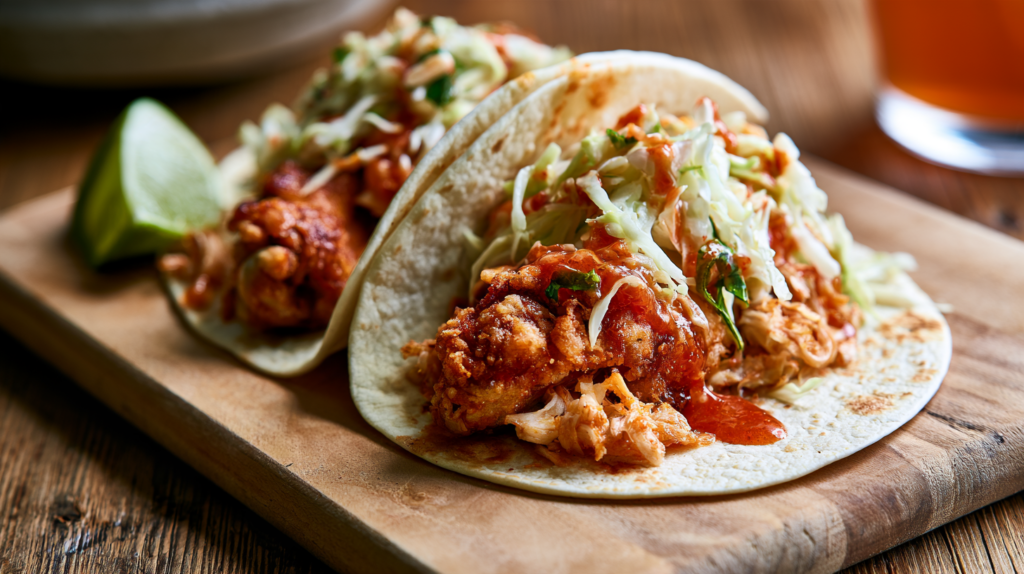
Fried Wing Tacos With Quick Slaw
Pull the meat from the leftover wings and warm it in a skillet. Pile it into small flour tortillas with a quick slaw of shredded cabbage, lime juice, and a thin drizzle of hot sauce. The seasoned wing meat already carries enough flavor that you do not need much else. These come together in under ten minutes and make cold leftover wings feel like an entirely new meal.
Wing Meat Fried Rice
Chop the leftover wing meat off the bones and toss it into fried rice along with scrambled egg, green onions, soy sauce, and whatever vegetables you have on hand. The already-seasoned, already-fried meat adds texture and flavor that plain chicken cannot match. Day-old rice works best here — fresh rice turns the whole thing gummy.
Chicken Wing Salad on Toasted Bread
Shred the leftover wing meat and fold it into a simple chicken salad with mayonnaise, a little mustard, diced celery, and salt and pepper. The fried coating breaks down into the salad and gives the whole thing a deeper, richer flavor than plain boiled or baked chicken ever could. Pile it on toasted bread or stuff it into a lettuce wrap for something lighter.
Southern Fried Chicken Wings
Equipment
- Deep cast iron skillet or Dutch oven
- Clip-on deep fry thermometer
- Instant-read meat thermometer
- Wire cooling rack
- Sheet Pan
- Tongs or spider strainer
Ingredients
Wings
- 2 lbs chicken wings separated into flats and drumettes, tips removed
- 1 tsp salt
- 1 tsp black pepper freshly ground
- 1 tsp garlic powder
- 1 tsp paprika
Seasoned Flour Dredge
- 1.5 cups all-purpose flour
- 1 tsp salt
- 1 tsp black pepper
- 1 tsp garlic powder
- 1 tsp paprika
- 0.25 tsp cayenne pepper optional, adjust to taste
For Frying
- 4 cups peanut oil or canola/vegetable oil, enough to come halfway up the wings
Instructions
Season the Wings
- Pat the chicken wings completely dry with paper towels. Arrange them on a sheet pan and season all sides with 1 teaspoon each of salt, black pepper, garlic powder, and paprika. Let the seasoned wings rest at room temperature for 15 minutes while you prepare the flour and oil.
Prepare the Dredge
- In a wide shallow bowl, whisk together the flour, salt, black pepper, garlic powder, paprika, and cayenne pepper until evenly combined.
Dredge and Rest
- Working a few at a time, press the seasoned wings into the flour mixture, coating all sides thoroughly. Shake off excess flour and place the dredged wings on a wire rack. Let them rest for 5 minutes to allow the flour to bond to the skin.
Heat the Oil
- Pour the oil into a deep cast iron skillet or Dutch oven. Heat over medium-high until a clip-on thermometer reads 350 degrees Fahrenheit. Adjust the burner to maintain that temperature.
Fry the Wings
- Carefully lower 4 to 6 wings into the hot oil using tongs or a spider strainer. Do not overcrowd the pan. Fry for 10 to 12 minutes, turning once or twice, until the wings are deep golden brown and the internal temperature reaches 165 degrees Fahrenheit at the thickest part near the bone.
- Transfer the finished wings to a wire rack set over a sheet pan to drain. Allow the oil to return to 350 degrees before frying the next batch. Repeat until all wings are cooked.
Serve
- Serve the wings immediately while the crust is at its crispiest. If holding before serving, keep them on the wire rack in a 200-degree oven with the door slightly open for up to 20 minutes.
Notes
Grandmaw's Notes
- Season the wings AND the flour separately — flavor in just one layer is not enough.
- Pat wings bone dry before dredging. Any moisture between skin and flour means the coating slides off in the oil.
- Let dredged wings rest on a wire rack for 5 minutes before frying. The flour bonds to the skin during that rest.
- Keep oil at 350 degrees and fry in small batches of 4 to 6. Overcrowding drops the temperature and steams instead of fries.
- Use a wire rack to drain — not paper towels. Paper towels trap steam underneath and turn the bottom crust soggy.
- Always check internal temperature. Golden color does not guarantee the meat near the bone has reached 165 degrees.
Nutrition
Rate This Recipe
Share This Recipe With The Ones You Love!Questions Folks Ask About Fried Wings
Should You Brine Wings Before Frying
Brining chicken wings before frying is not required, but it does make a difference if you have the time. A simple brine of water, salt, and a little sugar for two to four hours seasons the meat deeper than any surface rub can reach. The salt also helps the meat hold onto moisture during frying, so the finished wings come out juicier. If you are short on time, skip the brine and season the wings directly — you will still get a flavorful result. Buttermilk works as a brine and tenderizer in one step if you prefer that route.
Can You Fry Chicken Wings Frozen
Frying frozen chicken wings is possible but not ideal. The ice crystals on frozen wings cause violent splattering when they hit hot oil, which is a real safety concern. Frozen wings also drop the oil temperature much further than thawed ones, which leads to longer cooking times and a greasier result. If you must fry from frozen, lower the wings very slowly into the oil using a spider or slotted spoon and expect the cook time to nearly double. Thawing in the refrigerator overnight gives you a safer, cleaner fry every time.
What Temperature Oil for Frying Wings
The ideal oil temperature for frying chicken wings is 350 degrees Fahrenheit. At this temperature, the outside of the wing crisps and browns at the same rate the inside cooks through, which gives you a fully cooked wing with a crust that is golden and crunchy without being burnt. If your oil is below 325 degrees, the wings absorb too much grease. Above 375 degrees, the coating darkens before the meat near the bone reaches the safe internal temperature of 165 degrees. A clip-on thermometer is the most reliable way to monitor the oil throughout the cook.
How Long to Fry Chicken Wings
Chicken wings take ten to twelve minutes to fry at 350 degrees Fahrenheit. Smaller flats may finish closer to nine minutes, while larger drumettes can take up to thirteen. The best way to know they are done is not by time or color alone but by checking the internal temperature with an instant-read thermometer. You are looking for 165 degrees at the thickest part near the bone. If the outside is golden but the inside has not reached temperature, lower the heat slightly and give them another minute or two rather than pulling them early.
Why Is My Fried Chicken Breading Falling Off
Breading falls off fried chicken wings for a few common reasons. The most frequent one is moisture — if the wings are not patted completely dry before dredging, the flour sits on a layer of water instead of bonding to the skin. Overcrowding the pan is another cause, because the wings bump against each other and knock the coating loose. Skipping the rest after dredging matters too. When you let the floured wings sit on a rack for five minutes before frying, the flour hydrates slightly and grips the skin. That five-minute rest is one of the easiest fixes for breading that will not stay put.
How to Keep Fried Wings Crispy After Cooking
The key to keeping fried chicken wings crispy after cooking is air circulation. Set them on a wire rack over a sheet pan instead of piling them on a plate or laying them on paper towels. Paper towels trap steam against the bottom of the wing and soften the crust within minutes. A wire rack lets air move all the way around each wing so the crust stays dry and crunchy. If you need to hold the wings before serving, keep them on the rack in a 200-degree oven with the door slightly open. Avoid covering them with foil, which traps moisture and undoes everything the frying accomplished.
A Good Fried Wing Speaks for Itself
Southern fried chicken wings are one of those dishes that do not need anything fancy to be outstanding. Good chicken, well-seasoned flour, steady oil, and a little patience at the stove — that is all it takes. The crust comes out golden and crisp, the meat stays juicy, and every bite carries flavor from the surface all the way to the bone. There is a reason this dish shows up at every cookout, every family gathering, and every plate that needs something people cannot stop eating.
Take your time with the seasoning, keep your oil at the right temperature, and give each wing the space it needs in the pan. When you pull that last batch out and hear the crust crackle as it hits the rack, you will know you got it right. Make these once and they will earn a permanent place in your kitchen. I hope you enjoy them as much as the folks around my table always have — and when you do, come back and tell me how they turned out.