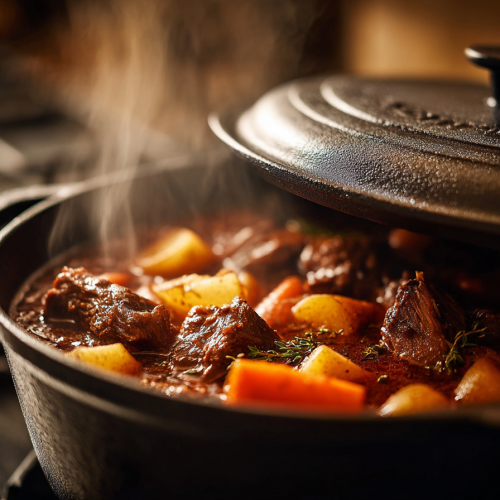
Possum Stew Recipe
This is the definitive, traditional method for making a safe, tender, and deeply flavorful possum stew. It's a "low and slow" recipe that honors the resourcefulness of our Appalachian forebears. There are no shortcuts, canned soups, or powdered gravies here—just the authentic, scratch-made techniques that build a truly historic dish.
Equipment
- Large stockpot (at least 8-quart)
- Heavy-bottomed Dutch oven (or a second large pot)
- Slotted spoon
- Large bowl (for soaking)
- Cutting board
- Sharp knife (for trimming)
- Small bowl (for slurry)
- Whisk
Ingredients
- 1 possum skinned, dressed, glands removed, and quartered
- 1/2 cup salt for soaking
- Water for soaking, boiling, and simmering
- 4 oz salt pork finely diced (or 1/4 cup rendered lard)
- 1 large yellow onion chopped
- 2-3 large carrots peeled and cut into thick coins
- 2-3 celery stalks chopped
- 4-5 large Russet potatoes peeled and cubed (about 6 cups)
- 2 bay leaves
- 1 tsp dried thyme or 2 fresh sprigs
- Salt and fresh-cracked black pepper to taste
- 2 tbsp all-purpose flour
- 1/4 cup cold water
- Optional: 1 14.5 oz can diced tomatoes
Instructions
Trim & Soak the Meat:
- Place the quartered possum meat in a large bowl. Meticulously trim and discard all visible fat. Cover the meat completely with cold water and stir in the 1/2 cup of salt until dissolved. Place in the refrigerator and soak for at least 12 hours, or up to 24.
Rinse & Safety Simmer:
- Drain the soaking water (it will be discolored). Rinse the meat thoroughly under cool running water. Place the meat in a large stockpot and cover with fresh water. Bring to a rolling boil and let it boil for 30 minutes. Skim and discard any foam that rises to the top.
Tenderizing Simmer:
- Drain the pot, discard the boiling water. Rinse the meat and the pot one more time. Return the meat to the pot and cover again with fresh water (about 8-10 cups). Bring to a boil, then reduce the heat to the lowest possible simmer. Cover the pot and let it cook for 6 to 8 hours, or until the meat is completely tender and falling off the bone.
Shred the Meat:
- Carefully remove the meat from the pot with a slotted spoon and set it on a platter to cool. CRITICAL: Save all the broth in the pot! This is the base of your stew. Once the meat is cool enough to handle, pick all of it from the bones. Shred the meat into bite-sized pieces and discard the bones.
Build the Stew Base:
- In a separate heavy-bottomed Dutch oven (or a clean large pot), add the diced salt pork. Cook over medium heat until the fat has rendered and the bits are crispy, about 8-10 minutes. (If using lard, simply heat it).
Sauté Vegetables:
- Add the chopped onion, carrots, and celery to the hot fat. Sauté for 8-10 minutes, until the vegetables begin to soften.
Combine the Stew:
- Add the shredded possum meat, the cubed potatoes, bay leaves, and dried thyme to the Dutch oven. Stir to combine.
- Ladle in 6-8 cups of the reserved broth from the tenderizing simmer. (If using, add the canned tomatoes now). You want enough broth to generously cover all the ingredients.
- Bring the stew to a boil, then reduce the heat to a steady simmer. Cook, uncovered, for 30-40 minutes, or until the potatoes and carrots are perfectly tender.
- In a small bowl, whisk the 2 tbsp of flour with the 1/4 cup of cold water to create a smooth slurry. Pour the slurry into the simmering stew, stirring as you pour. Let the stew simmer for another 3-5 minutes to cook out the raw flour taste and thicken the gravy.
Final Seasoning:
- Taste the stew. It will likely need a generous amount of salt and fresh-cracked black pepper. Add seasonings, tasting as you go, until the flavors are rich and deep. Remove the bay leaves before serving.
Notes
Storage, Serving & Reheating
Storage: Let the stew cool completely, then store it in an airtight container in the refrigerator for 3-4 days. It does not freeze well, as the potatoes can become grainy. Serving Suggestions: Serve piping hot in deep, pre-warmed bowls. This stew is a must-have with a side of crusty, hot-water cornbread or fluffy buttermilk biscuits to sop up every bit of the rich gravy. Reheating: Reheat gently in a pot over medium-low heat, stirring occasionally until warm through. The stew will thicken considerably in the fridge, so you may need to add a splash of water or beef broth to thin it back out.Flavor Variations & Pairings
Variations: Add a cup of sweet corn (frozen is fine) in the last 10 minutes of cooking. A cubed turnip or parsnip can be added with the potatoes for more root vegetable flavor. A splash of your favorite hot sauce or a pinch of red pepper flakes will add a nice warmth. Pairings: This hearty stew pairs perfectly with a side of braised collard greens, a simple, sharp-dressed slaw, or a jar of pickled okra.Leftover Transformation Ideas
Shepherd's Pie: Spoon the leftover stew (drained of excess gravy) into a casserole dish and top with a thick layer of mashed potatoes. Bake at 375°F until golden and bubbly. Stew & Biscuits: Reheat the stew and serve it ladled over split, buttered biscuits for a rib-sticking breakfast or lunch.Troubleshooting Tips
"My stew tastes gamey!" You likely did not trim enough of the fat or skip the 12+ hour saltwater soak. Unfortunately, you cannot fix this after the fact. This preparation step is critical. "My meat is still tough!" You did not simmer it long enough in step 3. The 6-8 hour simmer is the only way to break down the tough muscle. There are no shortcuts. "My stew is too thin!" Your potato starch wasn't enough to thicken it. Simply make another small slurry (1 tbsp flour + 2 tbsp cold water) and stir it in. "My stew is bland!" Be brave with your seasoning! Wild game needs more salt and pepper than you think. Keep tasting and adding until the flavor pops.Recipe Notes (Substitutions, Make-Ahead, Scaling)
Substitutions: You can use 1/4 cup of bacon grease instead of salt pork or lard. For a gluten-free stew, use 1.5 tbsp of cornstarch (mixed with 3 tbsp cold water) as your slurry. Make-Ahead: This stew is almost better the next day. You can make the entire recipe a day in advance. You can also break up the work: Do the soak and 8-hour simmer on Day 1, then build the final stew on Day 2. Scaling: This recipe is easily doubled, provided you have a large enough pot. The simmering times remain the same. Share Your Kitchen Story! Did you try this piece of mountain history? We'd be honored to see it. Share a photo of your stew and tag @grandmaws on social media!Nutrition
Calories: 76kcalCarbohydrates: 1gProtein: 1gFat: 8gSaturated Fat: 3gPolyunsaturated Fat: 1gMonounsaturated Fat: 4gCholesterol: 8mgSodium: 4970mgPotassium: 11mgFiber: 0.1gSugar: 0.01gVitamin A: 7IUVitamin C: 0.1mgCalcium: 6mgIron: 0.3mg
Rate This Recipe
Share This Recipe With The Ones You Love! Did you make this recipe?Mention @grandmaws or tag #grandmaws!
